Zemo Svaneti
Planned National Park
Introduction
2 August 2026 – 13 August 2026
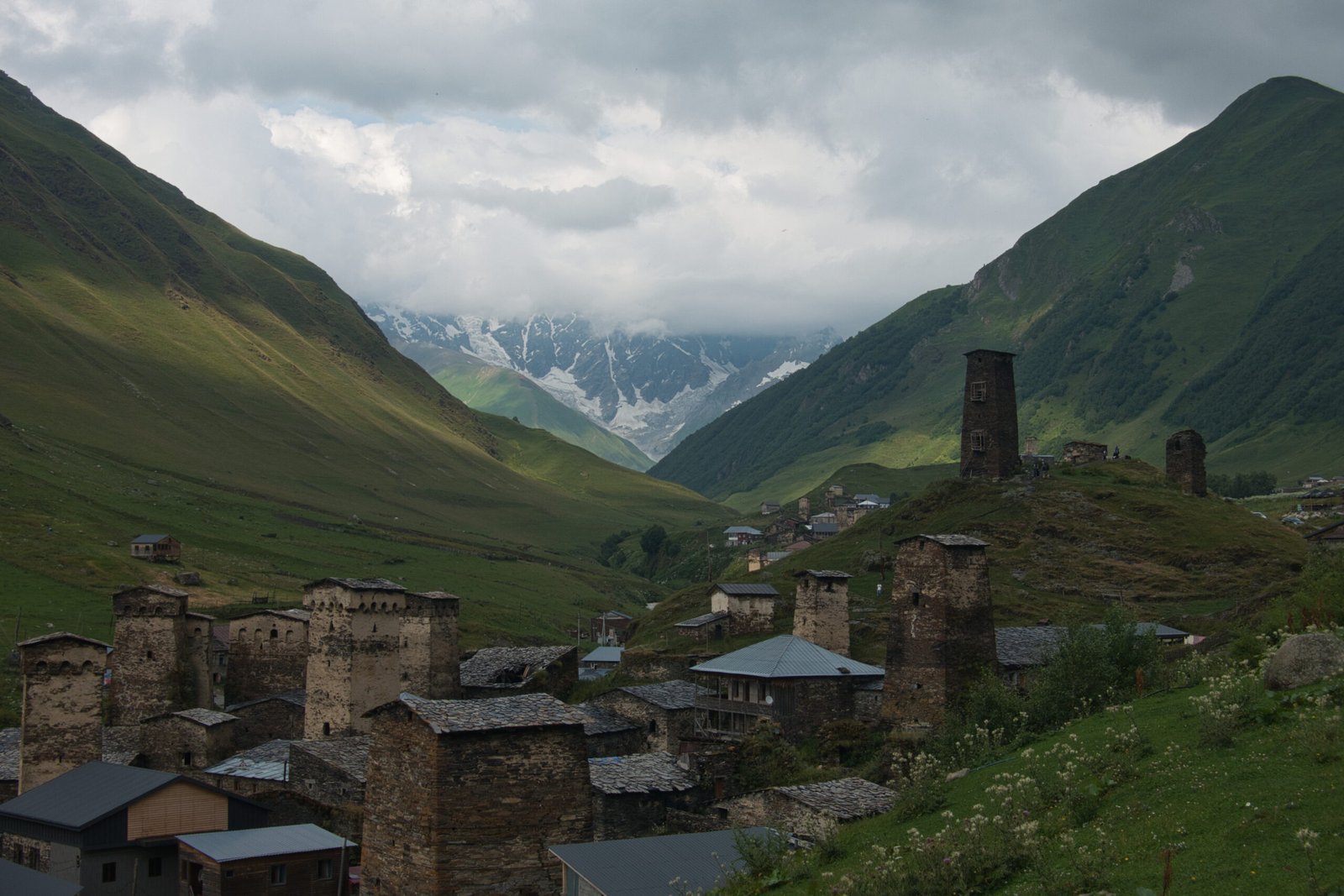
Upper Svaneti (Zemo Svaneti) is without a doubt the most spectacular region of Georgia and the Southern Caucasus: lush green valleys, icy peaks, and the iconic medieval Svan towers.
With the collapse of the Soviet Union Georgia fell into chaos. Multiple ethnic separatist movements resulted in a three-year civil war, followed by a decade of unrest. Until 2004, Svaneti remained a dangerous place ruled by banditry. Mestia was finally reconnected to the lowlands with the road to Zugdidi rebuilt and construction of the airport. Two ski resorts followed, and in 2024, the road was extended to connect to Ushguli and Kutaisi, significantly improving connectivity. All this development has come at a cost though. In addition to the general issues that arise from mass-tourism, there have been serious disputes over landownership and erasure of local culture.
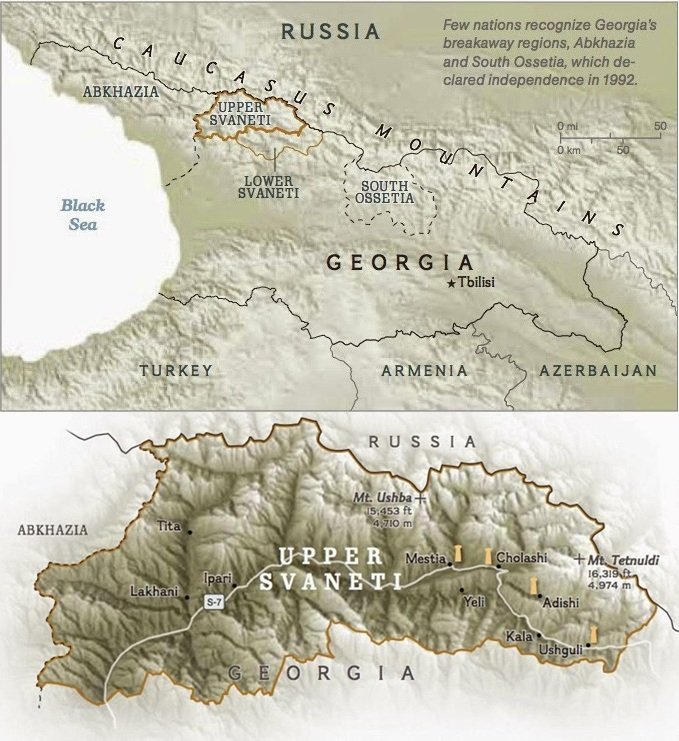
A map of my route is at the bottom of the page.
Expecting to have use-or-lose holiday days at the end of July due to a contract shift at work, I was in the market for an affordable and relatively straightforward, yet preferably slightly exotic destination. Georgian Caucasus and Kazakh Tian Shan (Ile-Alatau) quickly became the frontrunners. I was apprehensive over some uncertain domestic transit in Georgia, but the Svaneti region has been on my shortlist for some time now and promised a nice balance of culture and nature. I also wasn’t thrilled about the lengthy Kazakh flights and had hesitations regarding committing to a solo-wildcamp at altitude in such a radically new and different region.
Ultimately, my contract situation was kicked down the line to March 2027. But I had already settled on Svaneti as a destination.
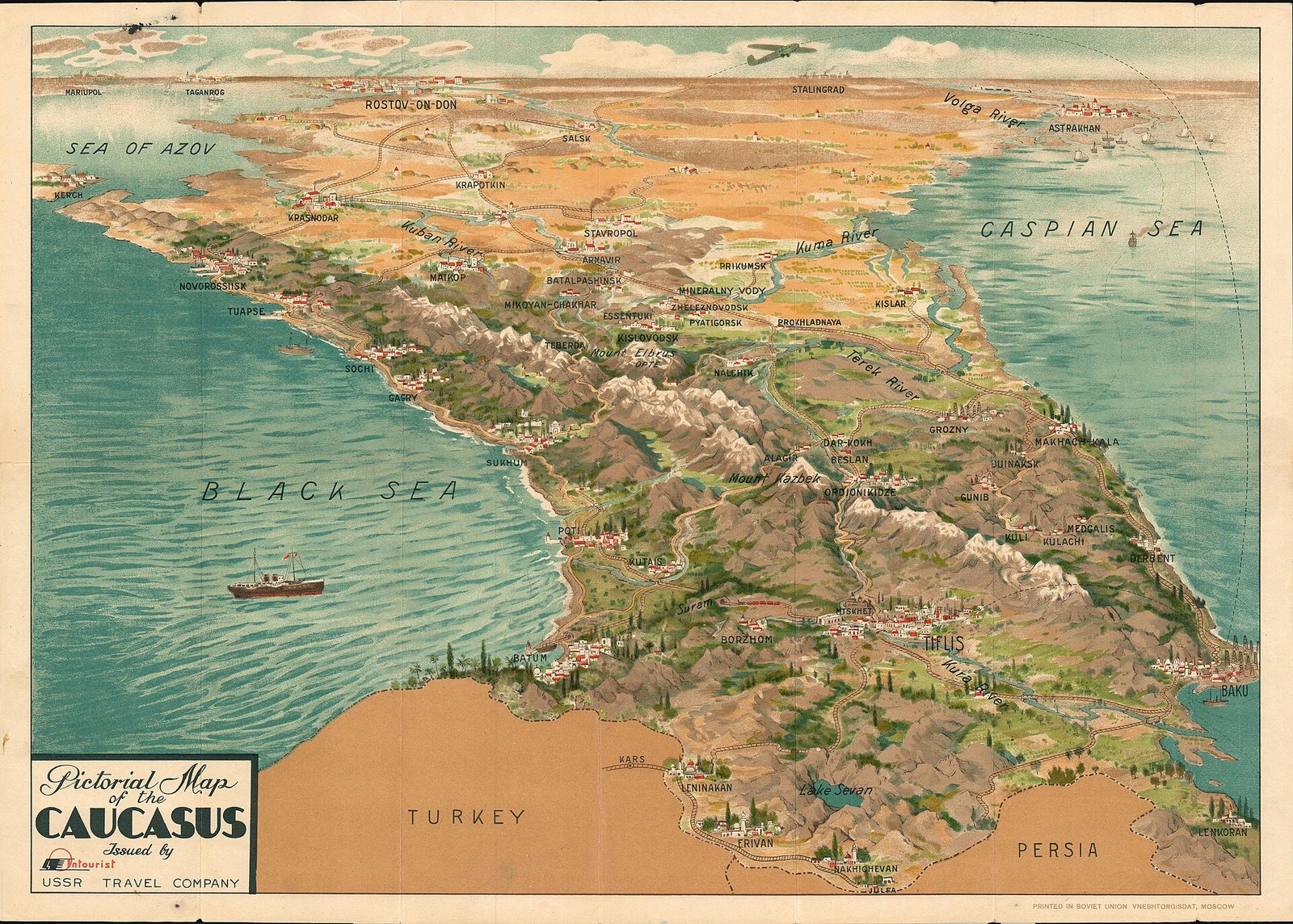
A pre-war Soviet tourism map of the Caucasus. Upper Svaneti is directly below Elbrus.
I decided on a variation of the classic Mestia-Ushguli trek with a handful of days split between Mestia and Tbilisi to pad things out. I would do the hike in the reverse direction in two days and utilise the seldom-used Lagem Pass route to minimise crowds while maximising views. Given prices, I opted to leave the tent at home and stay in guesthouses, the medieval villages were a large part of the draw regardless. I was half tempted to add a climb of Tetnulti, arguably Georgia’s finest peak. This would have swelled both the timeline and financial outlay though, and I already had plenty of mountaineering planned for the year: four 5000m peaks and two 4000m peaks.
Arrival
Sunday, 2 August – Monday, 3 August
It was a very chaotic couple of days prior to departure. I had intended to fly domestically from Tbilisi to Mestia. Not only do I enjoy those odd flights on small planes, but the cost was only about 50EUR (including airstrip transfers) and the overland options were both lengthy and uncomfortable. The airline has one of the worst designed websites I have ever seen, and flight tickets are only released one month at a time, a few days prior to the 1st of the month. Needless to say, I was not able to secure tickets. Instead, a nine hour overland journey was in store.
The weather was looking absolutely vile for the entirety of my hiking period. A fact that certainly did not improve my waning positivity going into the trip. Weather reports in the mountains are not necessarily to be believed though.
Georgia is visa-free for 365days. an exceptionally welcoming policy in an era of ever increasing travel restrictions. Until recently, visitors were also welcomed to the country with a bottle of wine at immigration. Sadly those days are gone, no doubt aligning with some vampiric EU directive.
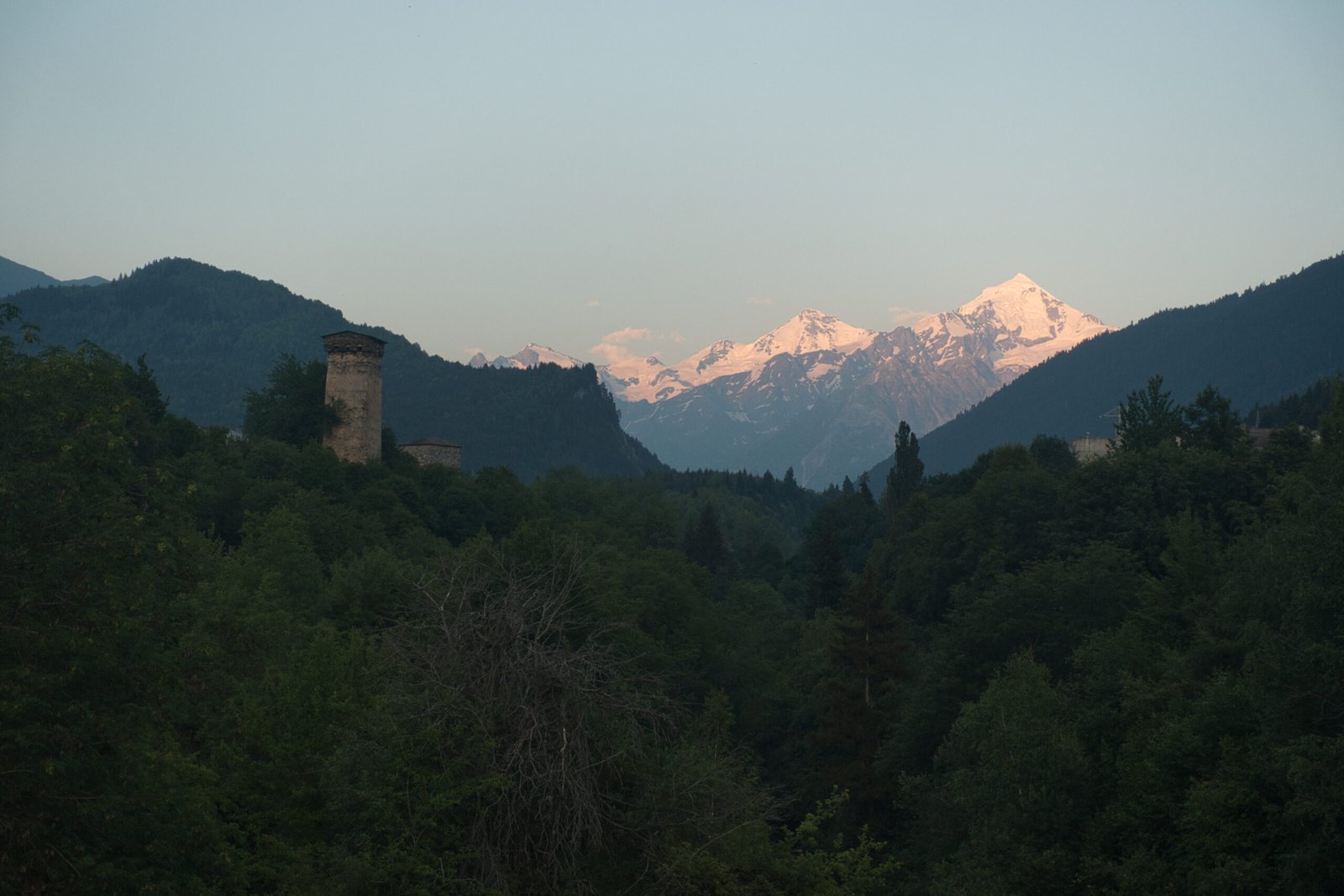
Tetnuldi at sunset, from Mestia
Mestia
Tuesday, 4 August
This day was primarily a padding day to guard against exactly the sort of domestic transit issues that ended up arising, but enforced by a rigid bi-weekly international flight schedule.
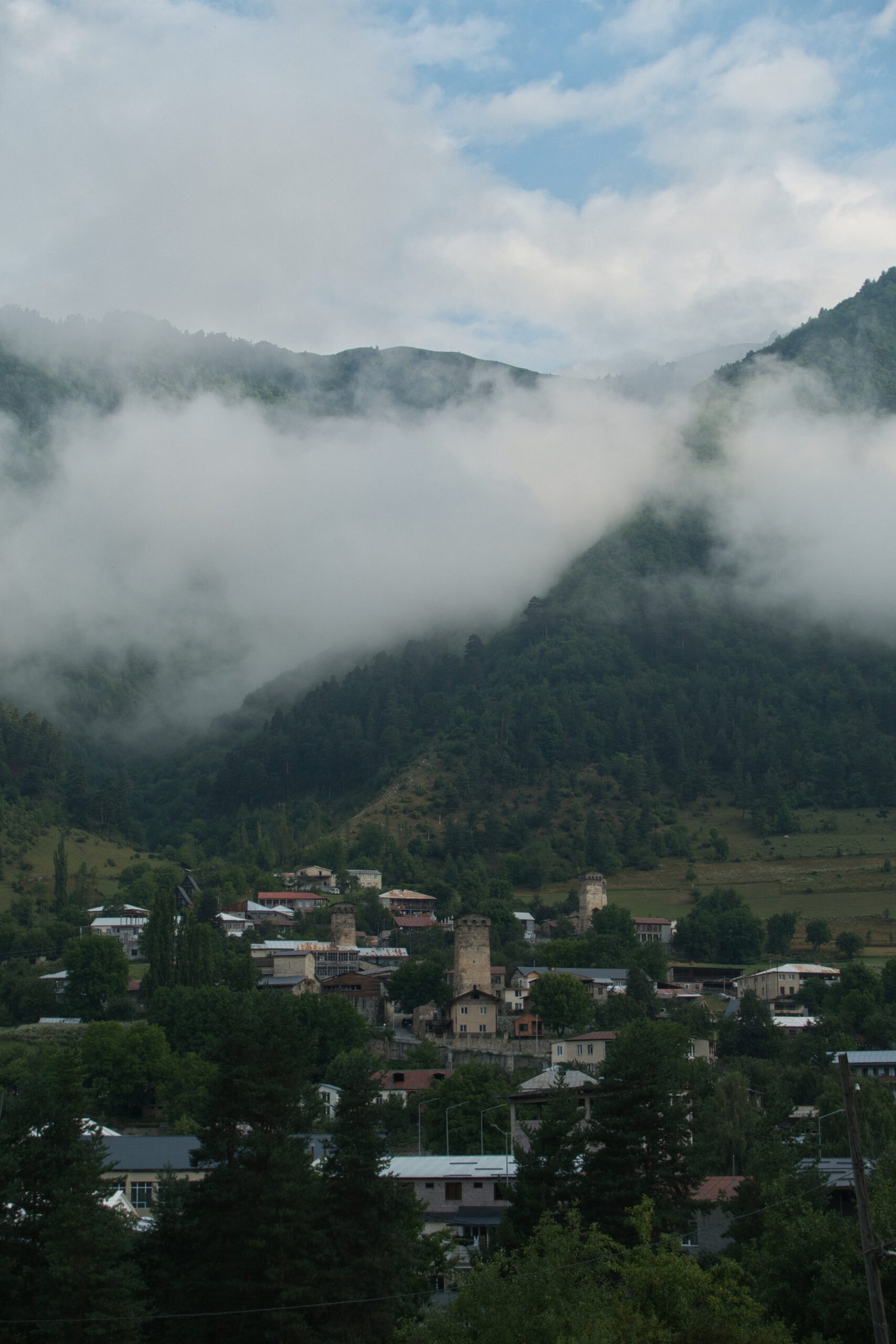
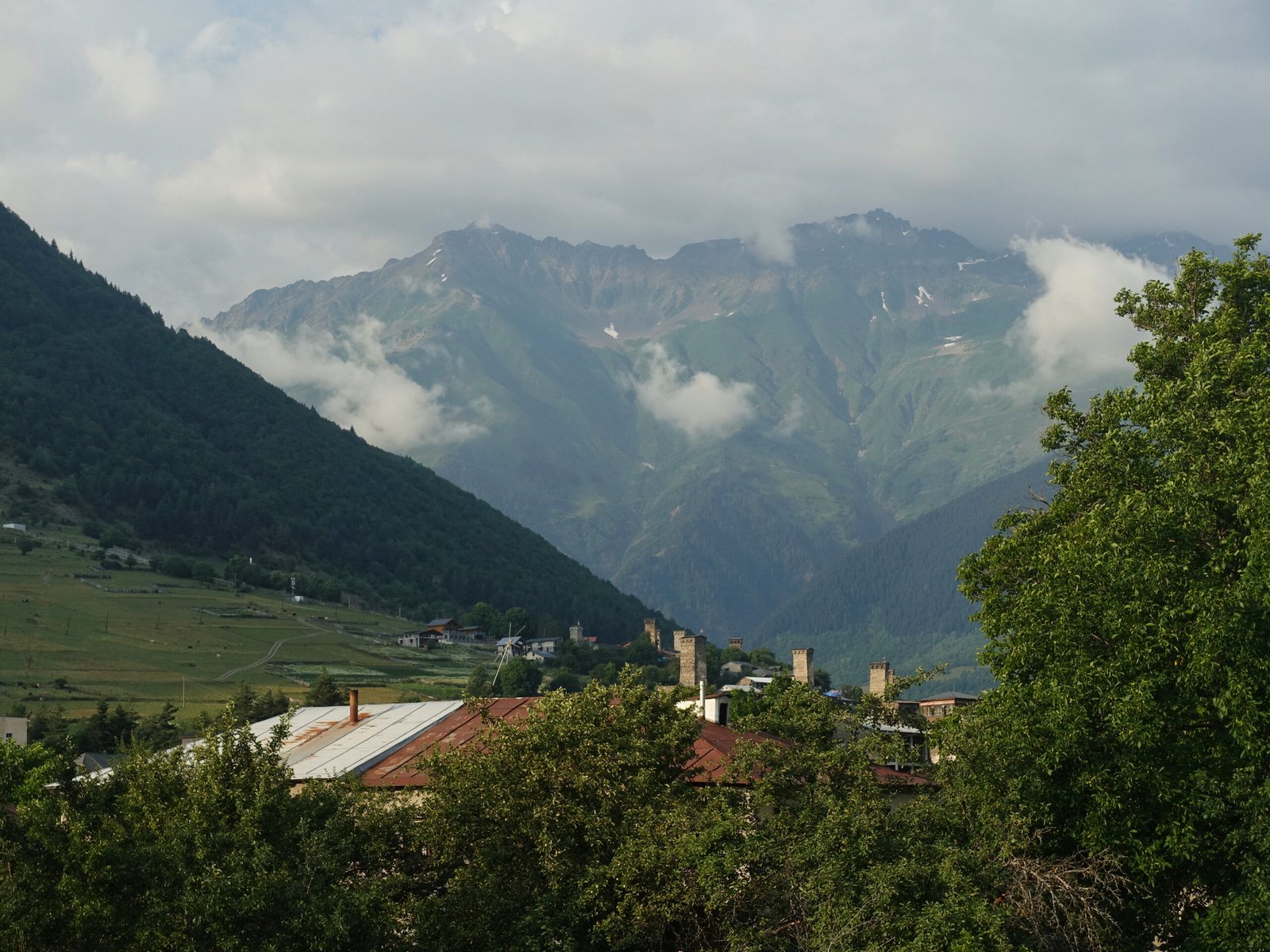
Views from Mestia Guesthouse window
The weather forecast predicted sporadic but considerable rain. When that did not appear to be materialising, I got out for a walk. It was nothing special, there are not too many options available directly from town, just a jaunt up the ski resort immediately behind the guesthouse. Being a ski resort, the hike itself was forgettable, but the ridge it reached promised panoramic views of Ushba and surrounding peaks.
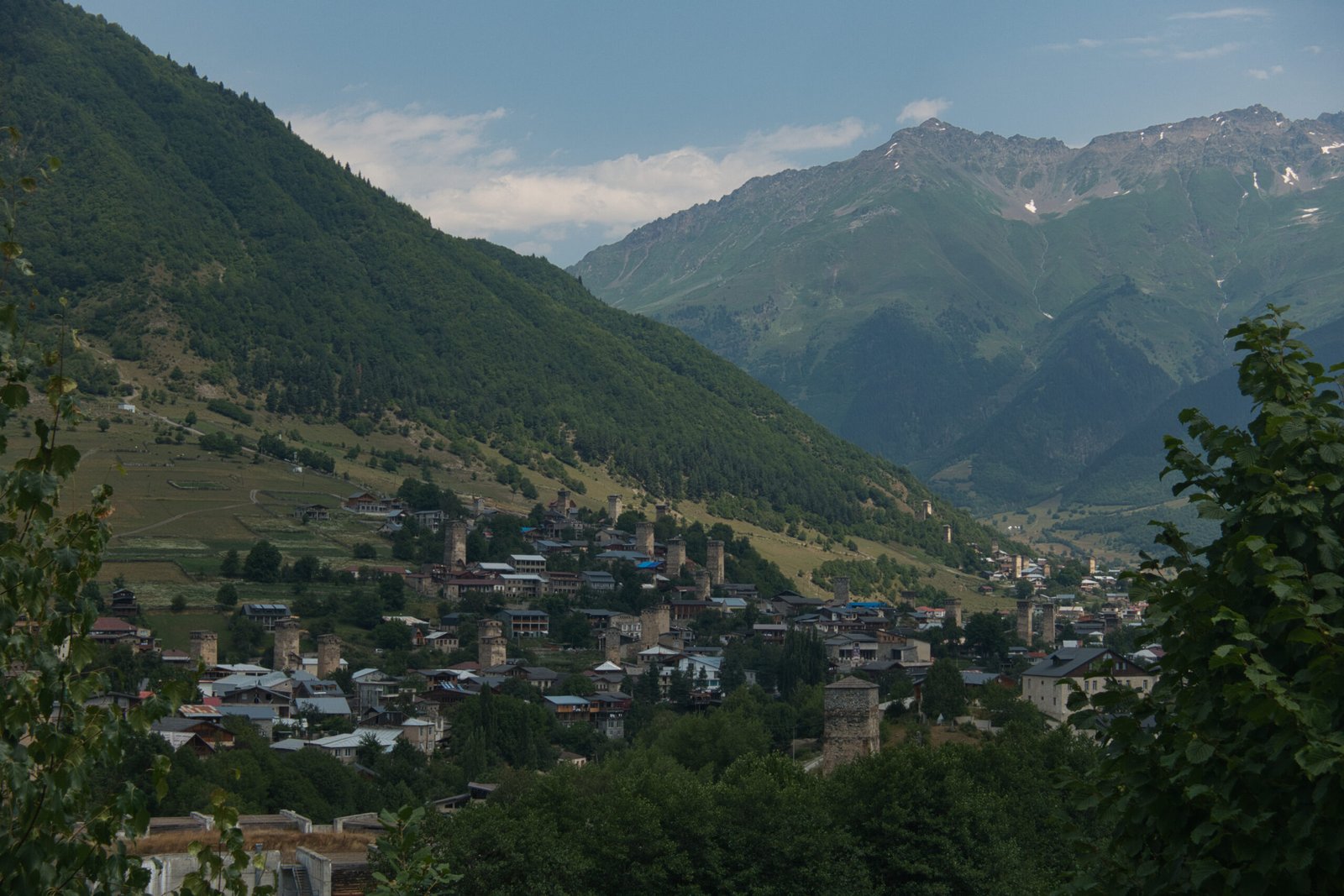
Starting up Hatsvali
As soon as I returned from the hike, I turned around and headed back out. The Svaneti Museum, just down the road from the guesthouse, is extremely highly rated and this was potentially my only opportunity to see it. A small but pleasant collection, refreshingly different from Continental Europe, but not much that particularly grabbed my attention.
Another night of torrential rain. At this point, I was very glad that I was not facing down the prospect of several nights in a tent. I can’t say I miss much about continental summers, but I do miss the storms. At least when I do not need to be anywhere.
Ushguli
Wednesday 5 August
I had a mid-morning marshrutka (Soviet van) to Ushguli. My ticket was prepurchased but still arrived quite early due some horror stories. I needn’t have worried, the van wasn’t even completely full when it departed. Similarly, I had heard some nightmarish tales regarding the drivers and without seatbelts I wasn’t going to turn my nose up at any potential benefits provided by the Orthodox iconography plastered across the interior of the van. My driver kept things under control though. Other than a little scare when he blew straight past the road to Ushguli – he needed petrol – there was little to actually worry about.
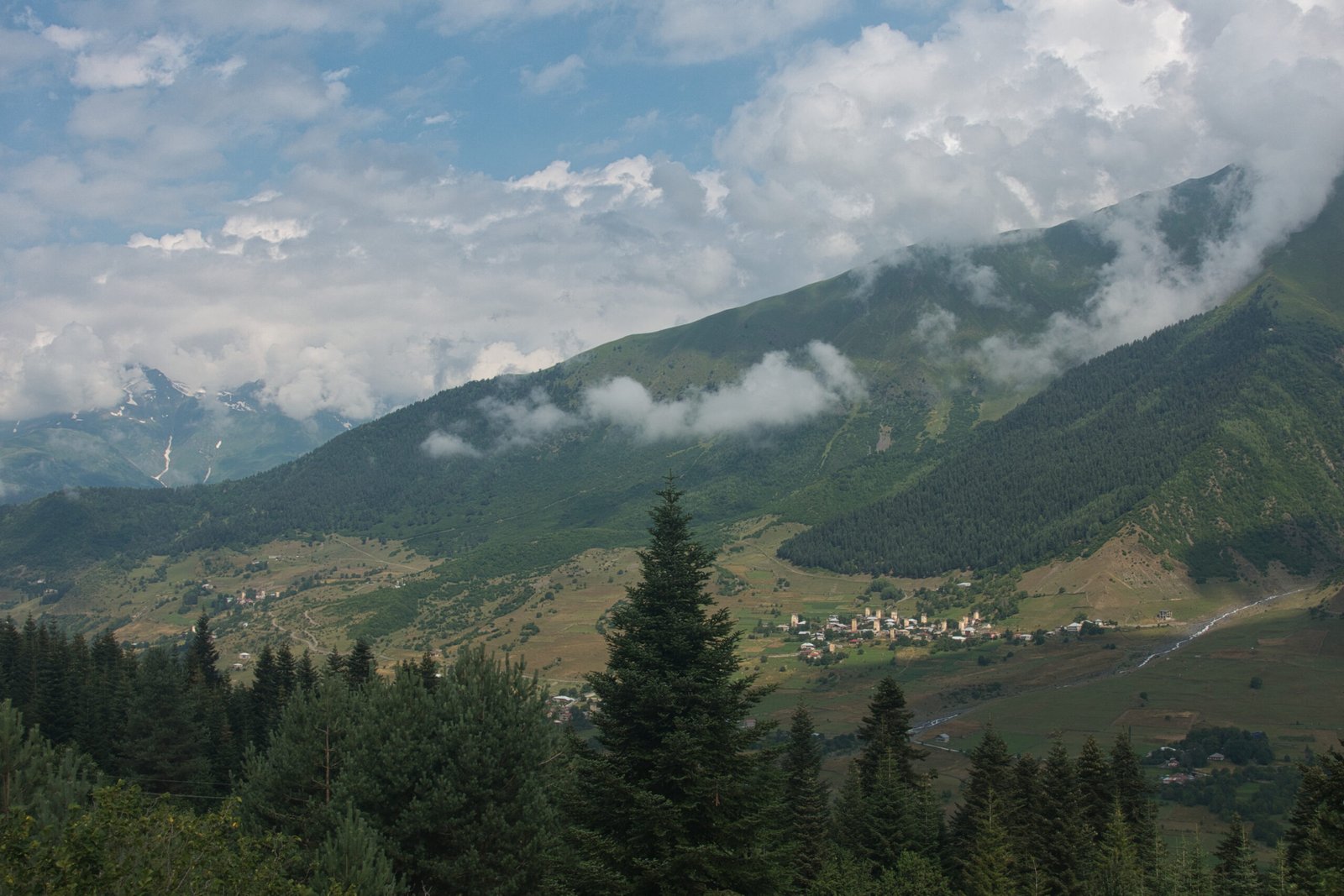
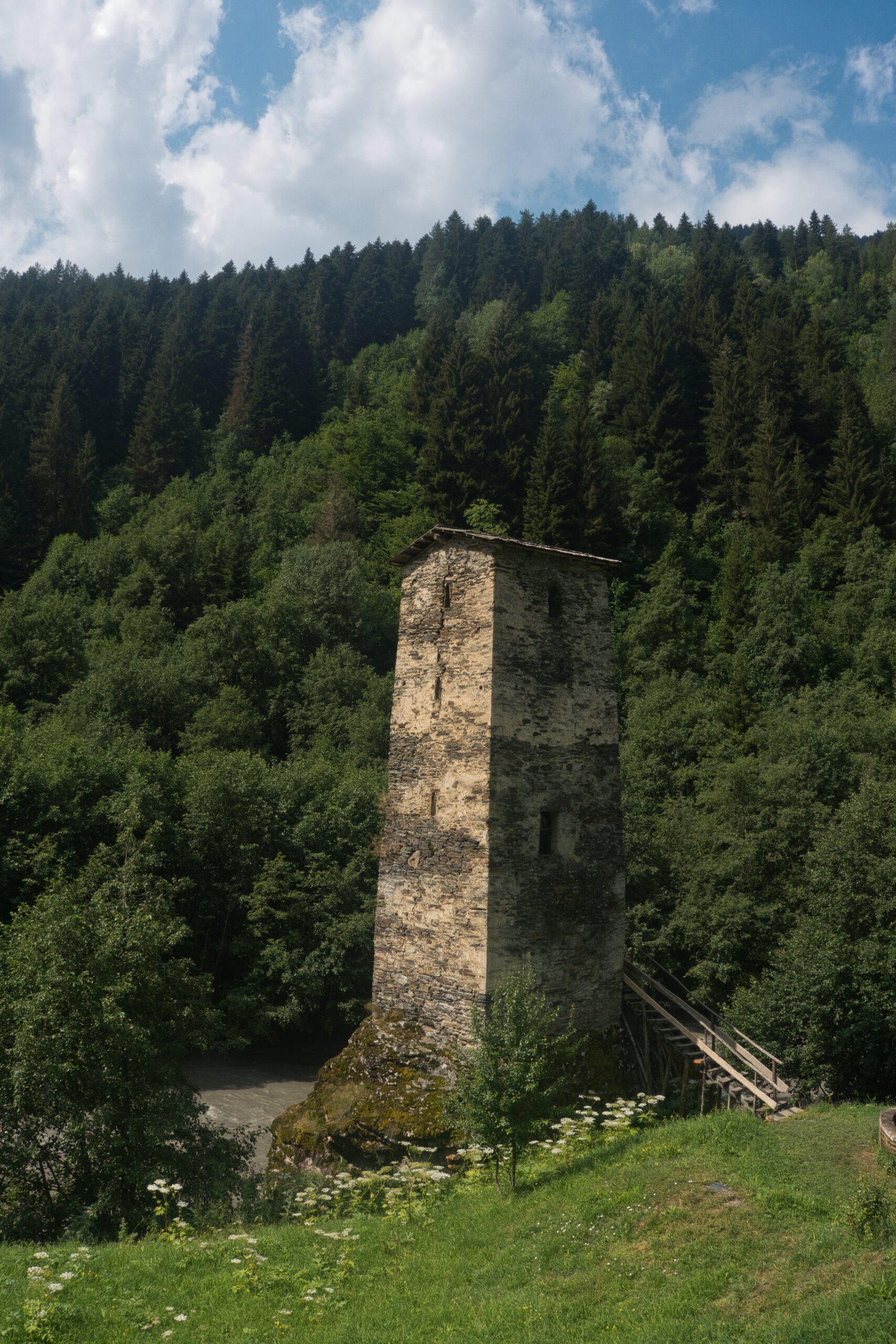
Views from the marshrutka
Ushguli is actually a collection of five villages, though all but one of the clusters are sufficiently close that they fully blend together. It was very dreary, but not actively raining when I arrived so I set out to explore as soon as I dropped off my things. Unfortunately, the rain that had been threatening decided to finally arrive when I was at my furthest point from the guesthouse. A few hours of reading as I waited for the rain to pass certainly wouldn’t hurt. And there was the added bonus that the marshrutkas would head back to Mestia – most people visit the town as a daytrip.
With the rain stopped, I made my way up to the ruins of Queen Tamar’s summer home via a steep track directly up a water channel. The castle ruins were undergoing active renovations, but she certainly picked a spectacular spot to build.
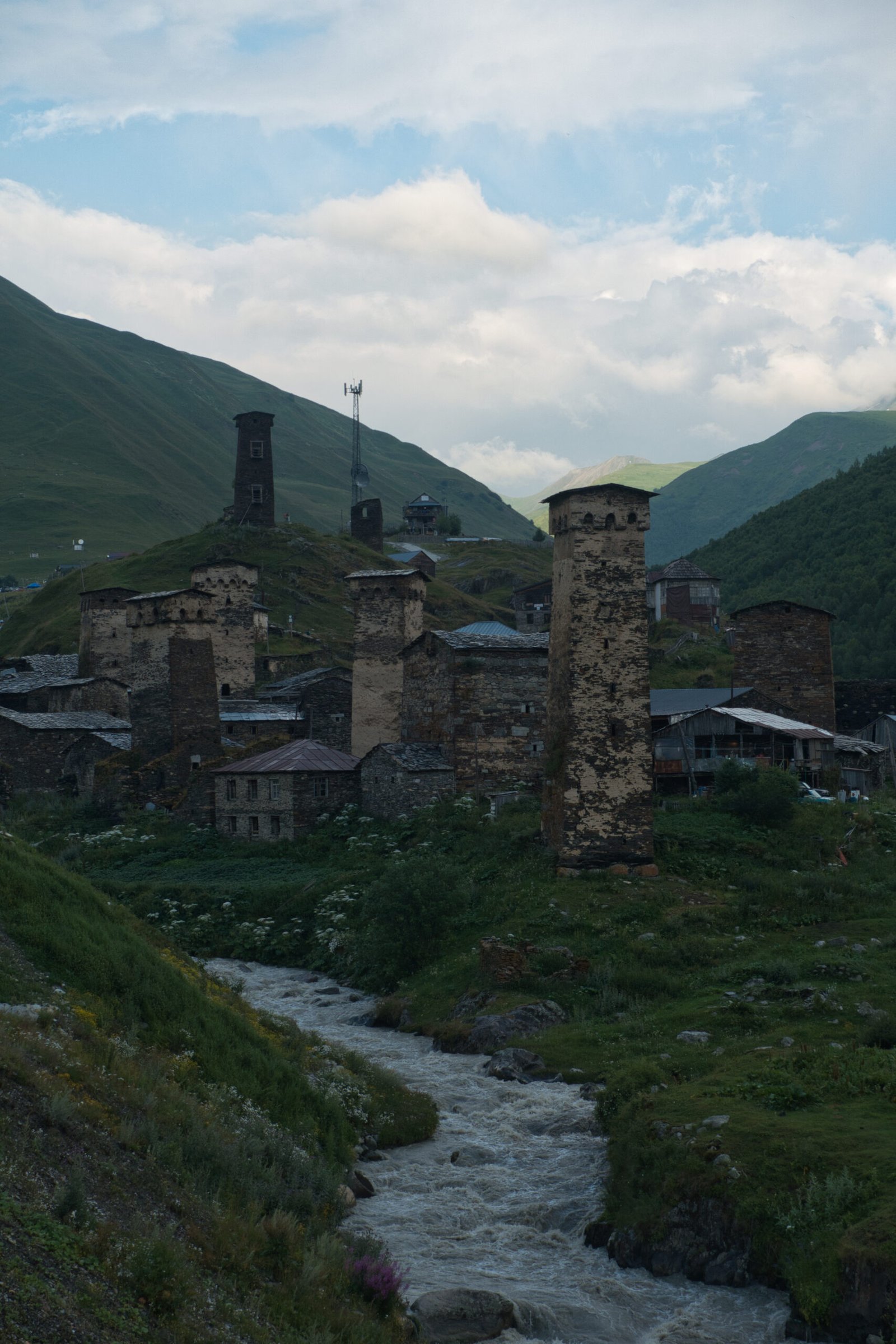
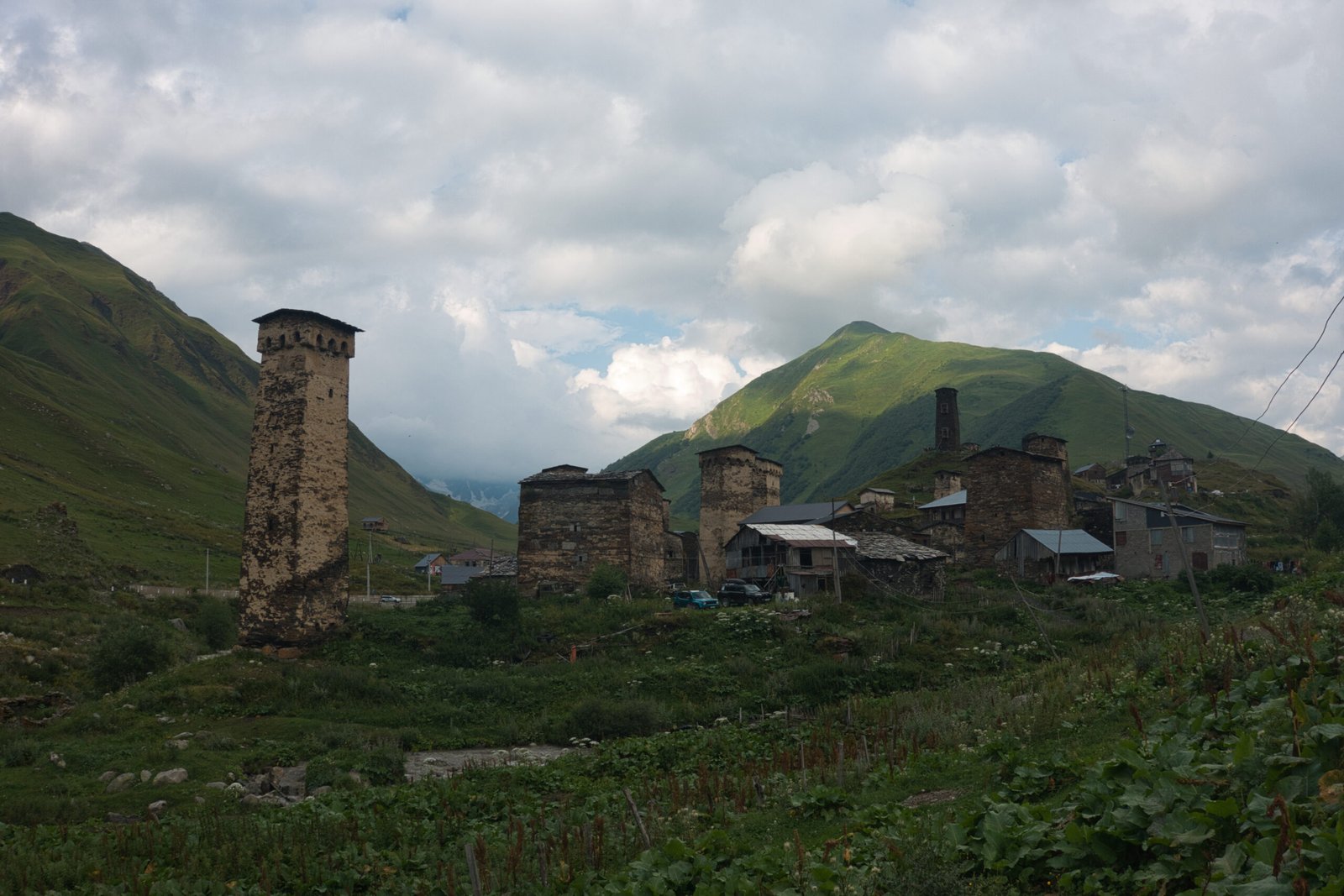
Chazhashi, Ushguli’s most photogenic cluster
It was an extremely loud night at the guesthouse, with a large group crashing in at about 21:00 and not shutting up until 1:00.
Chubedishi Ridge
Thursday, 6 August
Ushguli was one of the major draws for the trip so I planned to have a full day there. The obvious choice for a day hike was Chubedishi Ridge, rising directly above the village. The weather forecast was very promising but reality appeared a little underwhelming as I set out with heavy cloud on the Shkhara Wall. I had an 855m ascent to the primary viewpoint after which I could continue along the ridge for several kilometres before either returning by descending into the valley or backtracking on the ridge.
As I ascended through fields of wildflowers, the cloud was clearly lifting from the wall. By the time I was halfway up, it was almost clear and it seemed a spectacular day was in store.
There was no sign of rain, so I continued along the easy ridge for exceptional views of the Shkhara Wall. I was constantly frustrated by cloud that just wouldn’t quite open, though it did offer some nice dynamic light patterns on the hills below.
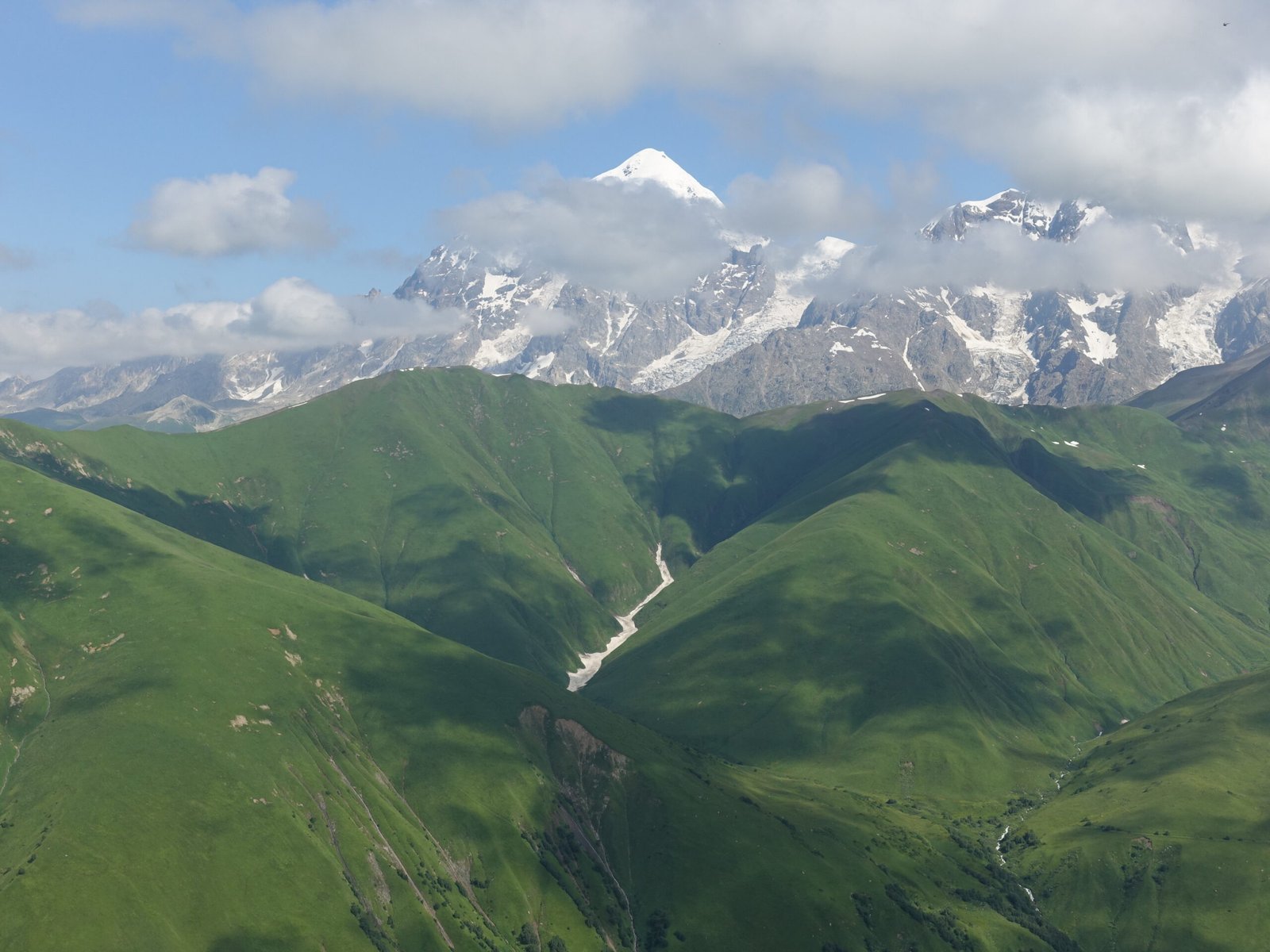
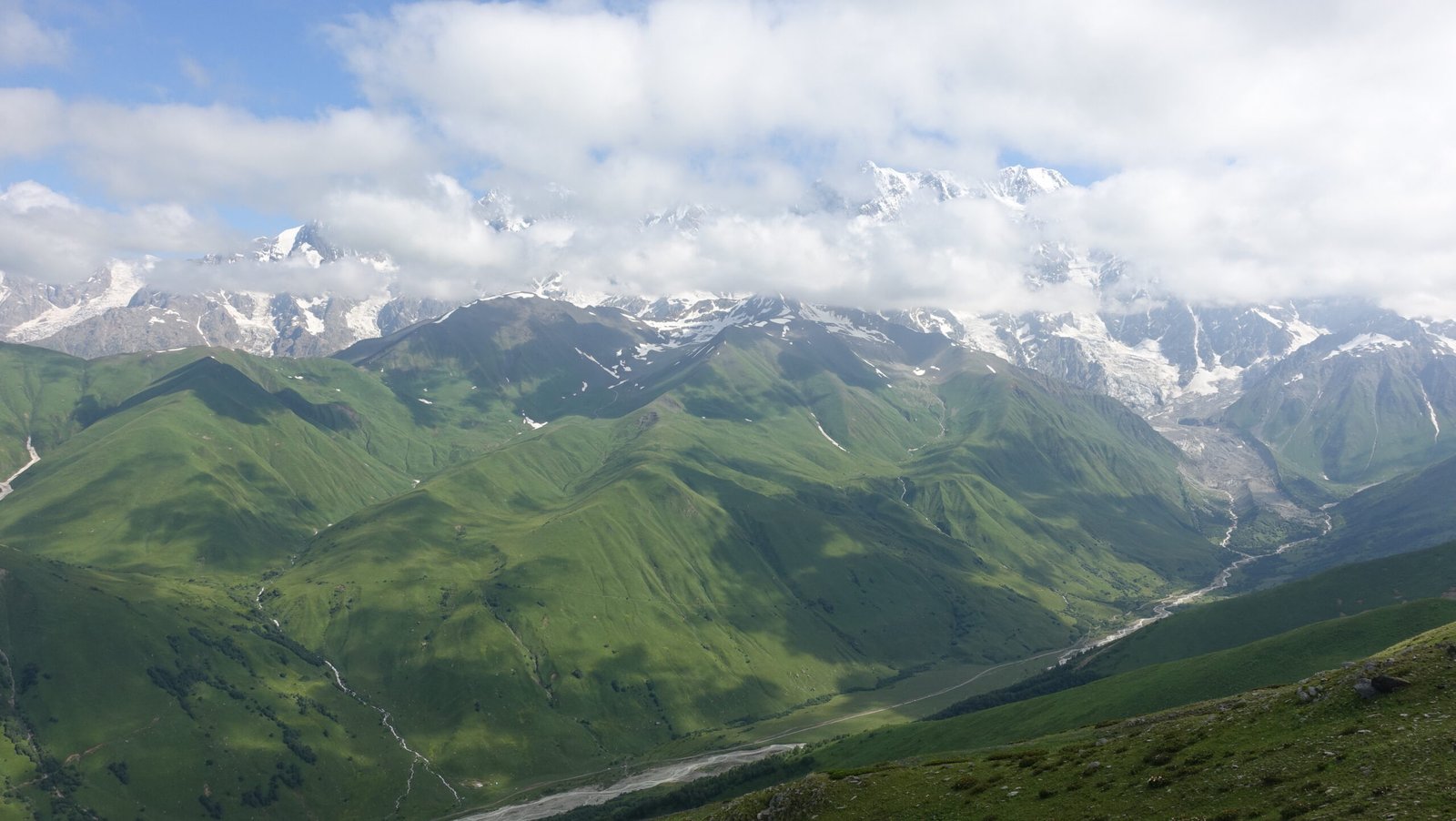
Shkhara Wall and Tetnuldi
I opted to return via the ridge rather than taking the 4×4 track at the bottom of the valley. I had the ridge to myself all morning. but when I got back to the primary viewpoint above town, a bit of a crowd had gathered. Well within reason for such an accessible viewpoint, but I was still happy to be able to walk straight through on my way down.
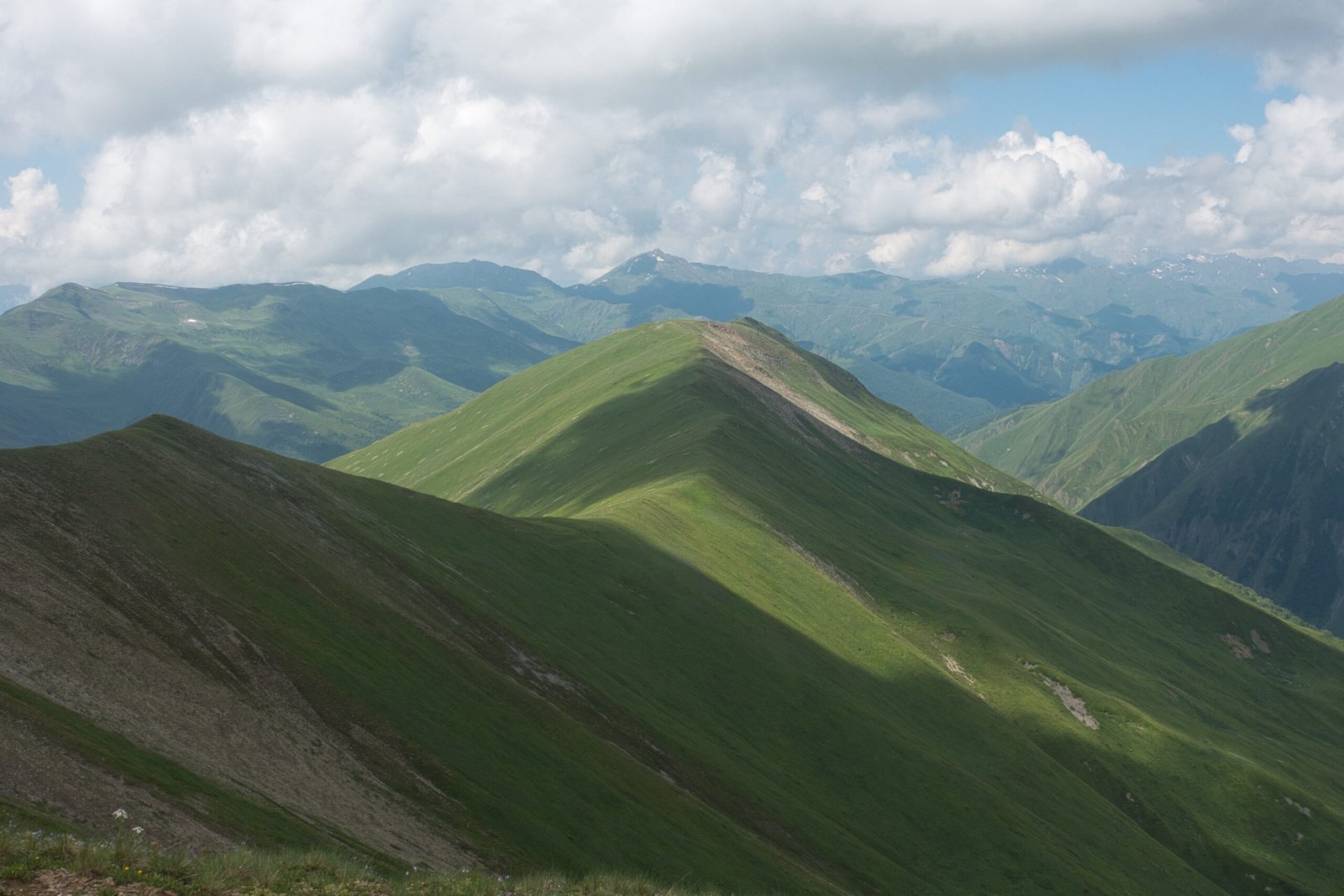
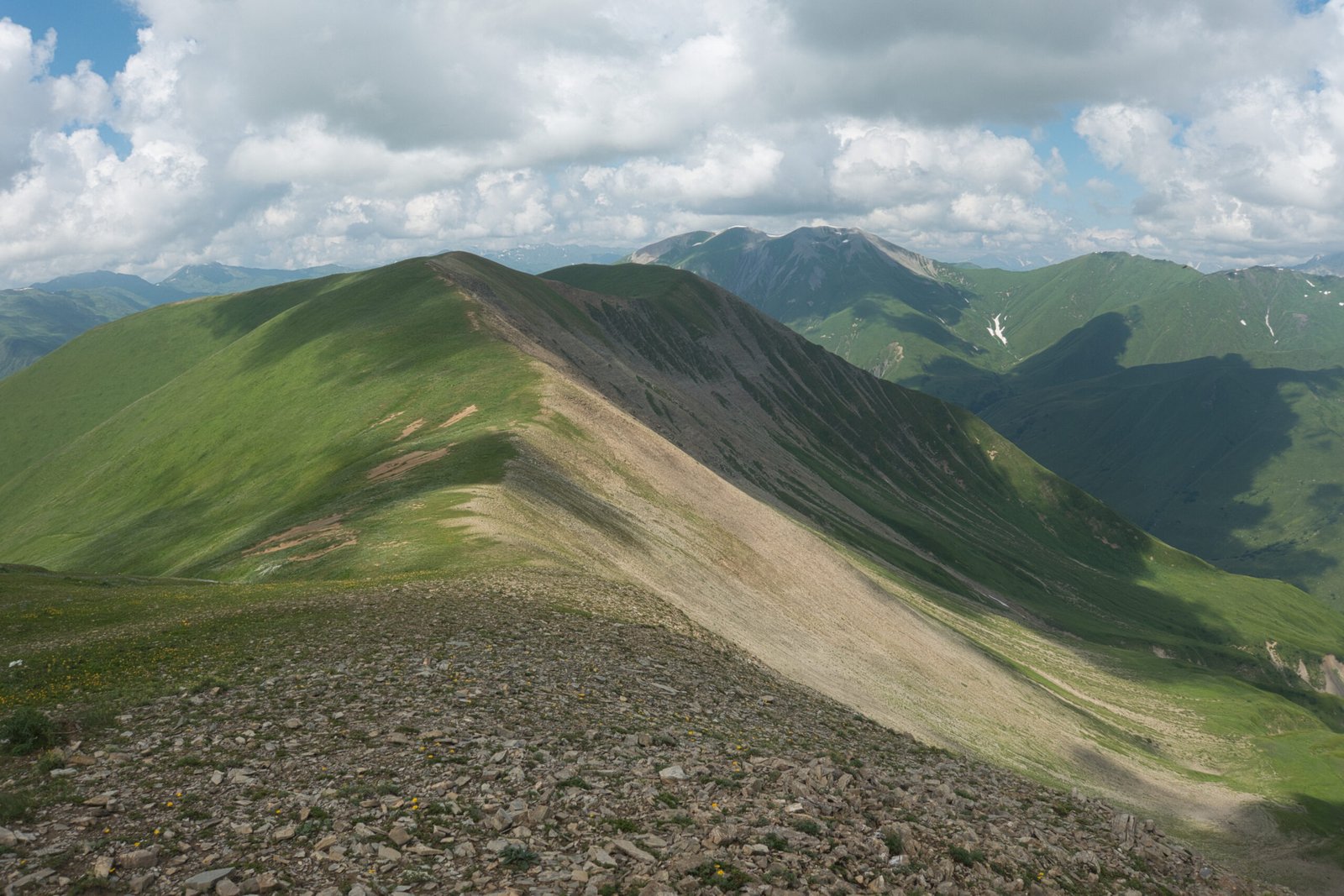
Chubedishi Ridge
Returning to the guesthouse around 14:00, I ordered chicken skewers and a beer. The obligatory rain started as I finished.
It had seemed like the weather was really settling in. But when I popped my head out in the evening, I was surprised to see extremely clear skies! I should have checked earlier.
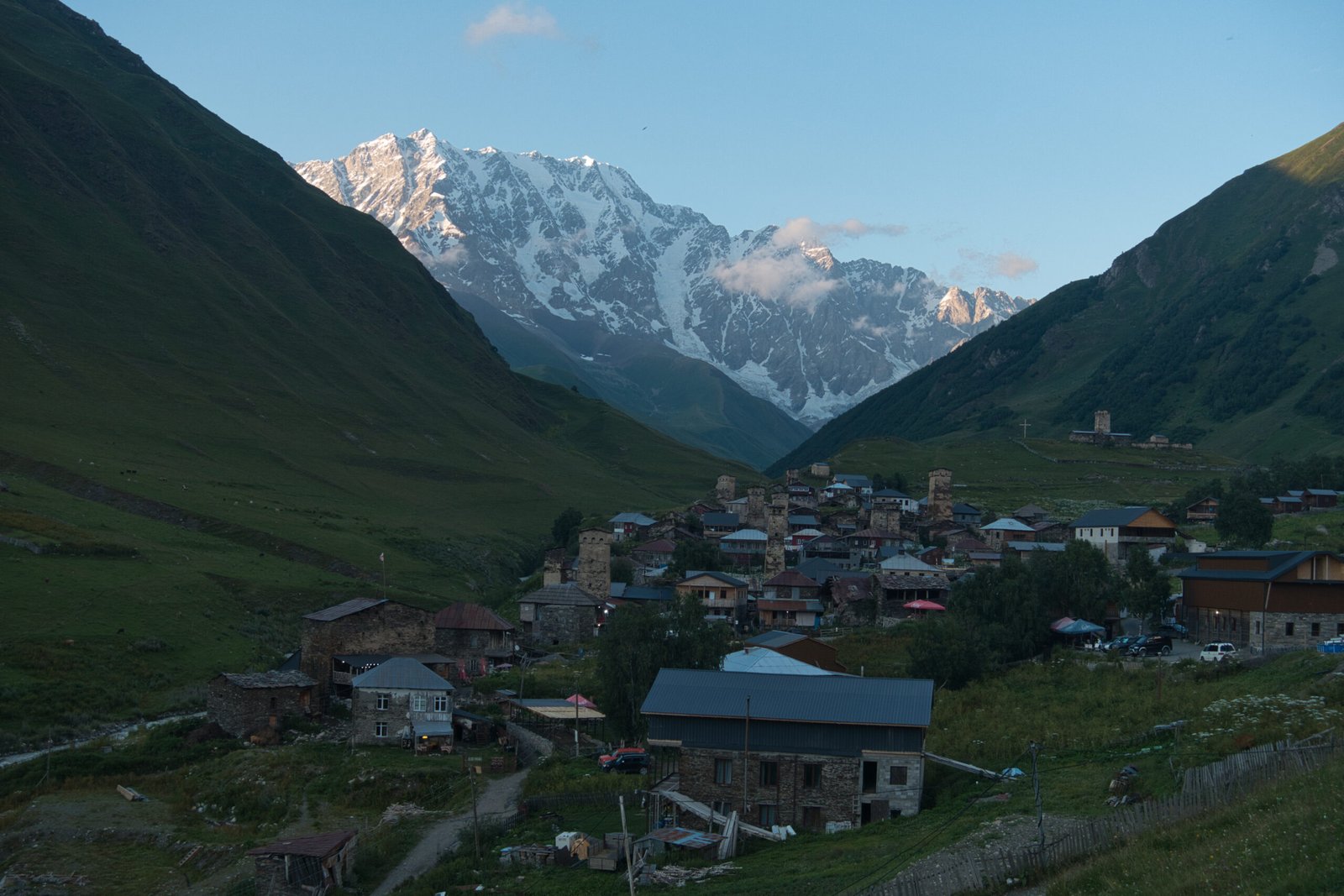
Chvibiani and Zhibianai with Shkhara Wall finally clear in the background
it was another absurdly loud night at the guesthouse. A similar story to the previous night, though this time it was a geriatric tour group staying up far past their bedtime.
Ushguli – Adishi
Friday, 7 August
I started early, about 7:30. I had 22km and 1600m vertical to cover with a potentially very nasty glacial river cross in the final stretch. Because I would reach the river in the afternoon, the crossing would be more difficult, though locals from Adishi do excellent business offering crossings by horseback.
A dog followed me as I started up the track. Not a welcome development, but at least it was friendly enough. It actually seemed to think it was guiding me.
The first pass. Lagem Pass, was the longer of the two climbs, with an ascent of 1018m. The trail was very heavily overgrown, but navigation was never a concern. Views from the top were fantastic, and I did not see anyone else for the entire morning.
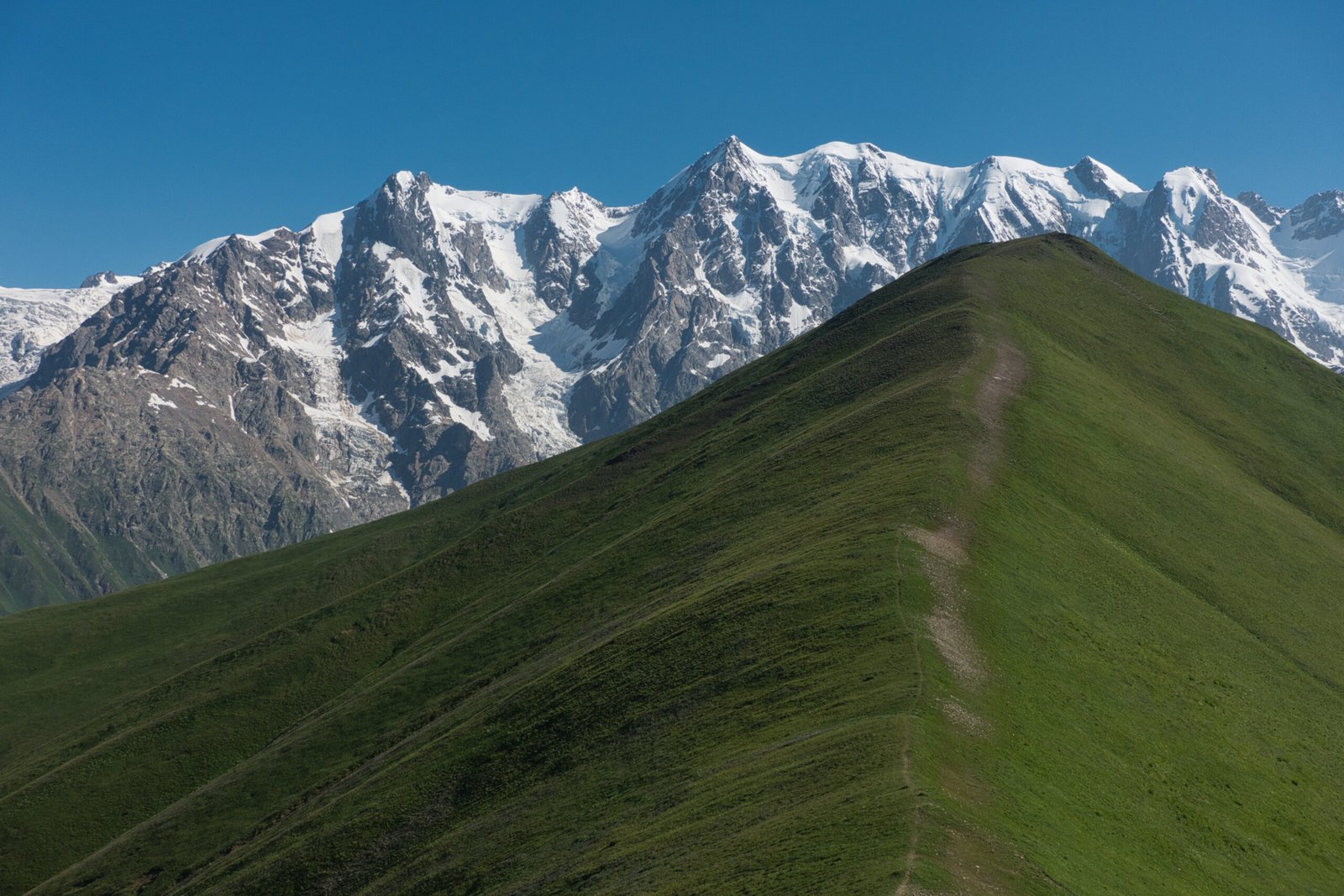
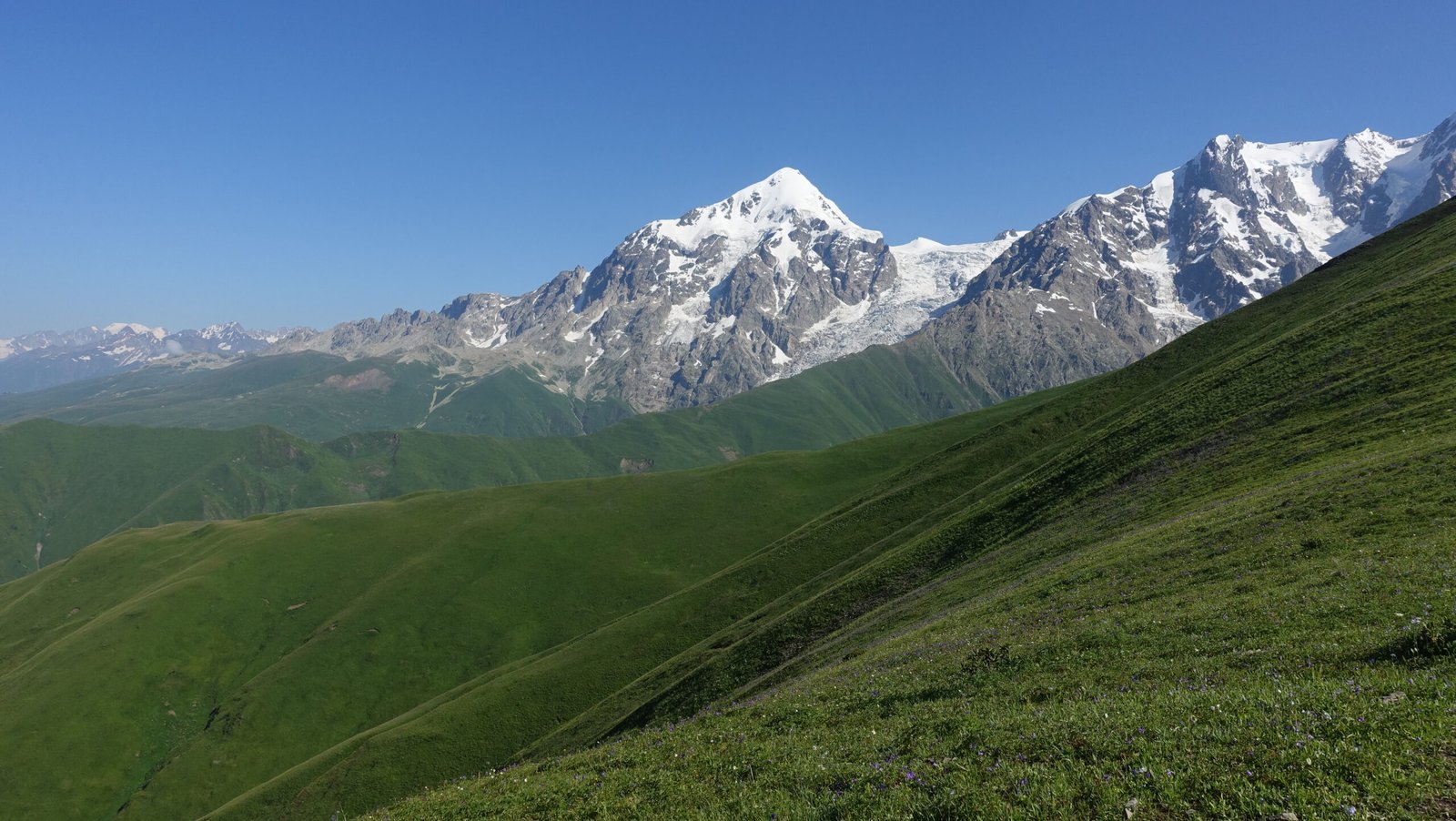
Lagem Pass
I could rarely discern where my feet were landing on the descent due to overgrown trail but it was a quick drop into the valley below.
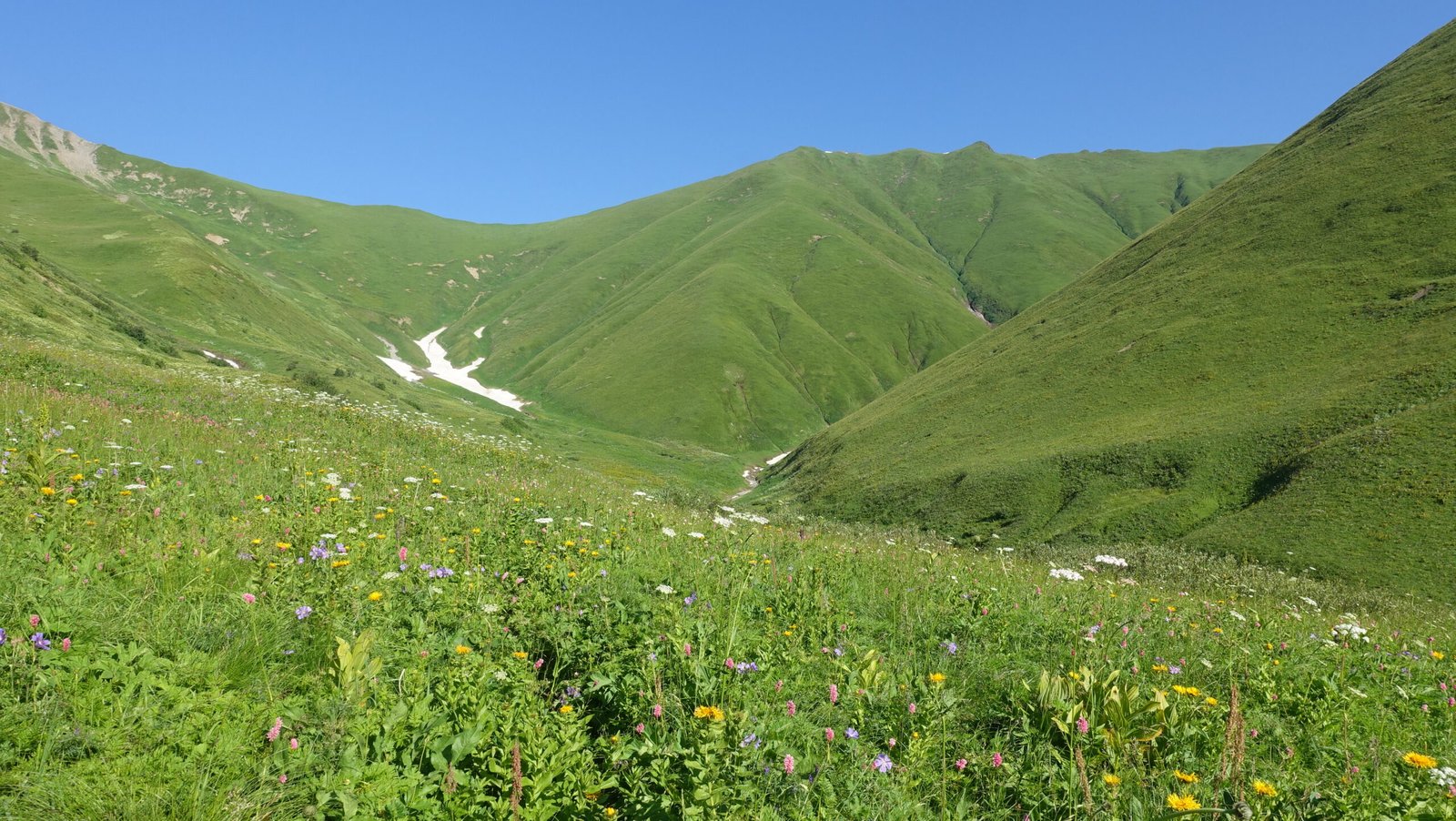
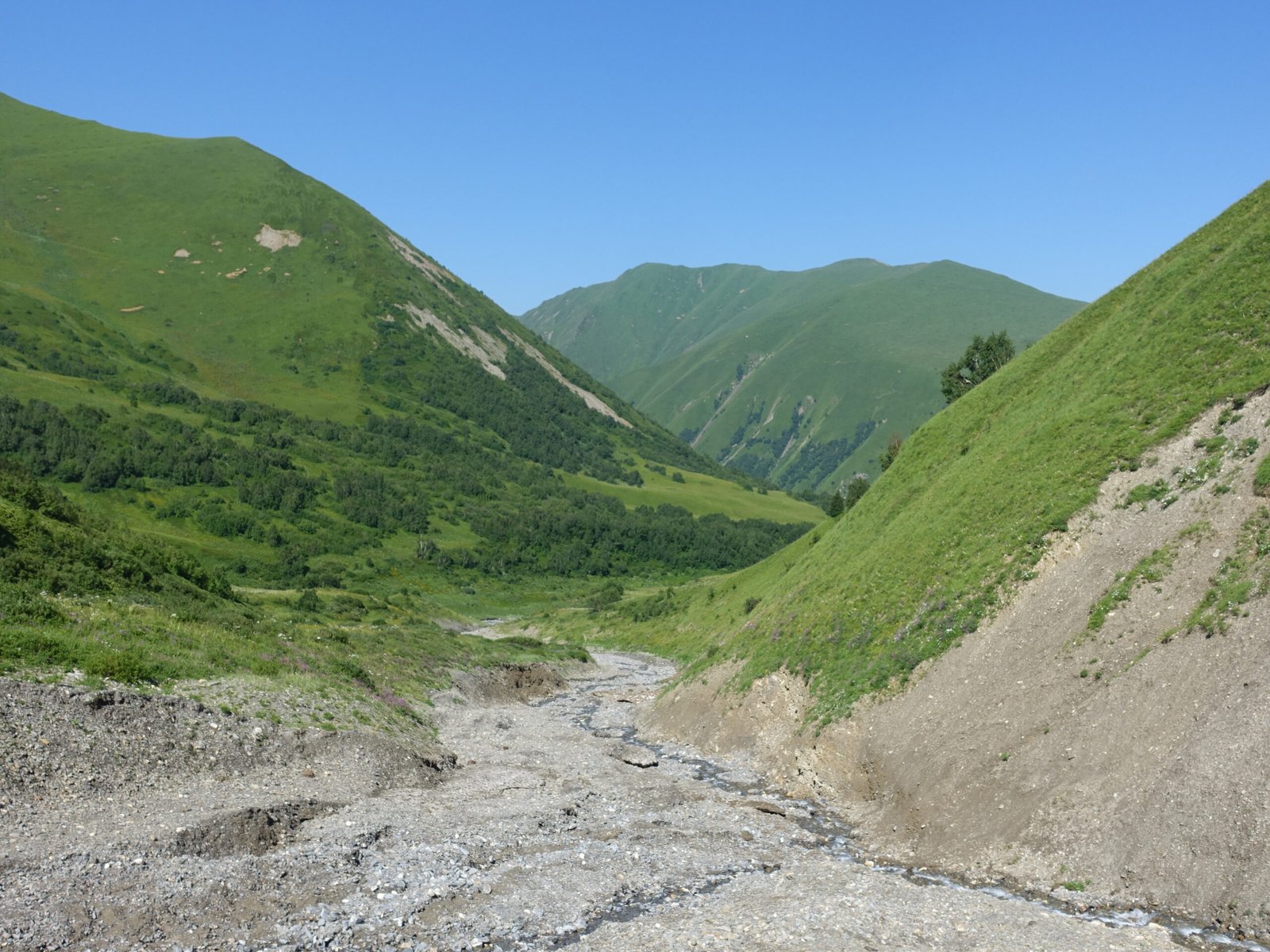
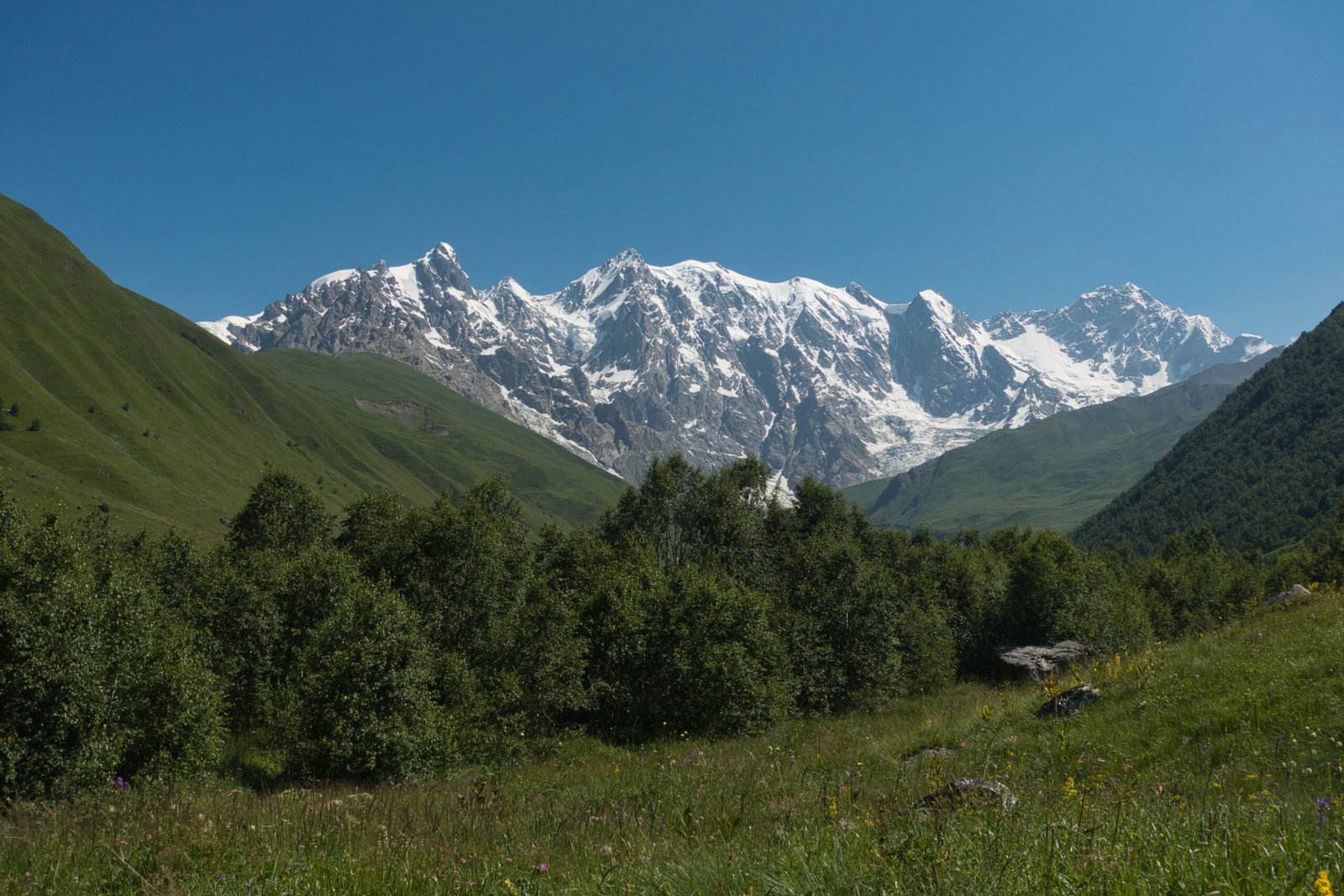
Between the passes
As I approached a small cluster of abandoned shepherd huts at the base of the valley, I finally started to encounter people. Two small groups were headed up Lagem from the other side. That trickle would soon become a flood as I joined with the main track and headed up Chkunderi Pass. From here out, I would be on easy and clearly defined trail.
The top of the pass offers one of the best views of the trek and it was an absolute zoo. I snapped a few photos and headed straight down, constantly having to dodge heavy upward traffic. I probably should have carried on along the ridge before descending, but the crowds were off-putting and I was mildly concerned about what the upcoming river crossing might look like. If I arrived too late in the day, there would be a chance I would not have the backup option of crossing by horse.
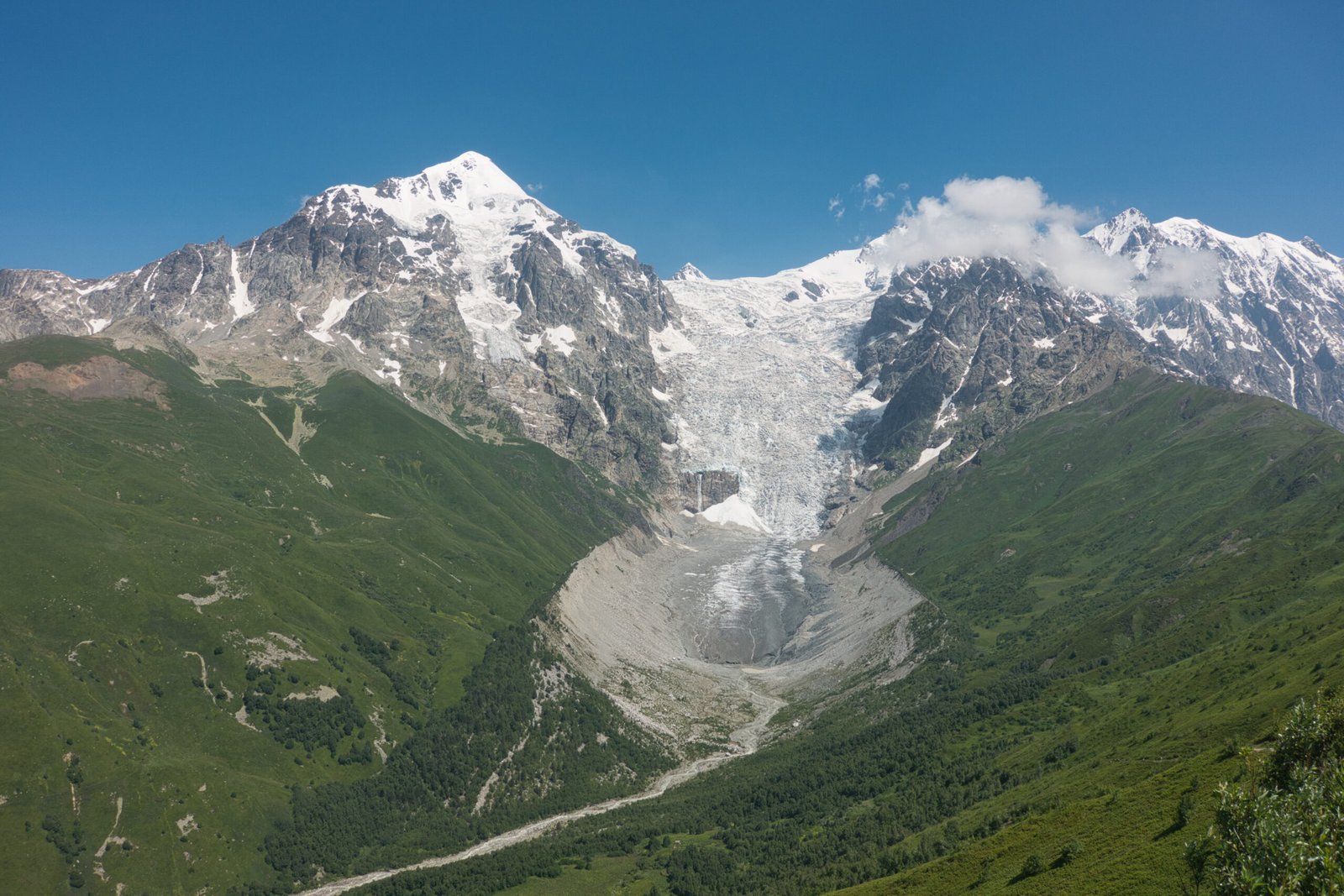
Tetnuldi and Katintayu from Chkunderi Pass
At the bottom of the pass, I arrived at the infamous river crossing. Even before I could see it, it was clear that there were still plenty of people about. I was actually surprised by how many people still appeared to be crossing this late in the day (13:00ish). Regardless, it meant that I would not need to worry about getting across, the horses were still there.
Initial observations of the river were not great. A strong current, depth up to mid-thigh, and sufficiently silty to be unable to see any trace of the bottom. After a bit of scouting, I observed a group crossing by horse in the other direction. I did not like what I saw, the water was up to the horse’s belly and they appeared to be having far from an easy time of it. I opted to cross by horse as well.
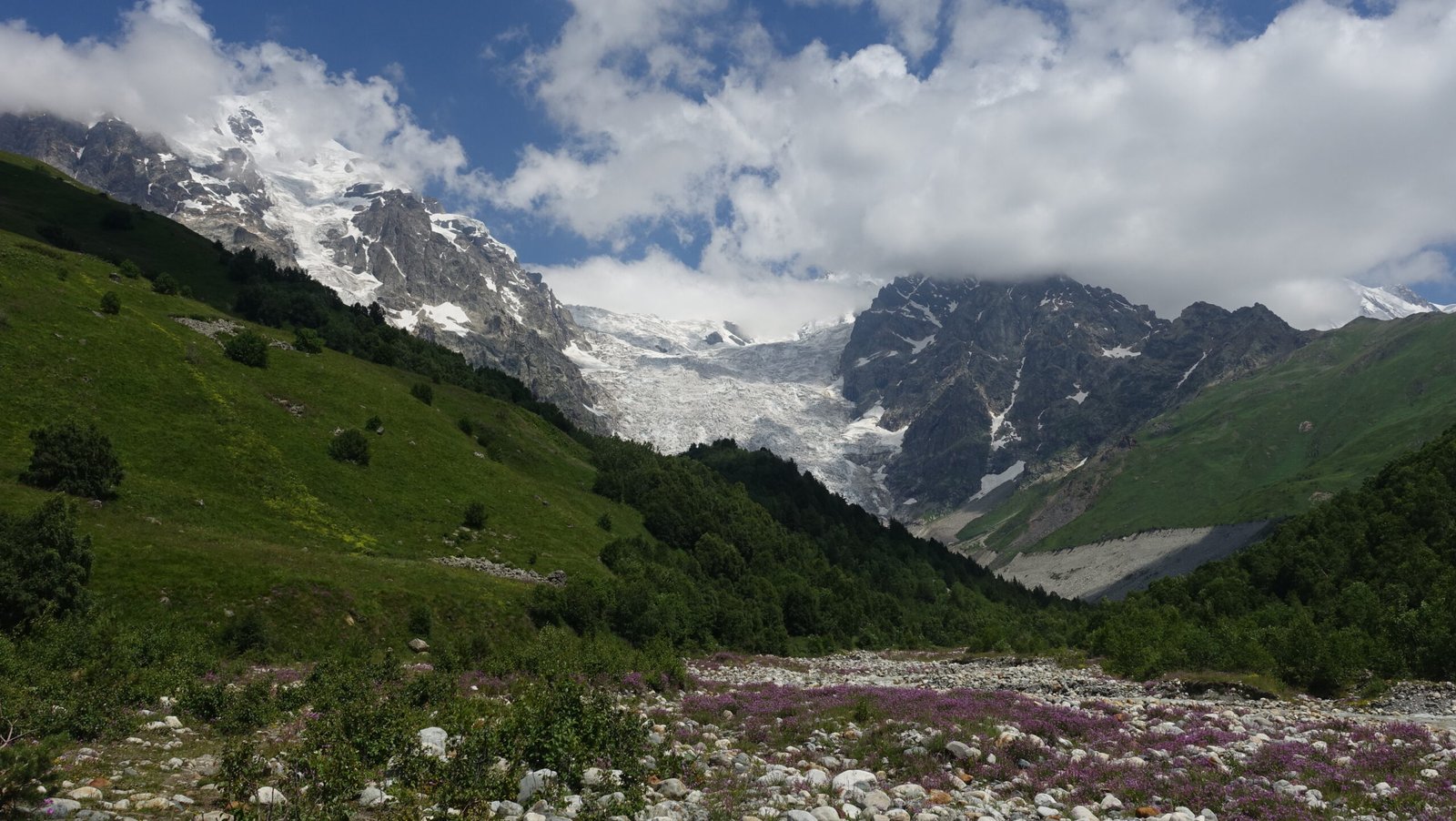
Adishi Glaier and Tetnuldi
The final 5km of the day were uneventful. I was now in a nice valley following the river, but the impressive views of ice walls and glaciers were behind me.
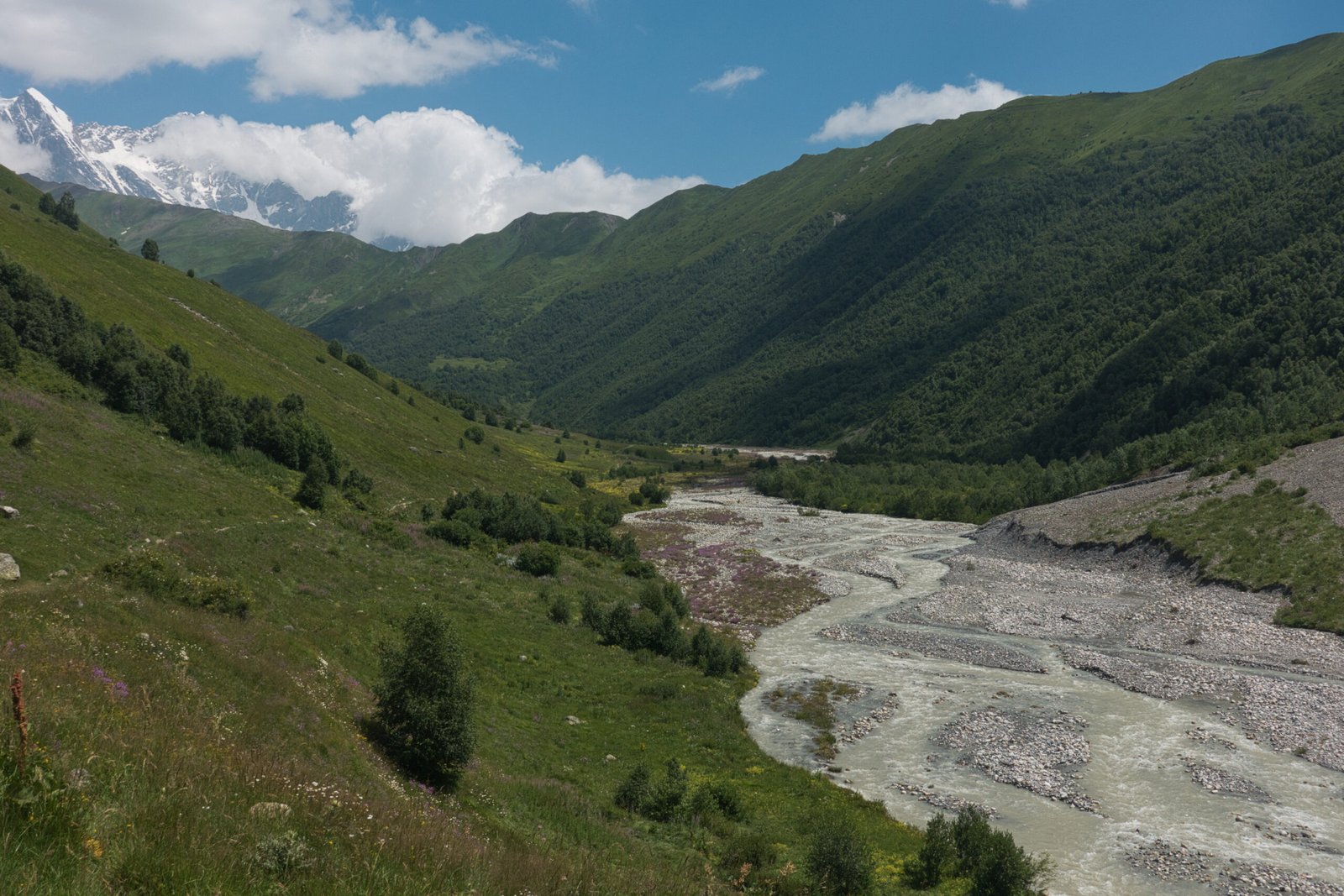
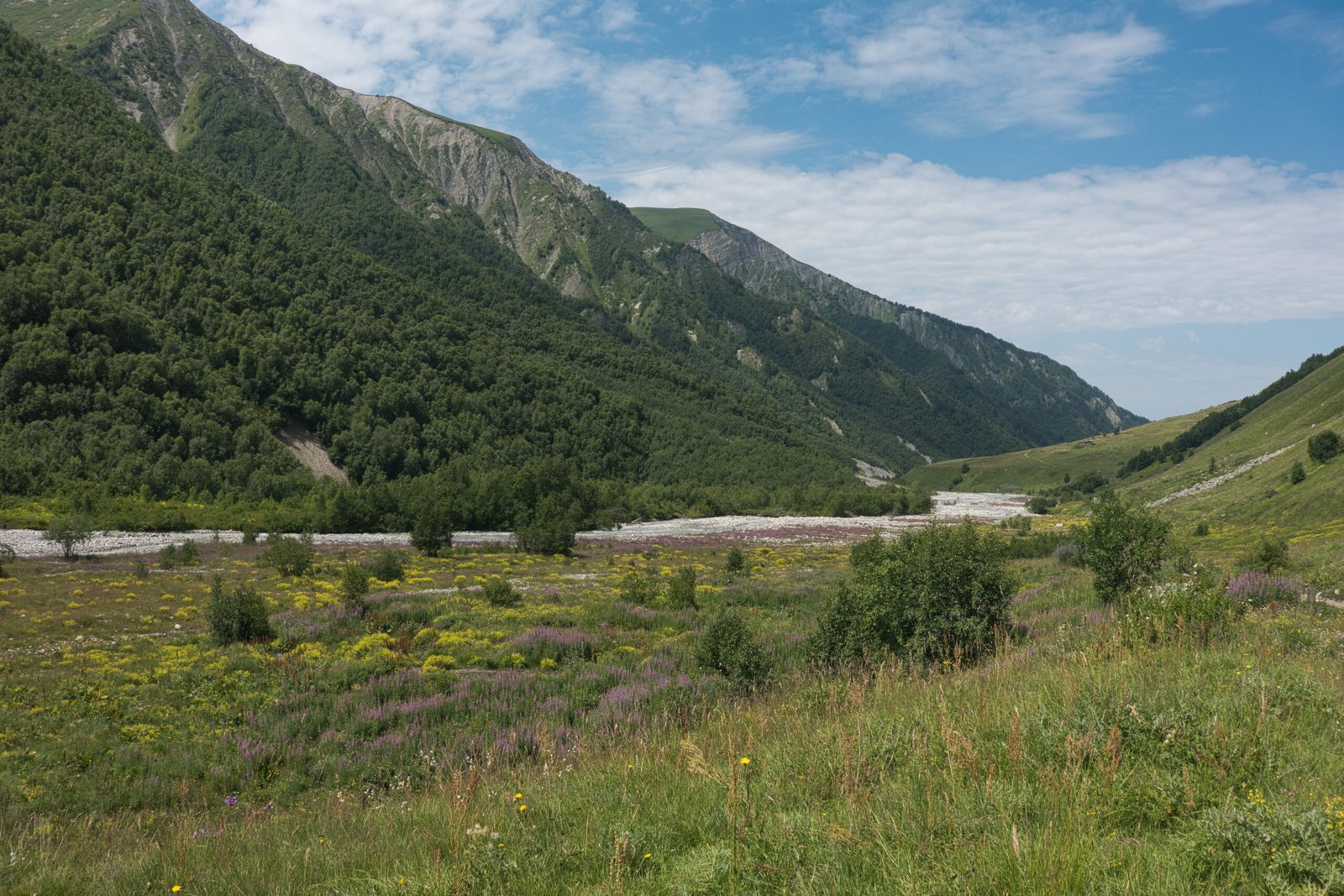
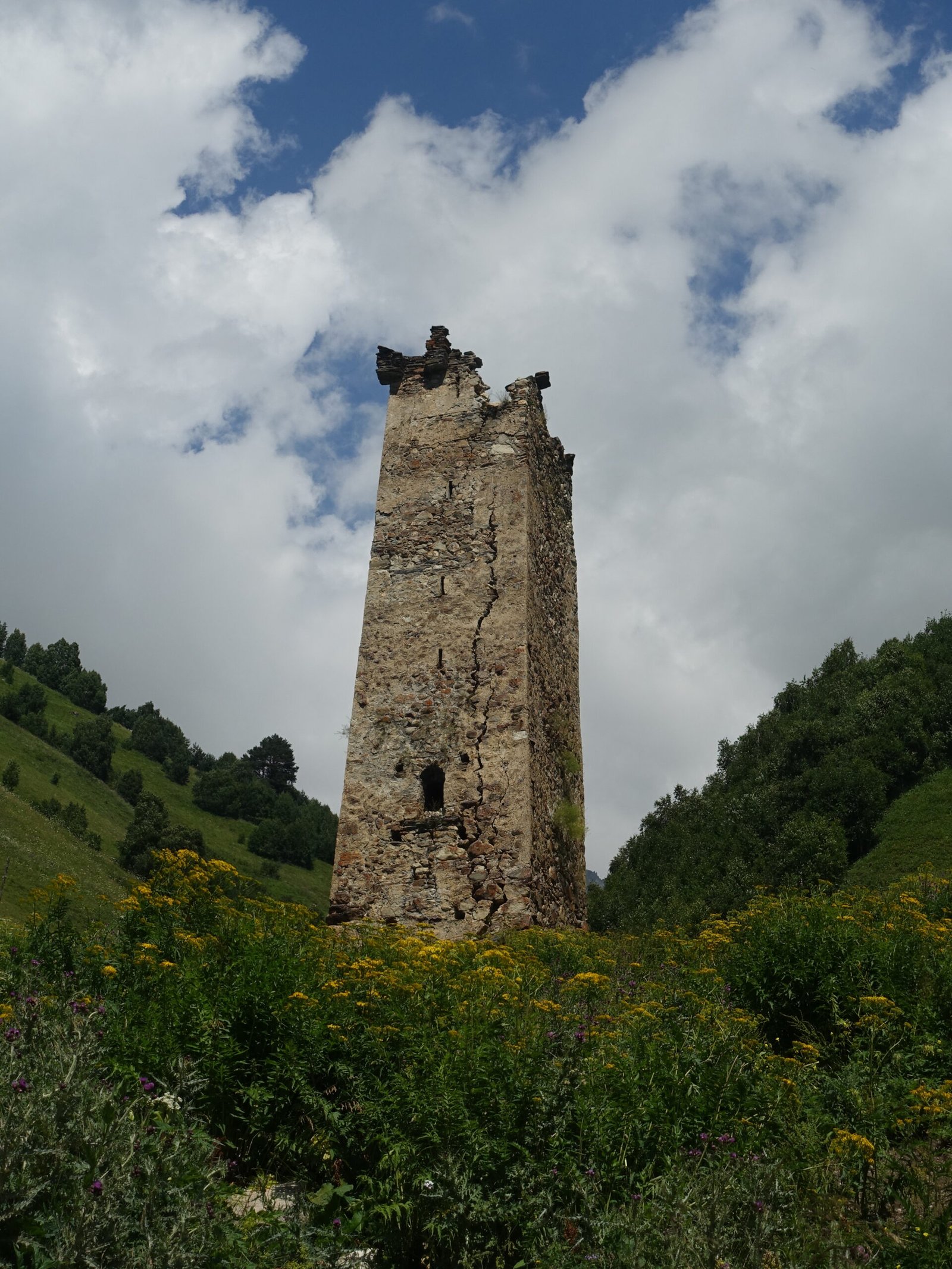
Approaching Adishi
This time, I opted for the dinner option at the guesthouse. A random assortment of homemade Georgian food served to the entire table for everyone staying at the guesthouse.
Fortunately, this guesthouse was quieter; definitely within acceptable bounds for such accommodation.
Adishi
Saturday, 8 August
There isn’t all that much to do in Adishi. I probably would have been better off continuing back to Mestia. The thought process during planning was that Adishi is a cool village that I want to be sure to be able to properly see, and staying there a second night would offer another crack at Adishi Glacier in case of poor weather, or as a reserve if I got stuck at the river crossing.
I had a relaxed morning before heading back to the river crossing. I wanted to see how much of a difference there was in morning water levels. It looked doable but it was still a definite risk. Almost everyone was still crossing by horse and the few that did attempt to ford typically ended up pretty wet. One gentleman ended up with a nasty arm injury requiring extraction back to town by horse. The rescue team celebrated the fact that it was only an arm injury with chacha back in Adishi, inadvertently joined by a German from my guesthouse.
My intent was to then continue upstream to the base of the glacier. It was immediately apparent that this idea would require significant wading through knee-high grass and stinging nettles. I quickly changed my mind and headed back to Adishi – there really wasn’t much to be gained by pushing on regardless.
Not the most interesting of days, but there is nothing wrong with doing a bit of reading in the sun.
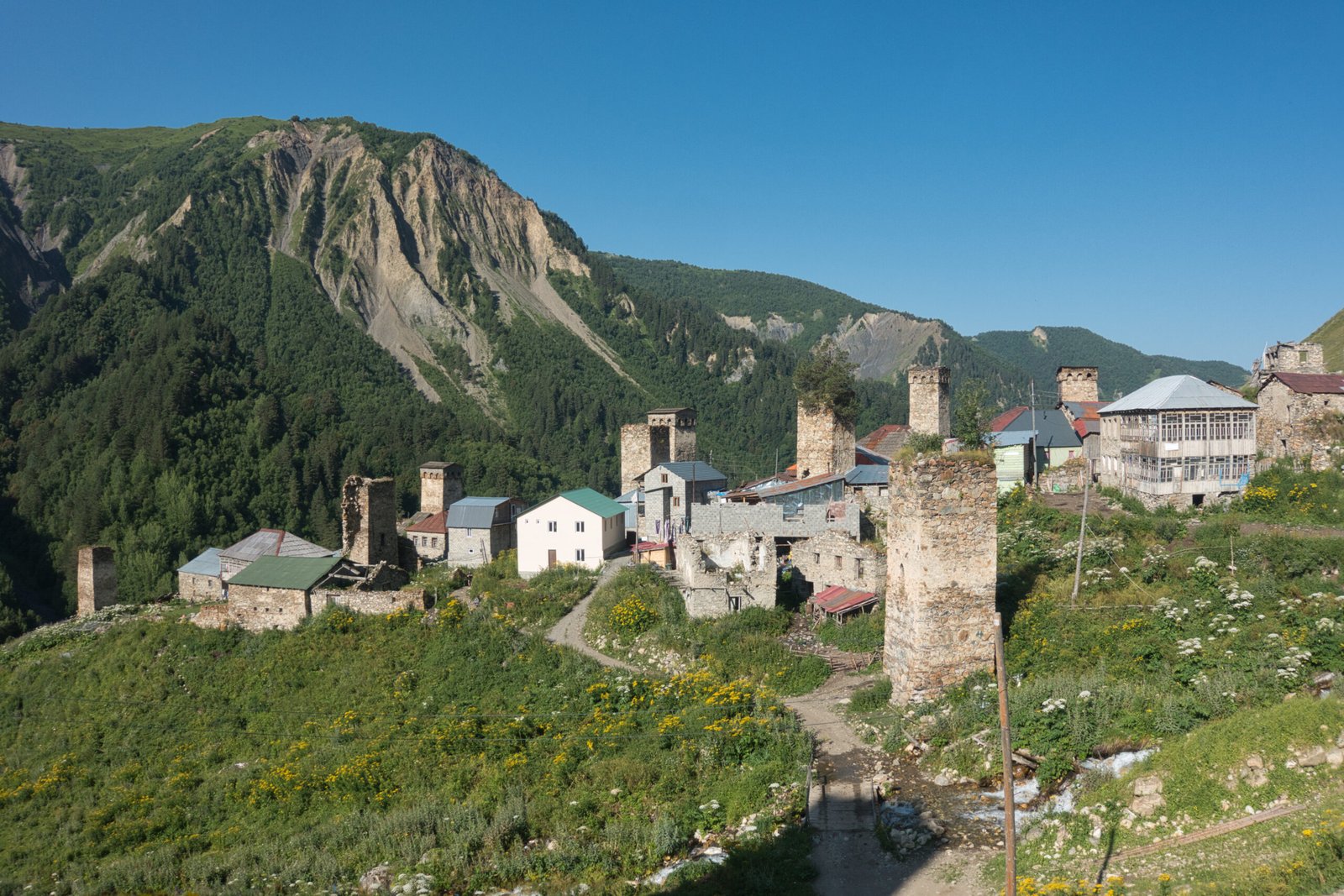
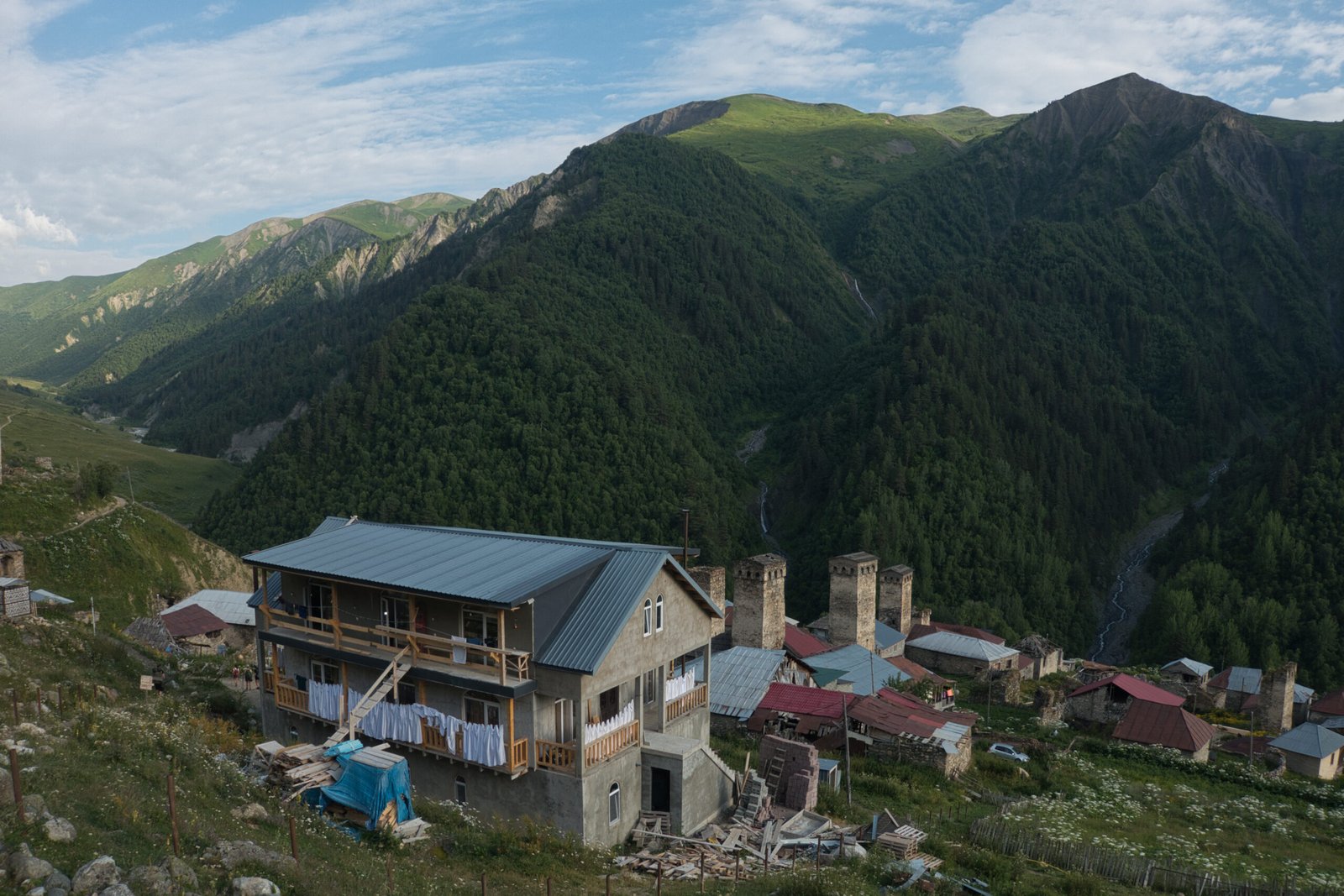
Adishi in the morning
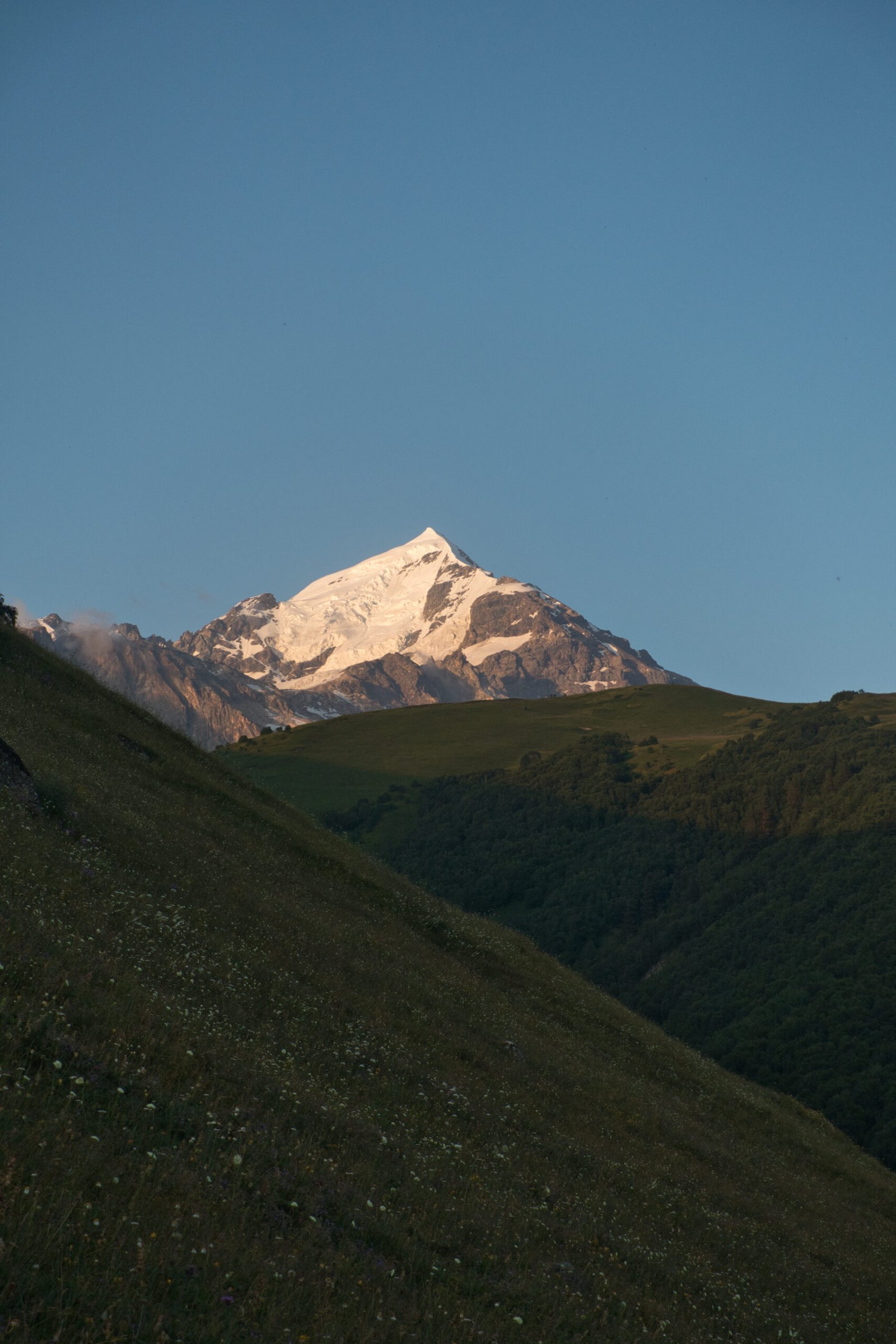
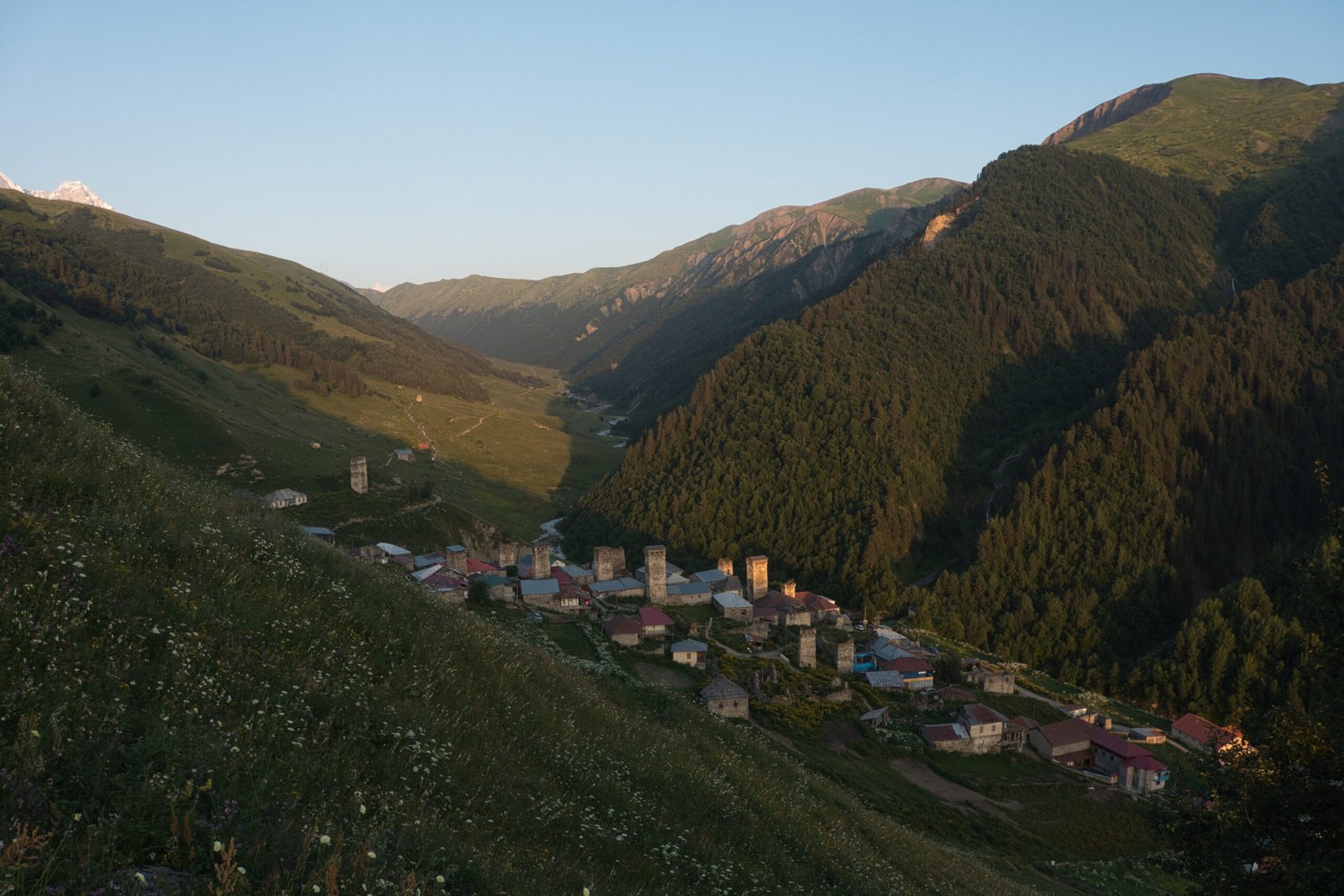
Evening views from a little cafe above Adishi
Adishi – Mestia
Sunday, 9 August
The weather forecast for my final day of hiking was pretty dire. But when had the forecasts been correct thus far on the trip.
It was warm, humid, and overcast, but not overly threatening as I started out. The trail was smooth and not particularly exciting, the primary views were behind me at this point. I passed Tetnuldi Ski Resort before descending into the valley. The valley’s villages were interesting in their own way, and a significant improvement over the ski resort, but that is just not my kind of trek. It didn’t help that the oncoming crowds were beginning to thicken. By the time I was exiting the valley, it was a flood.
I witnessed some absolutely diabolical outdoor behaviour on this section. Never in my life have I seen anything like it.
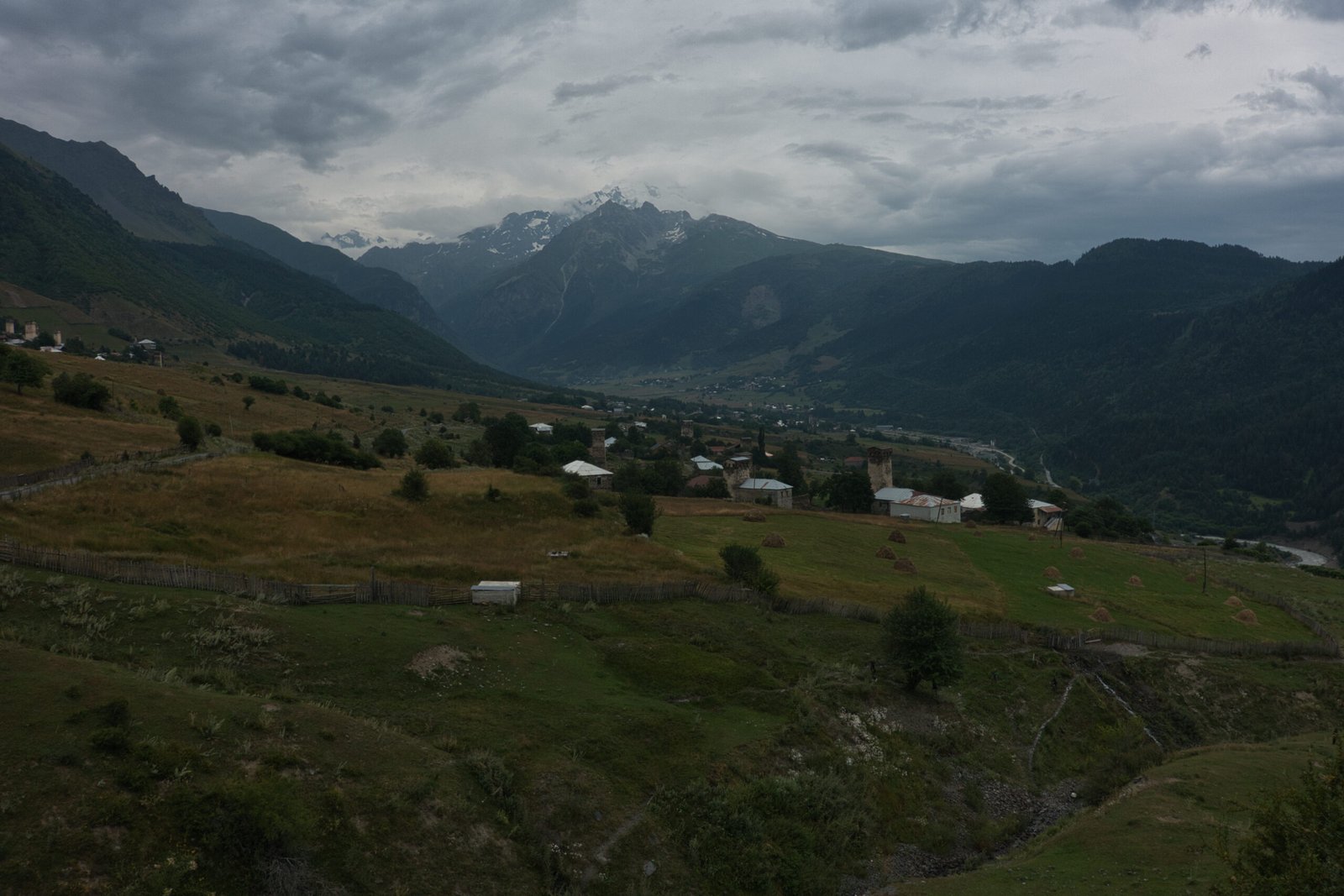
Dreary weather starting to lift
I arrived back in Mestia around 13:30. It actually seemed to be turning into a pleasant afternoon. So much for the forecasted 10mm+ of rain, I guess.
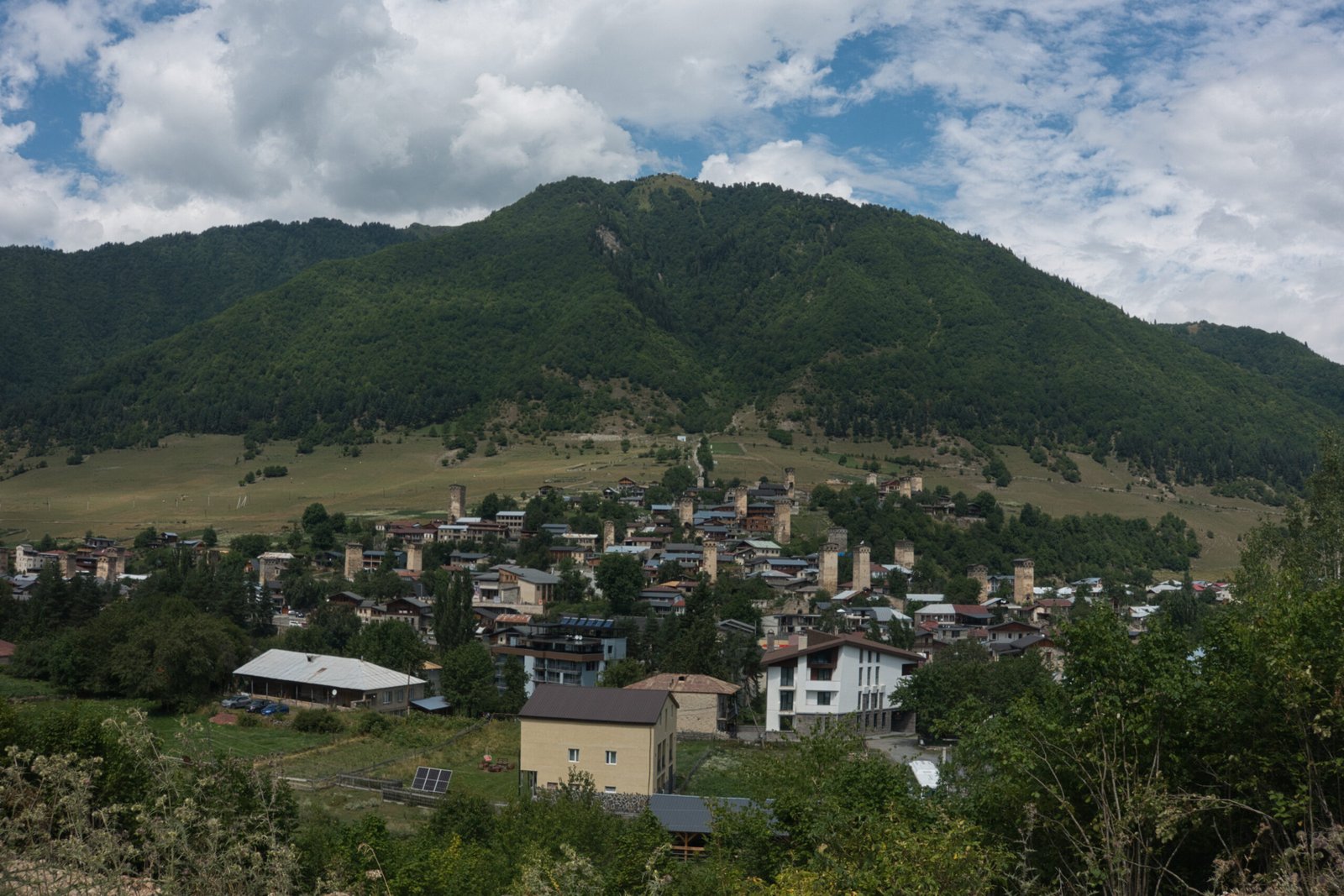
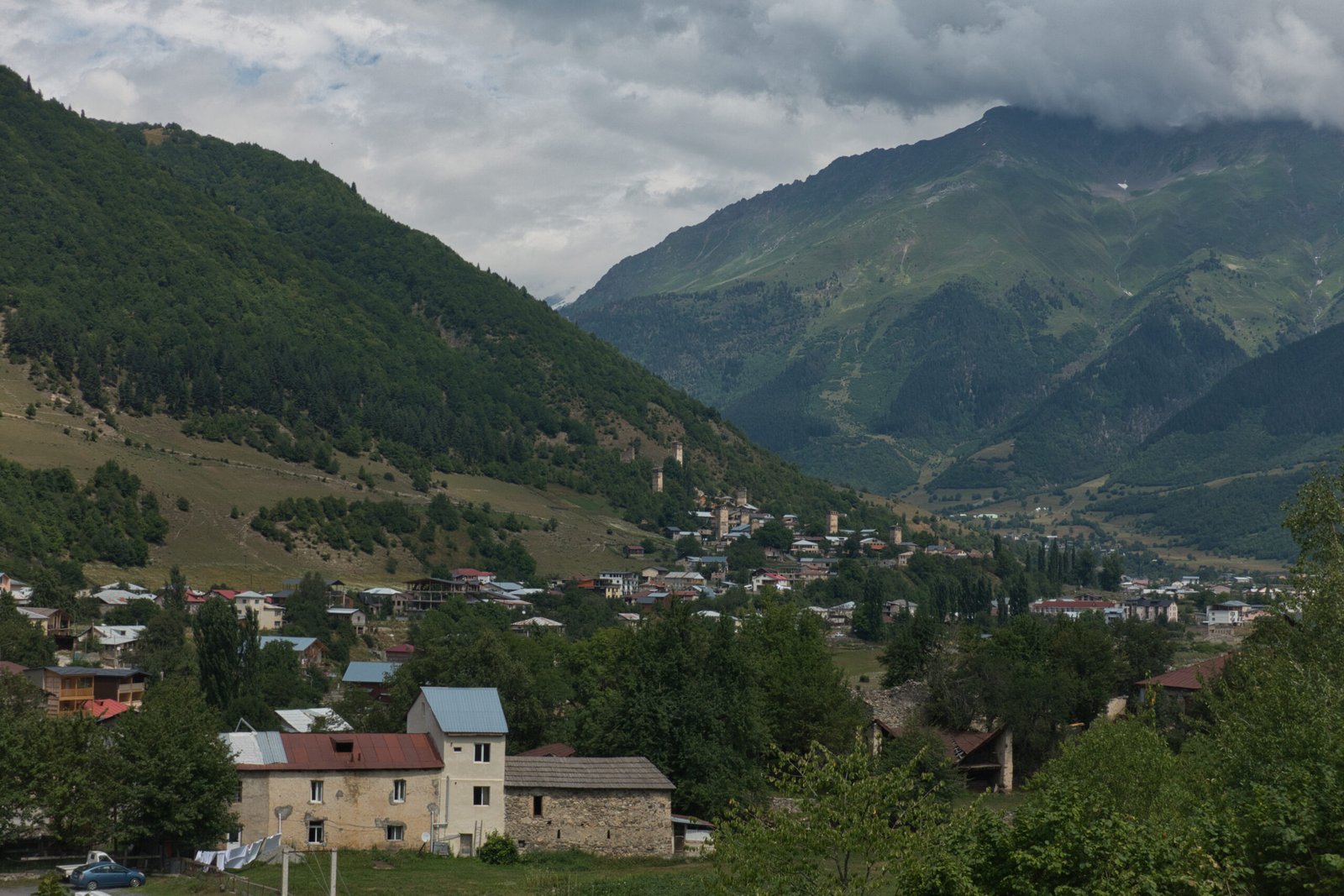
Arriving back in Mestia as the skies clear
The storm hit at dinner. I was happy to watch it from the Mestia balcony knowing I had nowhere to be.
A large group arrived at the guesthouse late in the evening and continued to be loud deep into the morning. Another night of no sleep.
Mestia
Monday, 10 August
During planning, I had been very enthusiastic about the day’s objective: a ridge above Mazeri Pass offering one of the finest views in the Caucasus. But between the poor sleep, poor weather forecast, and recent miles, I was not enthusiastic to get out on the day. Nonetheless, I set out in midmorning. There were a few lesser objectives along the way, the primary one being the ‘Cross Above Mestia’, a viewpoint that can either be driven to via a rough and circuitous dirt road or hiked via a direct and extremely eroded trail.
Reaching the cross, about half the vertical distance to the ridge, much less than half the horizontal, I had plenty of energy, but was feeling very negative about the route. The excessive heat and humidity was bad, but I was also not thrilled with the atmosphere: boisterous cafes were clustered around the hilltop and until the final scramble, the ‘trail’ I would need to follow was a road packed with large groups of walkers and regularly clogged by dust thrown up by marshrutkas. I opted to call it a day. The clouds were clearly already closing in regardless, with Ushba’s dual peaks already mostly concealed.
Perhaps I should have pursued on of Mestia’s other hikes, there are several options offering more solitude. Unfortunately, none of them are easily accessible directly from town. A taxi is required (or lengthy and unpleasant walk-in). One of the primary web sources for hiking in Georgia claims that Mestia’s hiking is vastly superior to Ushguli’s; I could not disagree more.
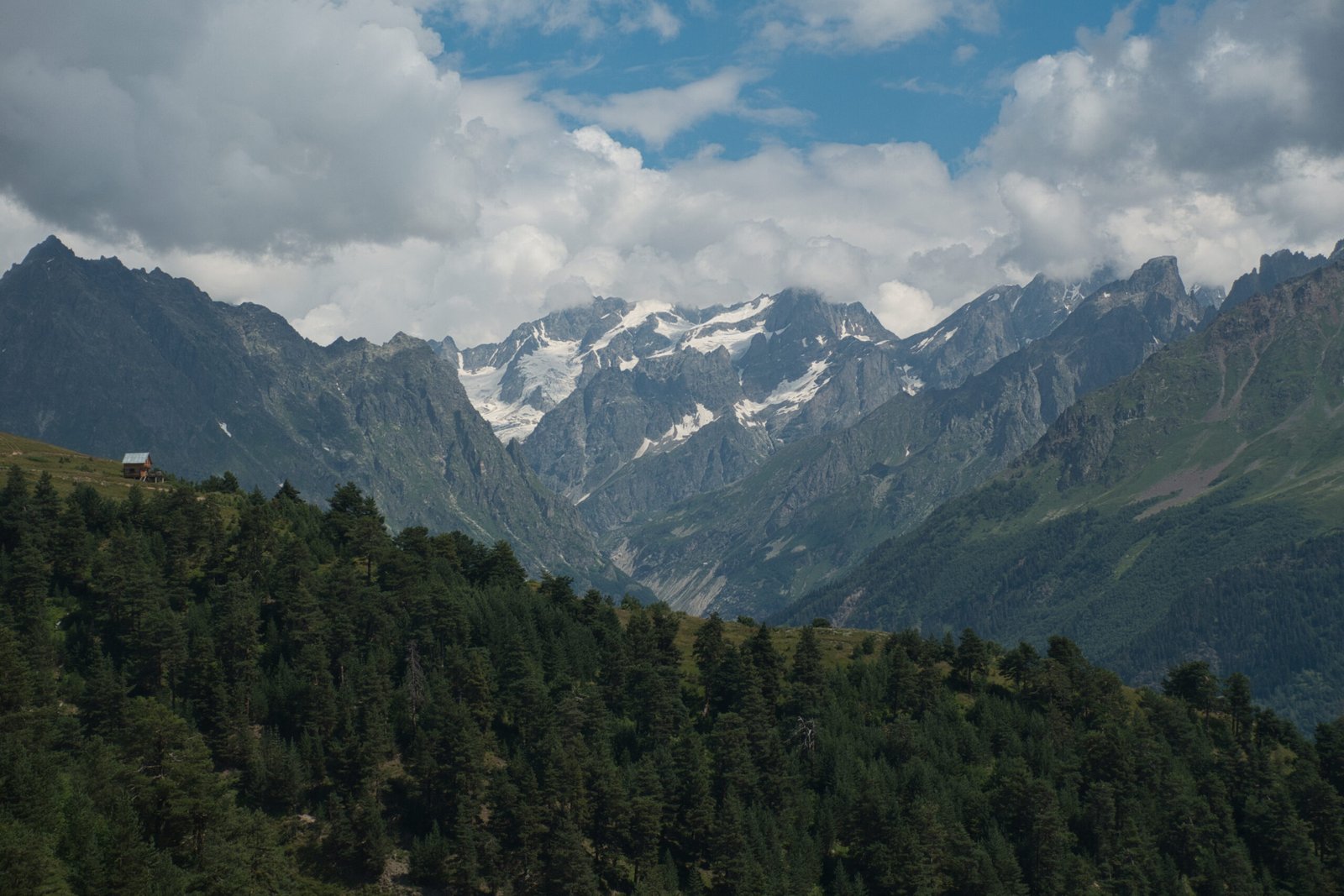
Ullutau-Chana
The rain arrived in the early evening. Another day, another thunderstorm.
The noisy guests were still at the guesthouse, so yet another night of no sleep.
Tbilisi
Tuesday, 11 – Thursday. 13 August
Without domestic flight tickets, it was another 9hour overland journey back to Tbilisi. Georgian roads remain terrifying.
Approaching Stalin’s hometown, Gori, the hills were spectacularly lit-up with ominous clouds seemingly closing in from all directions over abandoned and crumbling industrial parks. JaggedGlobe reported that their Kazbek team was back in Tbilisi after moving their summit day forward due to ‘a significant incoming weather event’. They must have access to better forecasts than me, because wow were they spot-on. Absolutely torrential rain, much more intense than the intense storms of previous evenings, hit shortly after.
AirBnB babushka welcomed me with a bottle of wine and fresh Khachapuri.
Tbilisi is a fascinating city: nice verticality, with both near-eastern and western styling very apparent, coupled with Soviet brutalism and tenements, all punctuated with the odd ultra-modern glass and steel monstrosity thrown in for good measure. Unpleasant conditions limited my time out though. 30C with 65% humidity meant it was just so much more tolerable to be inside. Unfortunately, many of the best views were also blocked by scaffolding and cranes. Most worryingly, it appears that the most iconic Tbilisi view is being permanently eliminated by the construction of an ugly new hotel.
The highly rated National Museum was a bit of a disappointment. I really enjoyed a large collection of coins dating back to about 1000BCE and spanning numerous empires in the Current Era (Roman, Byzantine, Sassanid, Ottoman, Russian, and Soviet, to name just a few). Otherwise, the Georgian Golden Age was largely represented by a collection of impressive but random ‘treasures’ (jewellery, orthodox art, etc), before we jumped multiple centuries to an underwhelming exhibit on Soviet occupation.
I should have at least gotten out to Mtskheta, the ancient Georgian capital. If I were to replay the trip, I would perhaps have booked a day-trip out of town for the full day. Sighnaghi, or Gori being the main options (Kazbegi also possible but a day would be a bit insulting). I’m never keen on packaged day-outings, but they do have their place. Other than Mtskheta, the only viable option to get out of town is to hire a private car.
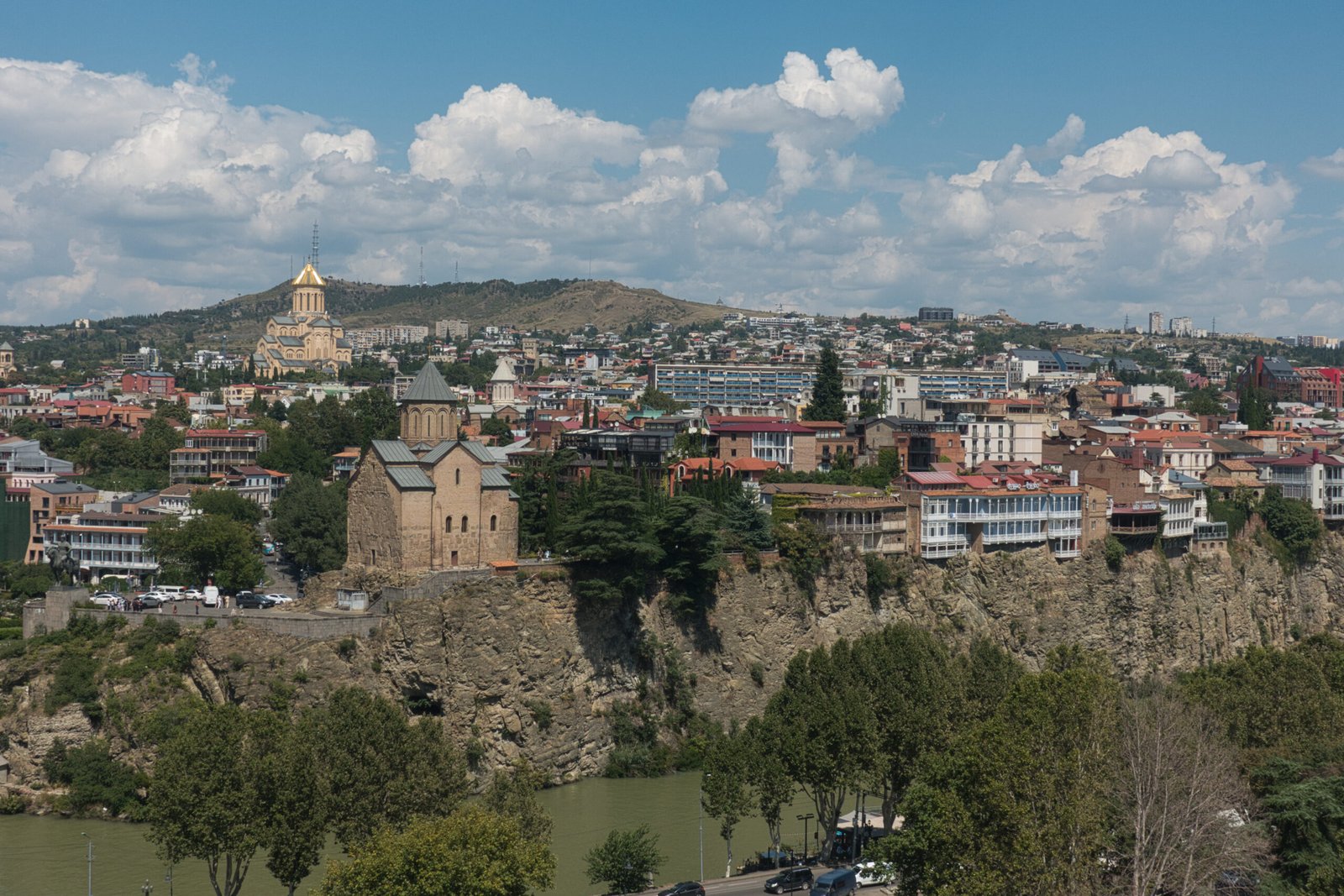
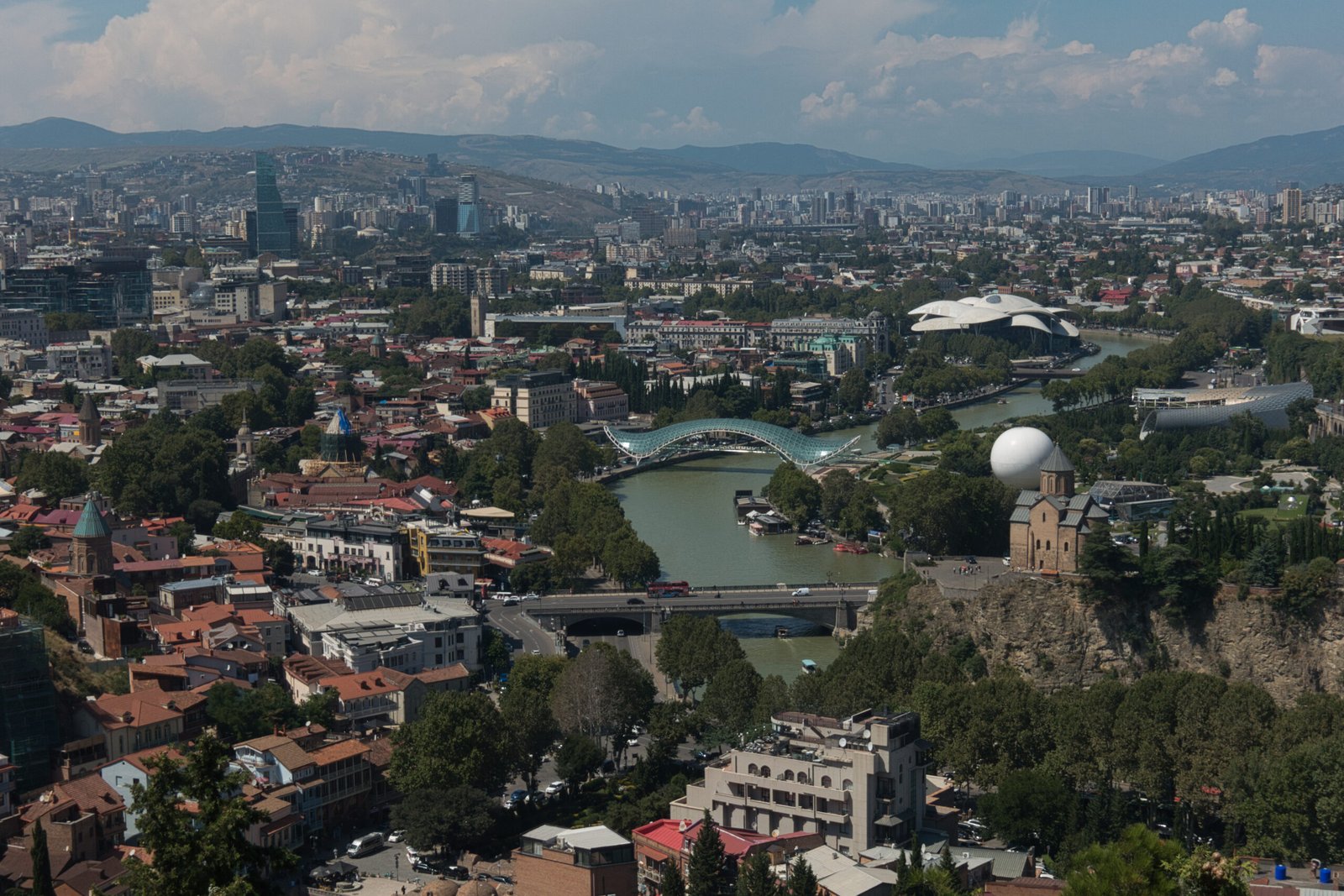
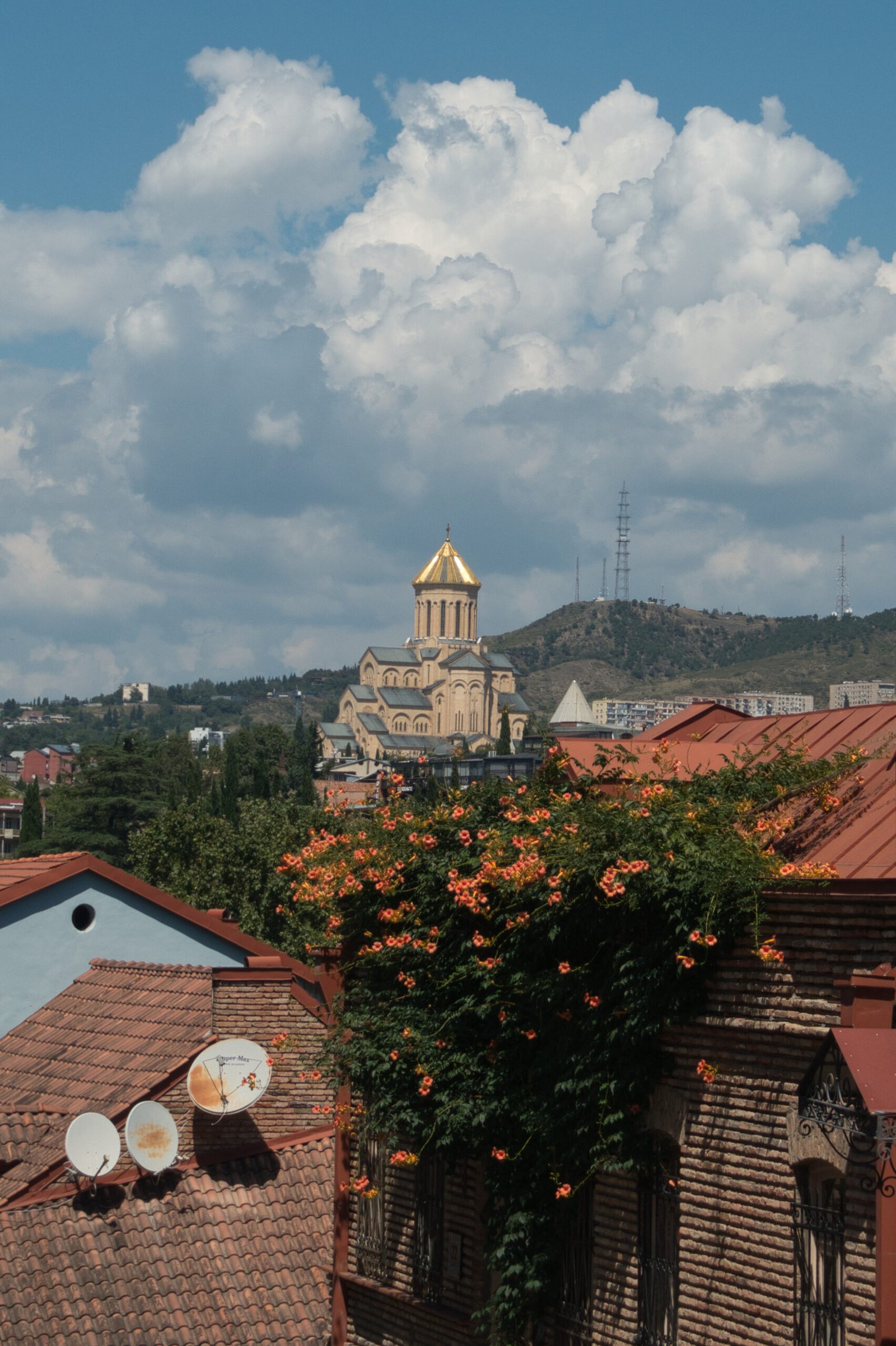
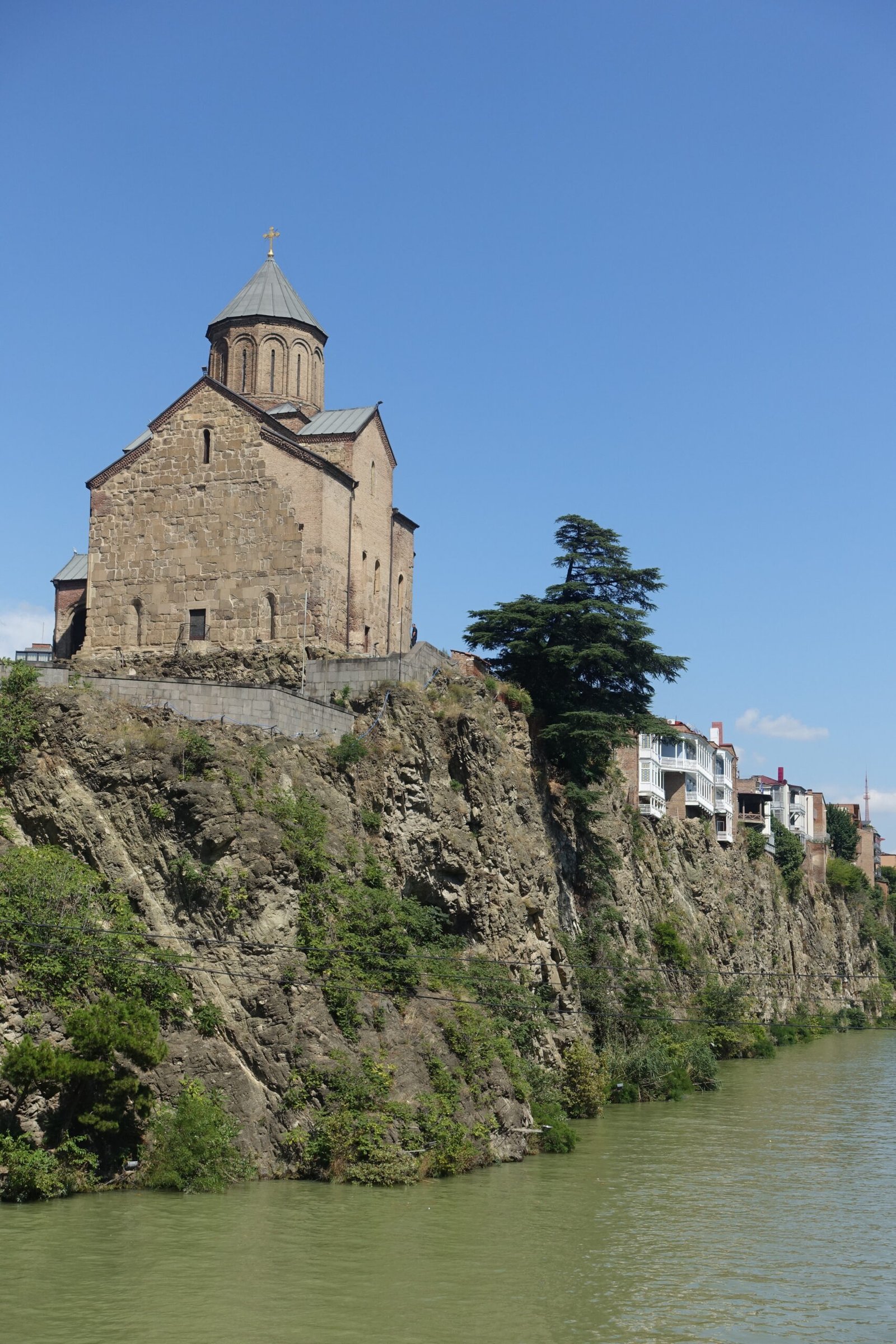
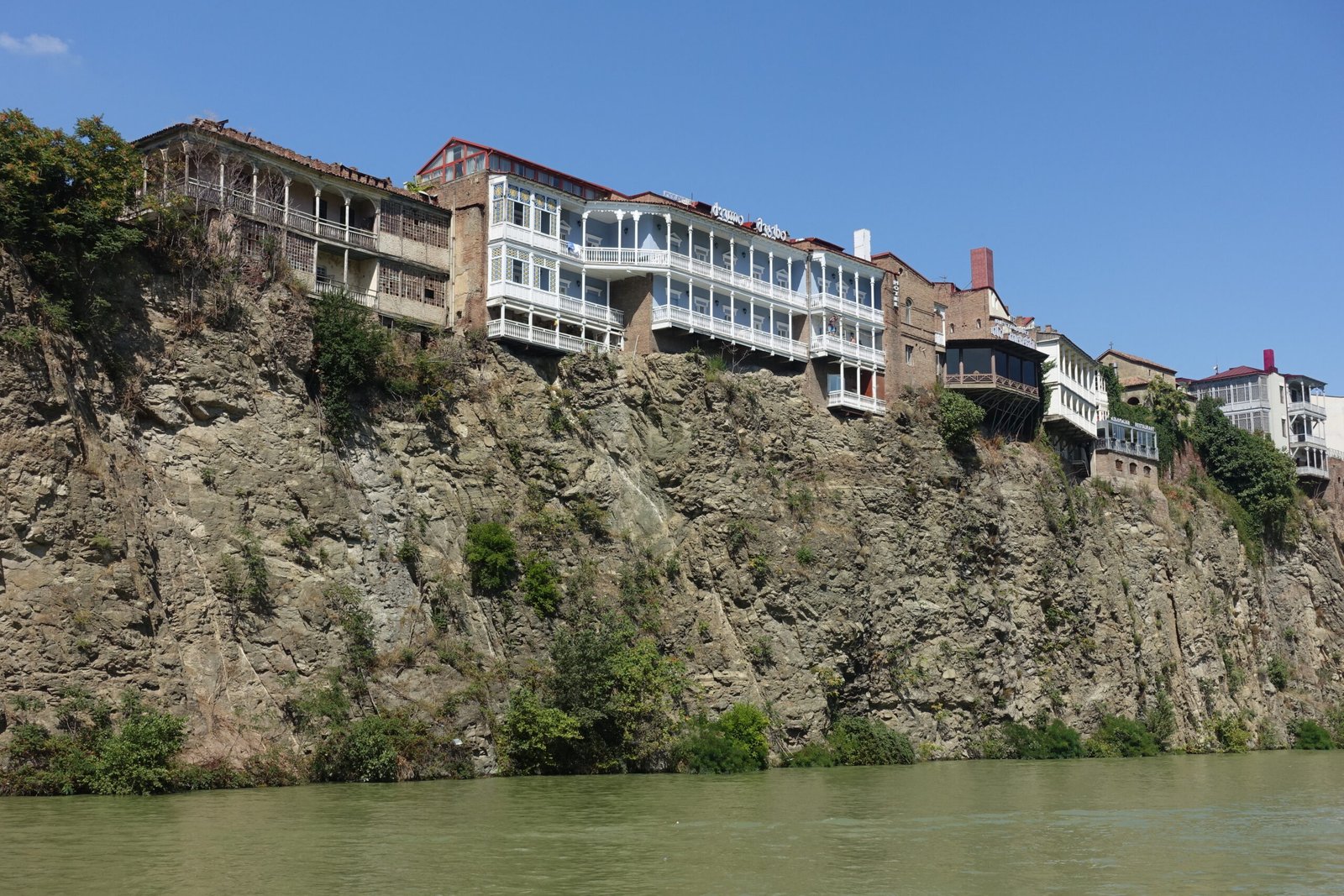
A fascinating city, though many of the most interesting views were sadly blocked
The bus back to the airport routed down George W Bush Street, lined with adverts for Wildberries. Georgia’s political divide in one road.
Mapping
This map/mapping tool is a first pass at an experiment. More work needs to be done.
Afterwards
This was not an easy trip, in fact it was often pretty tough going, and not for positive reasons. But the area around Ushguli, which was my primary objective, was absolutely worth a spot on my wishlist. Reviewing my photos, I should think that it was an amazing trip. That doesn’t necessarily match the way I felt at the time though. A good check on the personal viability of potential future trips, though I’m not entirely sure what the takeaway should be.
- I really dislike the travel part of travel, and particularly so when it involves messy transfers and uncertainty – if the ‘adventure’ is reaching your destination, something has gone very wrong. As such, I definitely undervalued the risk of not being able to secure domestic flight tickets.
- There is a reason I have little interest for hiking in Continental Europe and this trip highlighted all of them. I have no words for the diabolical behaviour I regularly witnessed. It was also alarming to hear so many talk about how “refreshing it was to have so little development and low crowds when compared to the Alps” [on the most developed portion of the standard route].
- Guesthouses are never my preferred accommodation style, mainly due to noise. Typically, there is a general understanding that the walls are paper thin and people try to act with some respect toward other guests. Maybe I was just unlucky, but that definitely was not the case here.
I have mixed feelings regarding any potential return to the Caucasus. There is definitely more to do in Georgia, but there are serious questions regarding domestic transportation, crowds, outdoor culture, and climate. The Keli Volcanic Plateau looks particularly intriguing, and quiet, but geopolitics makes it a dubious choice due to extreme proximity to South Ossetia (alternatively: how to make new friends in the mountains!). Further adrift, Khinalug is a cool spot in rural Azerbaijan, a bit similar to Ushguli in many ways, but seemingly devoid of the emergent mass-tourism.
Footnote
All photos are exclusive property and may not be copied, downloaded, reproduced, manipulated or used in any way without permission of the photographer.
Favourite Stories