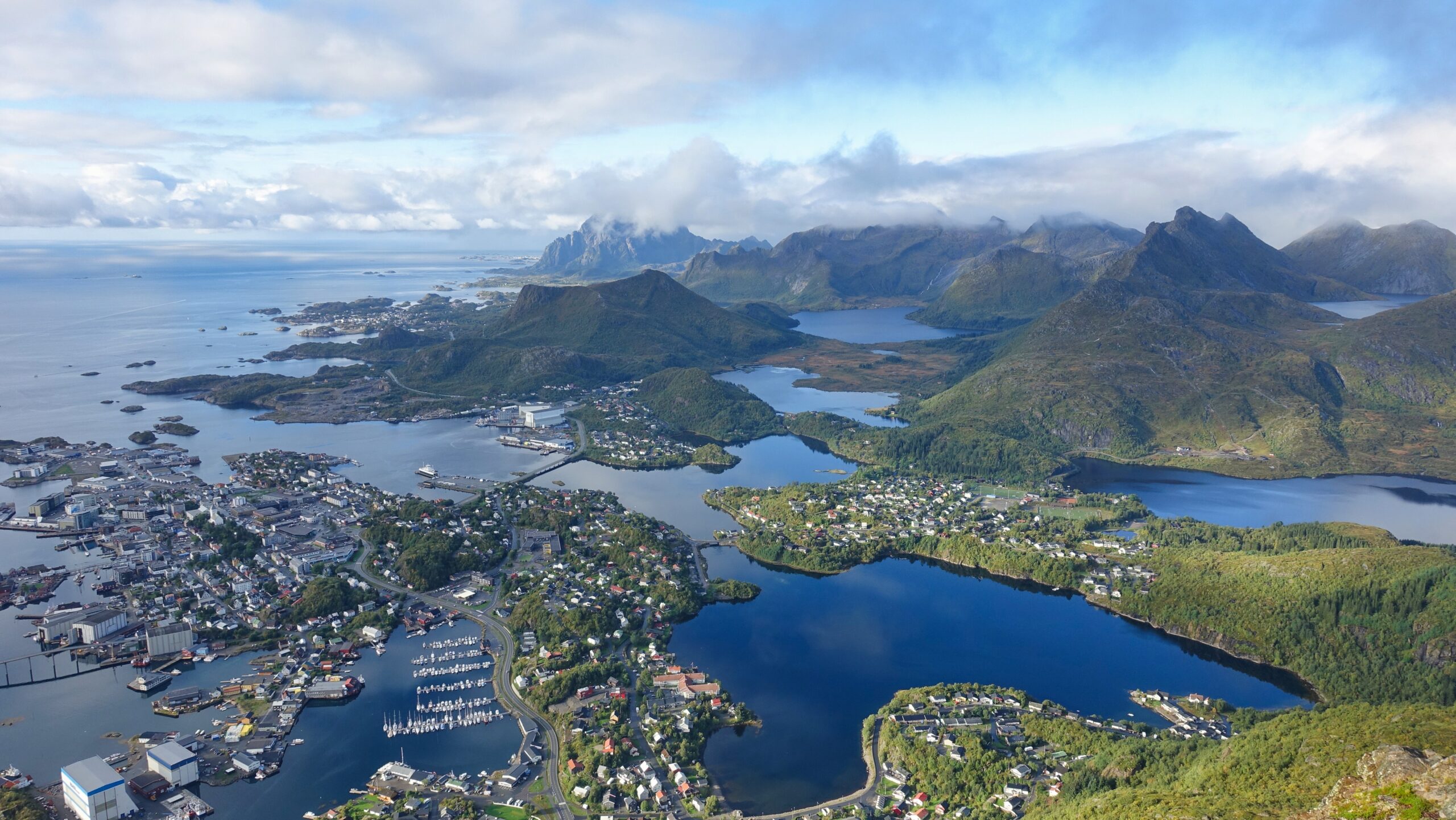
Austvågøya
Lofoten Once More
Introduction
16 September 2025 – 24 September 2025
Throughout the year, I had been looking at a little autumnal wildcamping minibreak somewhere in the Nordic Arctic. The late-September colours in the far north are difficult to beat and there are a wide range of easily accessible destinations. A return to Sarek National Park, Europe’s last great wilderness, was the front-runner. I need to right the mistakes of the first trip so a return had long been in the cards. I wasn’t particularly enthused about the transit connections to get there though and I knew I would be rolling the dice on being stuck in the tent for long periods of time in cold, pouring rain, thoroughly miserable. Autumnal weather in the region is notoriously fickle: high reward, but also high risk.
As plans developed the focus shifted to day-outings. It is important to match the destination with the travel style so the specific destination changed too. This eliminated Sarek, but there are no shortage of suitable options: Lofoten, Lyngen, and Kilpisjärvi all stand out. I have been to Lofoten several times now and in various ways, but I think it is particularly well suited to fast and light day-outings rather than wildcamping.
For this Lofoten trip, I would stay in the eastern end of the region. I briefly visited Austvågøya at the end of my first Lofoten trip back in 2017. Then, the trip culminated with the Arctic Triple 50 Mile mountain race which finished in Svolvær. Because of the race, I was unable to properly explore the island. Most of the trip was spent in Å i Lofoten, on Moskenesøya, only moving to Austvågøya for the race. Obviously I took the day immediately proceeding as a rest day and the day after was both wet and I wasn’t overly in the mood to get out and about… It is always amusing walking around town after an ultra – it is very easy to spot who was racing….
Arrival
Tuesday, 16 September
In the week leading up to departure, I had been watching the webcams to check the autumnal progress. I was very disappointed to see that autumn had definitely not yet arrived… That week, it was actually warmer in Lofoten than in Rotterdam! Things can change fast though, so I was still holding out some hope that colours would start to pop. Sure enough, there was a snap change and colder temperatures rolled in as we arrived – along with a bit of a stormfront. All it takes is that first coldsnap to kick things off.
The outbound journey called for flights to Bodø followed by the evening expressboat to Svolvær. Matching mixed transit types can be tricky, and this was no different – there would be just one hour between the flight’s arrival and ferry departure. Fortunately, Bodø is tiny and in the worst case it would be just a five minute taxi between airport and ferrydock and I was not checking baggage. As it worked out, I used the bus and still had plenty of time.
The first full day was quite unpleasant, with persistent rain and heavy low cloud. It would not have been a fun day in the hills and was exactly the kind of weather I was worried about for wildcamping – in no way dangerous but also definitely not pleasant and without the rewards of dynamic moody lighting. With the AirBnB, I stayed warm, dry, and ready to tackle improved conditions when they arrived.
Svolvær Tops
Thursday, 18 September
The forecast for the second day could have gone either way but was broadly optimistic it was for mixed rain and sun. When I woke, it was clear that it would it would be a classic Lofoten day with all of the conditions at once. Dangerously, I only had a general idea of what I wanted to accomplish. Fløya via Djevelporten was the obvious place to start though.
The track to Djevelporten is very well trodden and there are even stone staircases built. Fortunately, things were more interesting after ascending beyond and the final ascent to the true top was a very short light scramble.
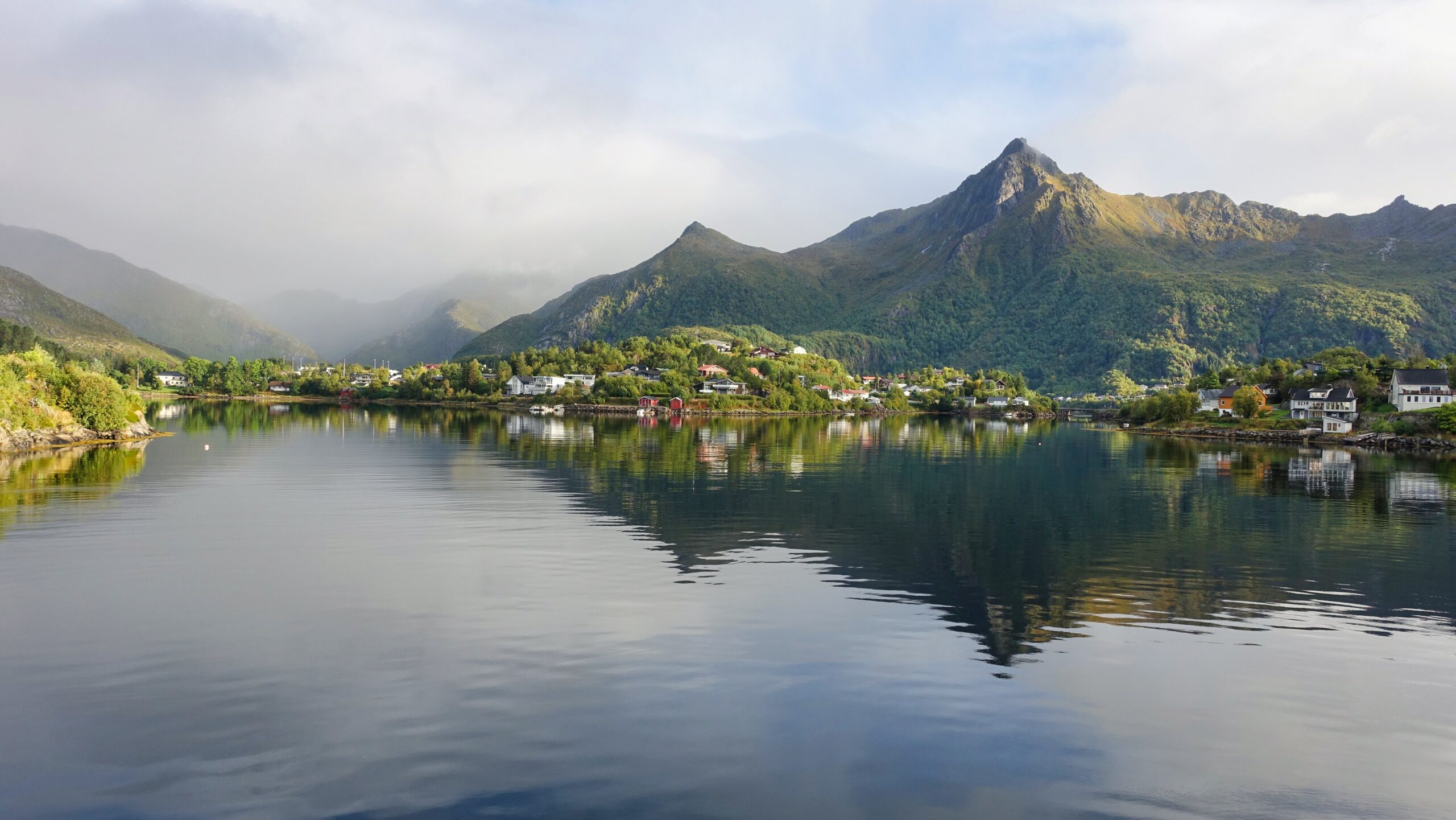
On the road to Fløya
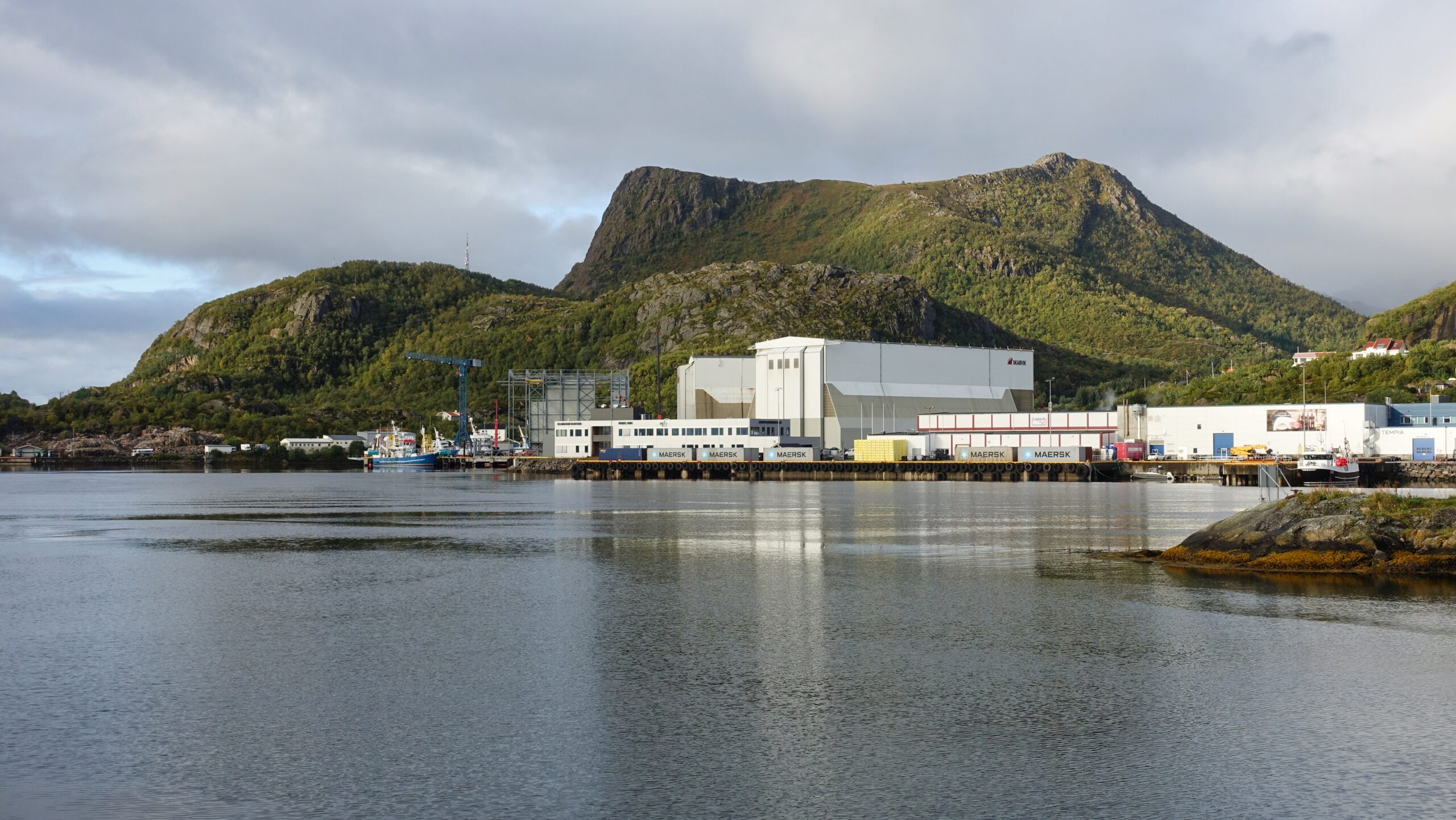
The classic Fløya view
There is an established track to the next top, Blåtinden, but it descends and reascends. From Fløya, it looked like I could stay high and take a ridge – both a more fun option and saving the reascent. Backtracking to Djevelporten, I attempted to do just that. Things went smoothly for a few hundred metres with some light scrambling. Before long I reached a gap after Frosken (intermediary top) that I was not optimistic about crossing, or at least not given that there was another option. I descended around the first obstacle, but ultimately I decided that it just wasn’t worth messing with, particularly given how wet everything was. I backtracked to Djevelporten once more and took the established track.
From Blåtinden, the idea was that I would simply close the loop and head home. Upon reaching the final saddle, I felt the need to do the next top, and then there was another ridge to do… Eventually I headed down a very wet and overgrown track back toward town.
Conditions were actually excellent: the rainclouds mixed with sun provided a great visual and dynamic lighting that fits Lofoten exceptionally. The centre of the island was clearly getting a fair amount of rain, but I managed to stay largely dry with only the occasional bout of mist passing through. A very successful, if simple, day out!
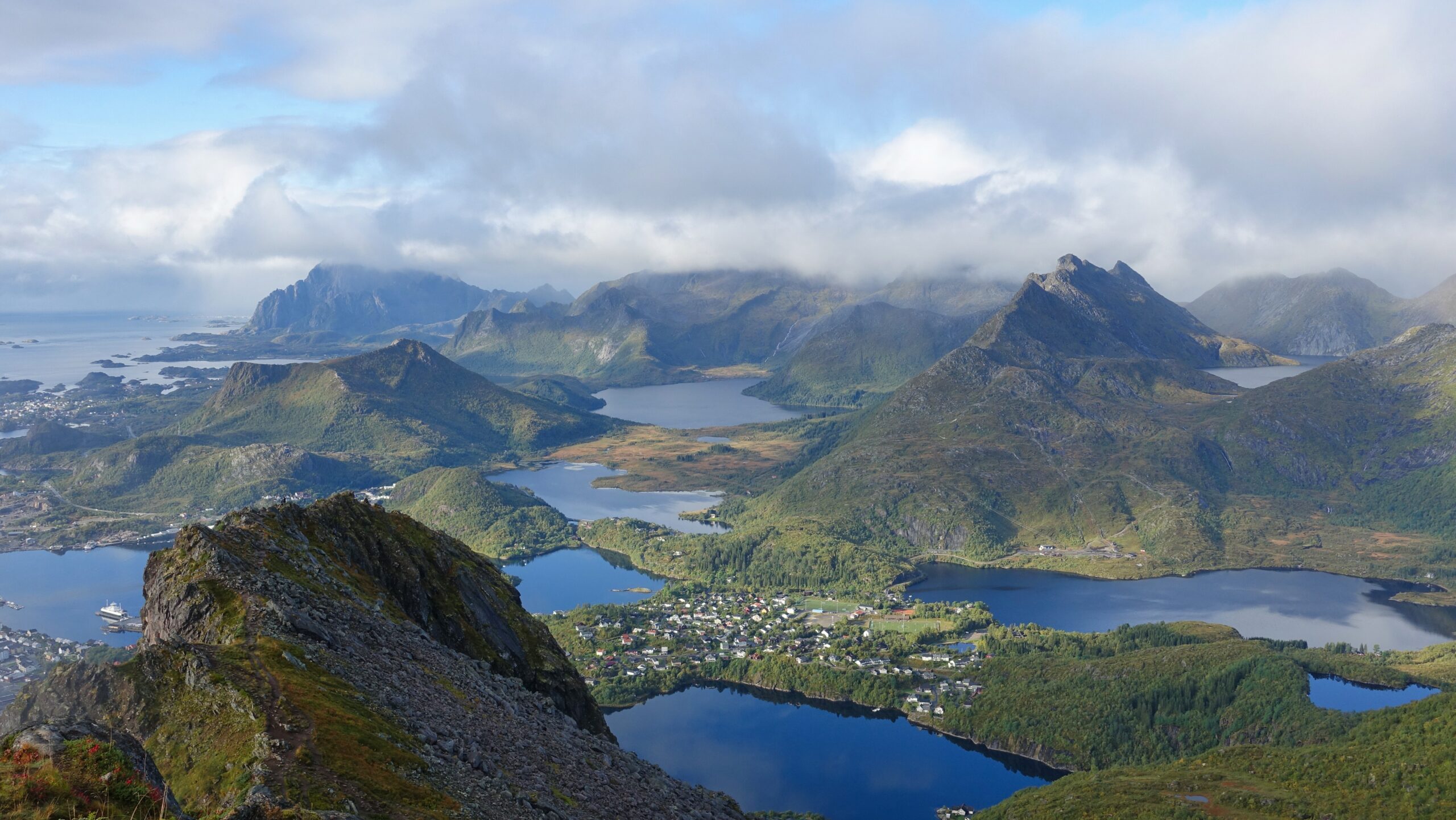
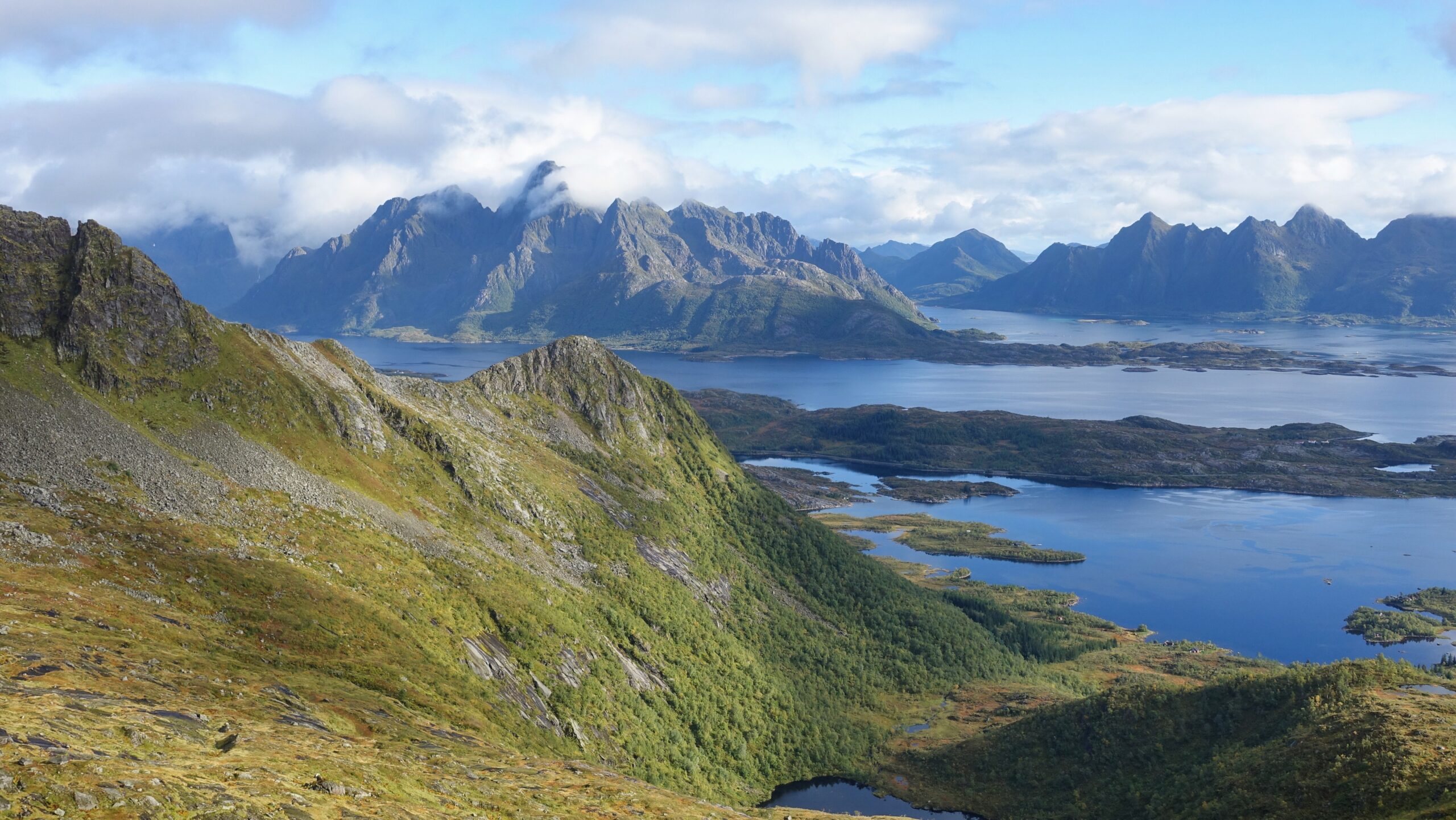
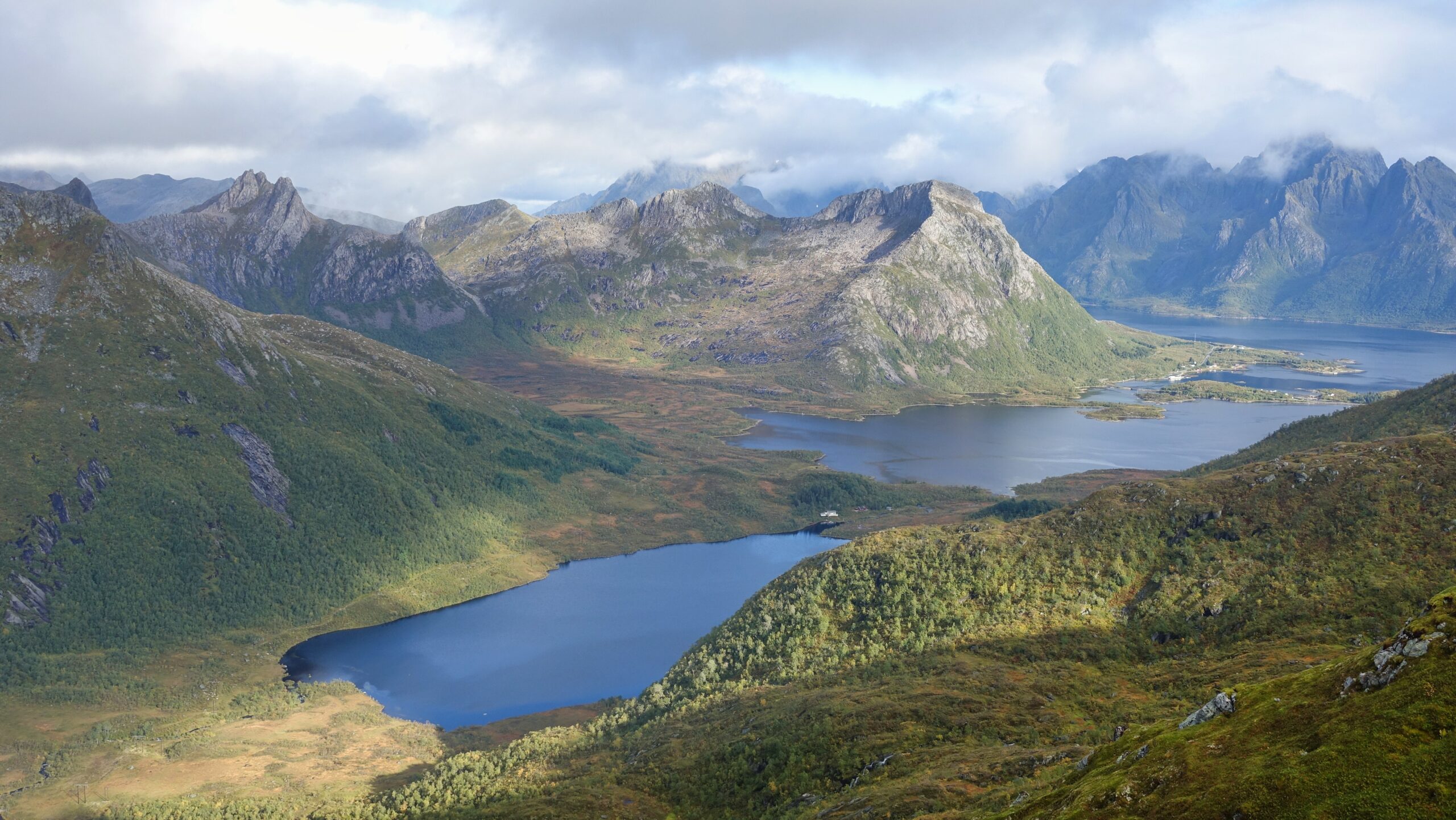
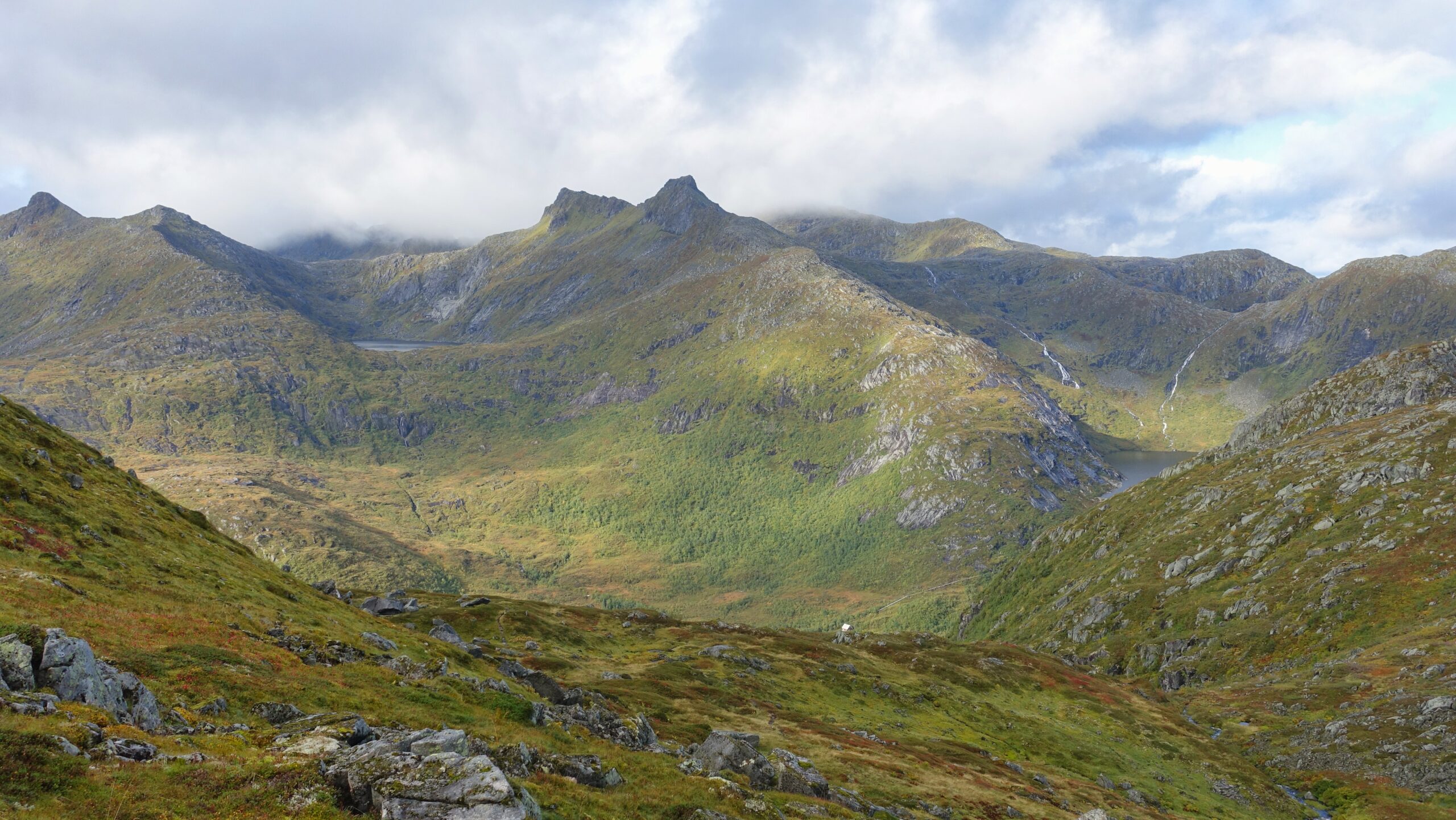

Hiking the ridge between Fløya and Tuva
In the evening, I planned to head back out to Tjeldbergtinden, the hill closest to the accommodation. The thought was that Svolvær would be nicely backlit in the evening lighting. A short and easy ascent led to the views I was expecting, but unfortunately the sun dropped behind a dense cloud block as I approached the top.
The hill has quite a broad ridge at the top and I was a little surprised to see two paragliders readying themselves as I approached.
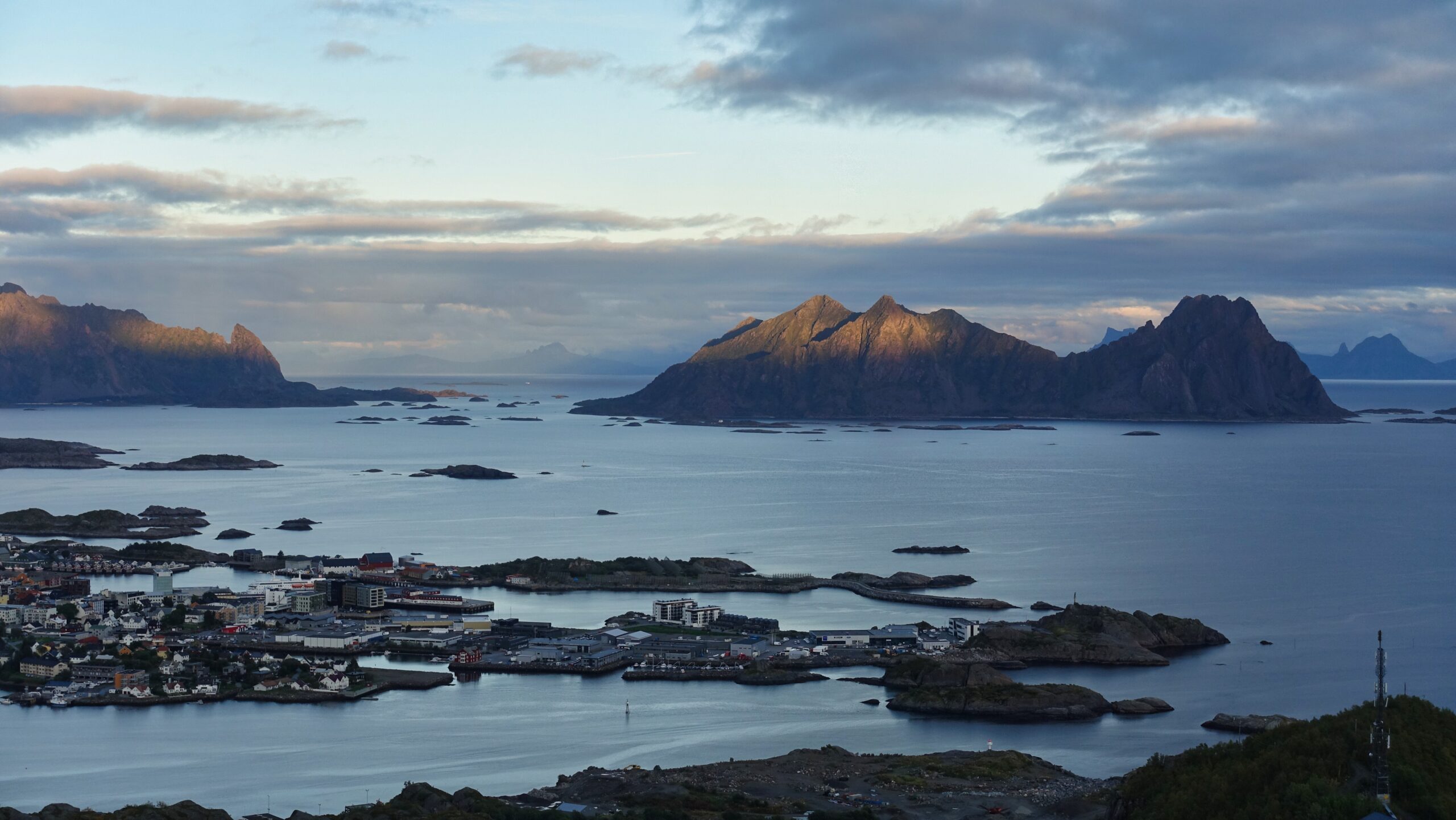
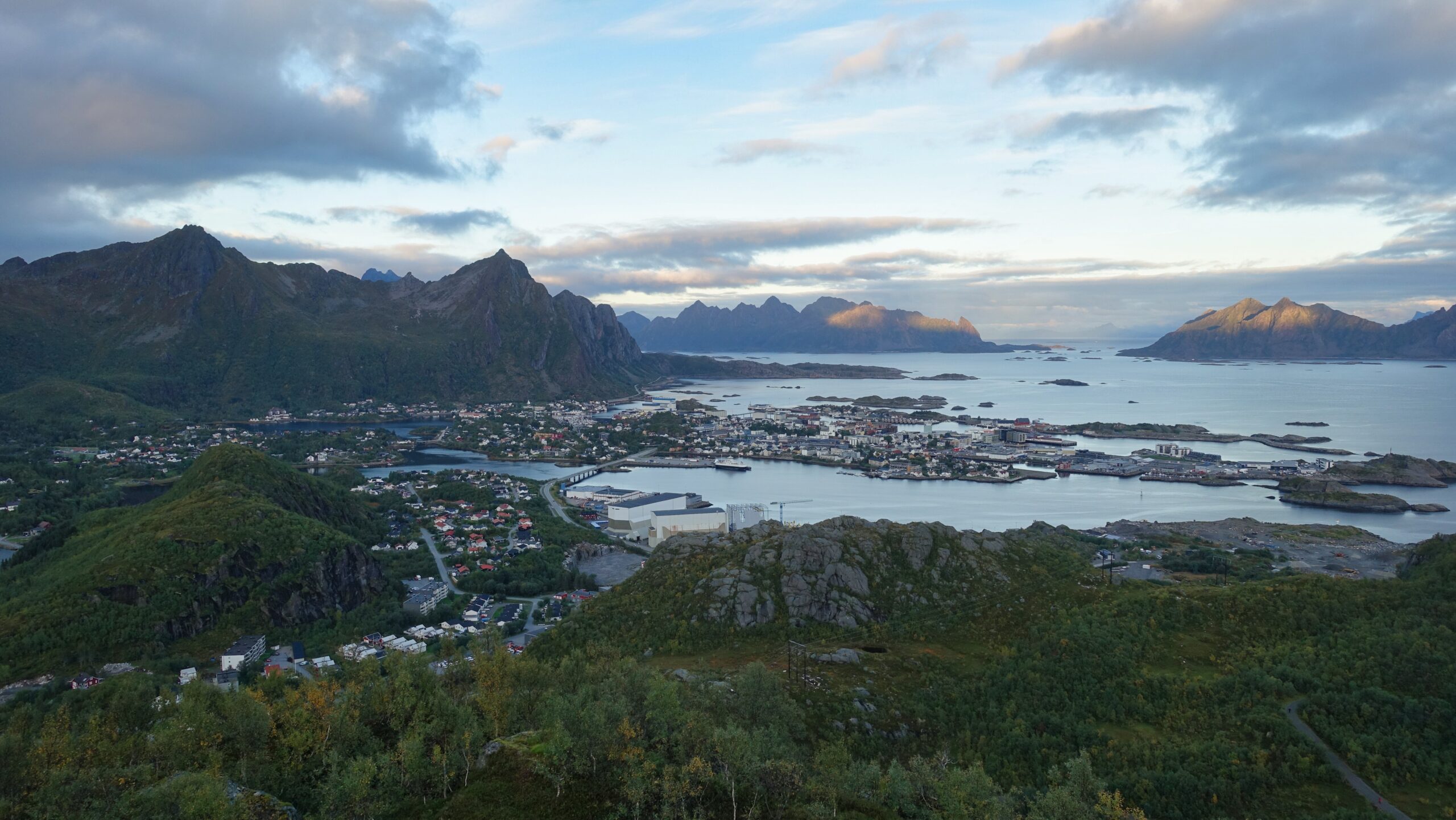
Evening, on the way up Tjeldbergtinden
Higravtind
Friday, 19 September
Weather for the final day in Svolvær was looking even more promising. My intent was to head for Higravtind, the highest top in Lofoten and what looked like a fun ascent. Bus timings were a little awkward on timing though. Ultimately, I went with a midday departure, with the option of taking a return bus at either roughly 17:30 or 19:00.
Waiting for the bus offered the perfect opportunity to get out and about in town for a bit of photography. I ended up nearly missing my outbound bus though. I was waiting at what was clearly the stop, but a van pulled up in place of the bus I was expecting. There was a sign with the number matching the bus I was trying to use in the windscreen, but it did not even register that my ‘bus’ might actually be a van. Views from the bus were excellent. When we dropped a couple off at the airport, I was wishing that it had made sense to fly in. It would be a dramatic flight and I always enjoy rides on the Dash-8. Maybe I’ll have to load up FS2020…
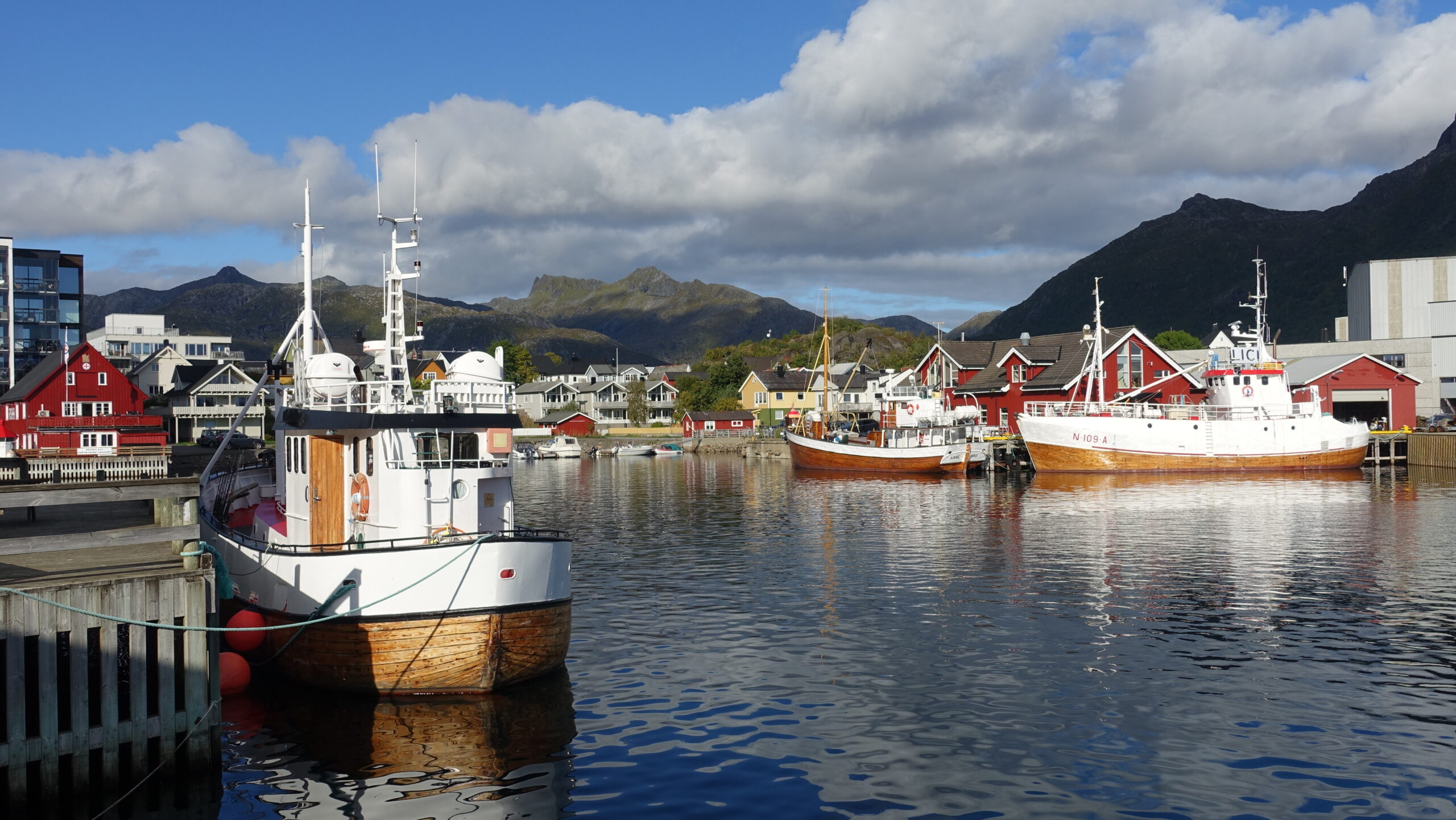
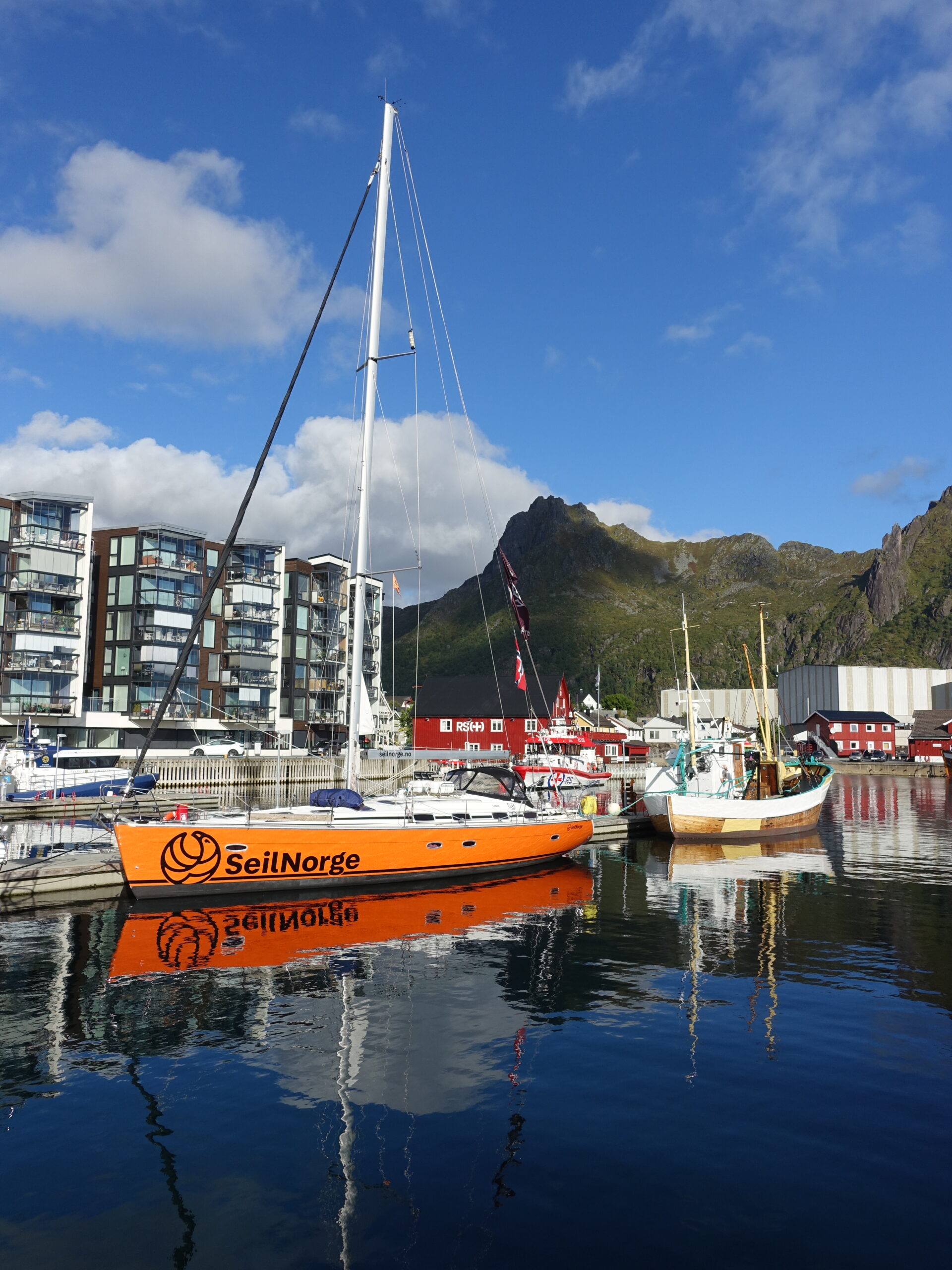
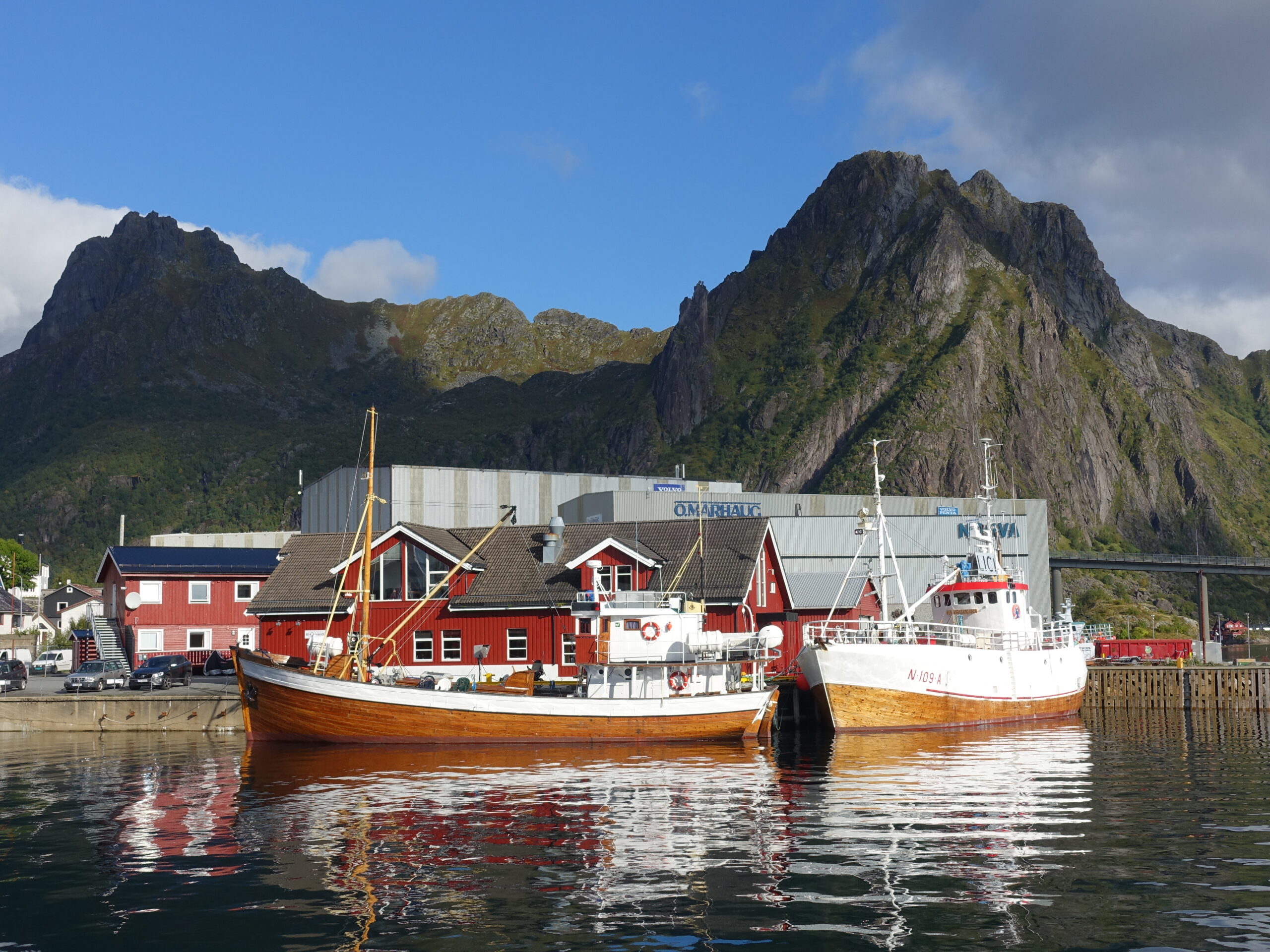
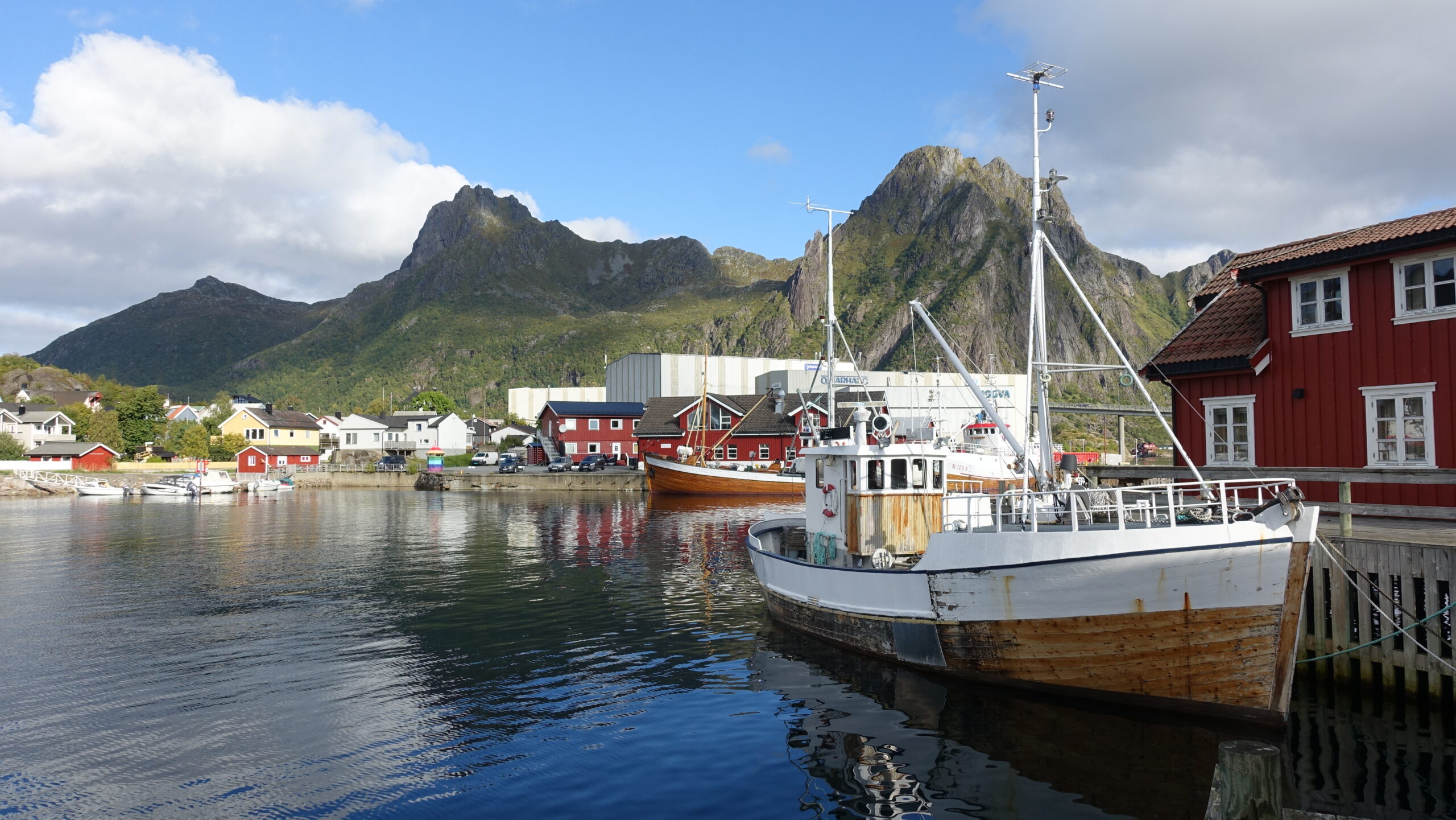
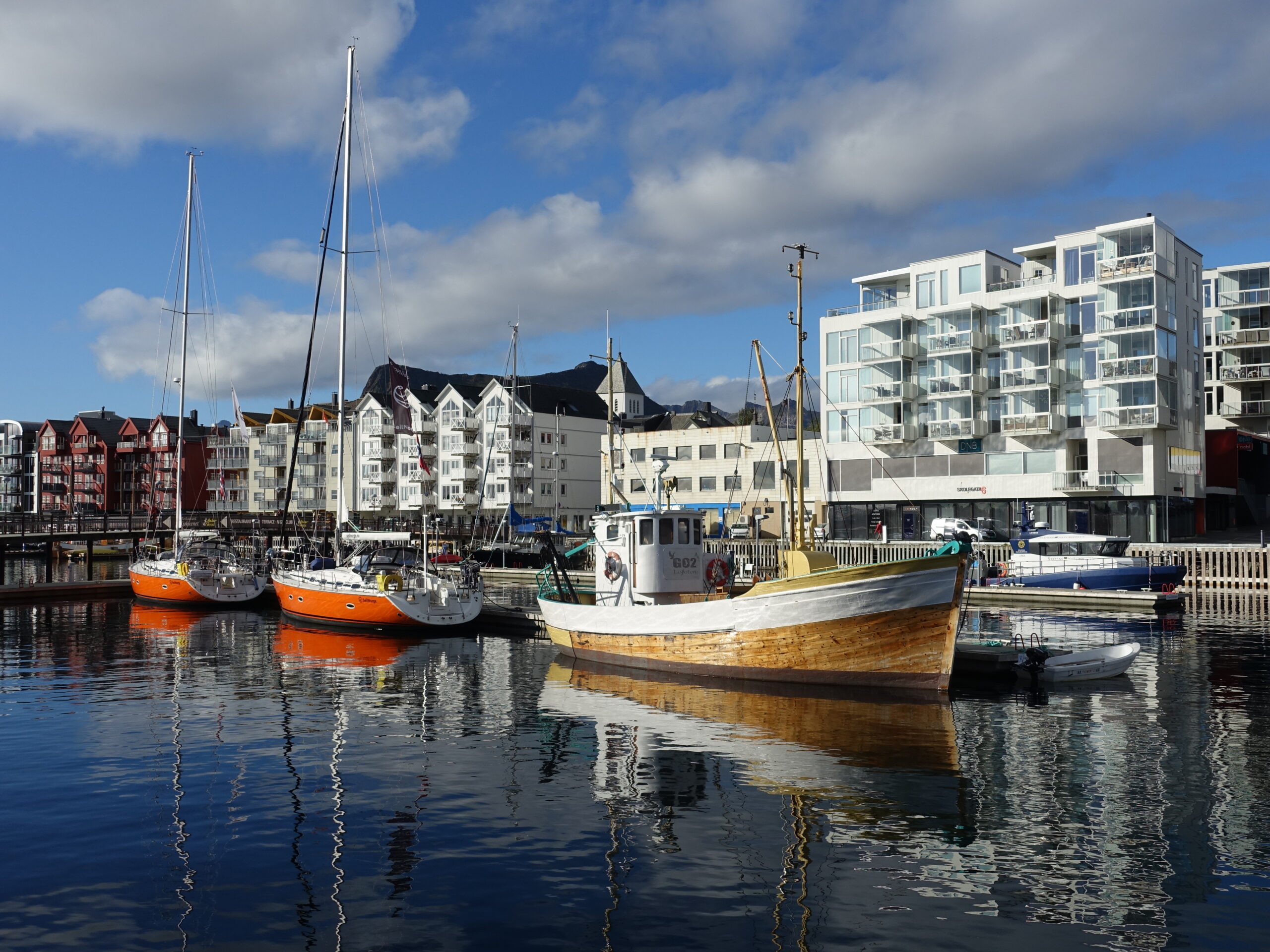
Svolvær views
The route was going to be a short but steep hike: 1142 vertical meters in 2.6km. After a few hundred meters for grass road’s single switchback, the ascent began abruptly at a relentless pace up the side of a waterfall. About a third of the way up, I had a brief reprieve to traverse across the waterfall over to the gully that would take me to the top.
It was a nice little puzzle to ascend the gully. As the obvious water channel down, and with a fair amount of rain the previous days, it was pretty slick too. The real fun began upon topping the saddle at the top of the gully. At first look, the summit block looked impenetrable. Fortunately, a closer look revealed a little step leading to some scree-fields that could be used as a switchback to a collection of chimneys that would take me to the top. The views into the most rugged parts of Lofoten were exceptional!
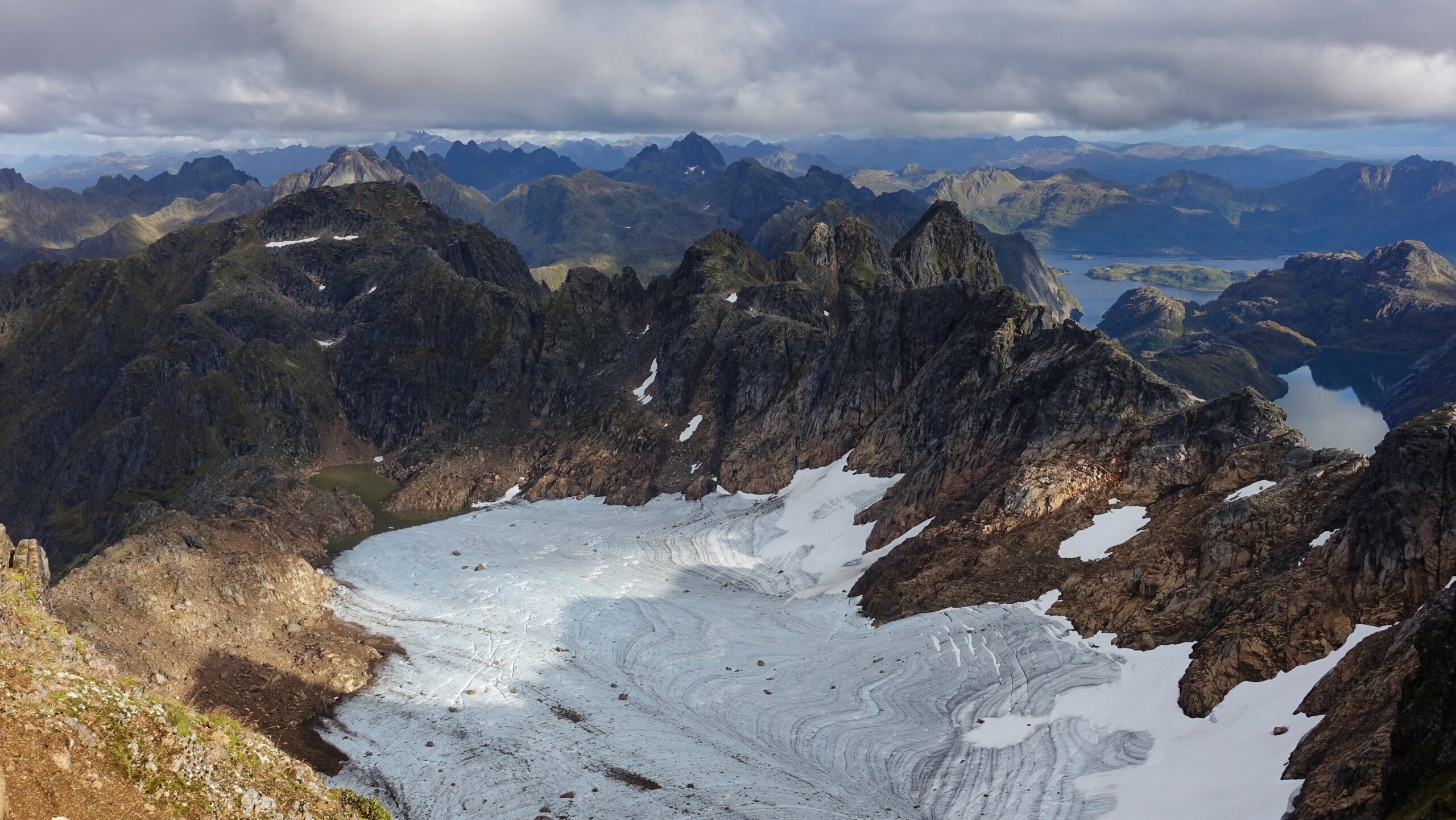
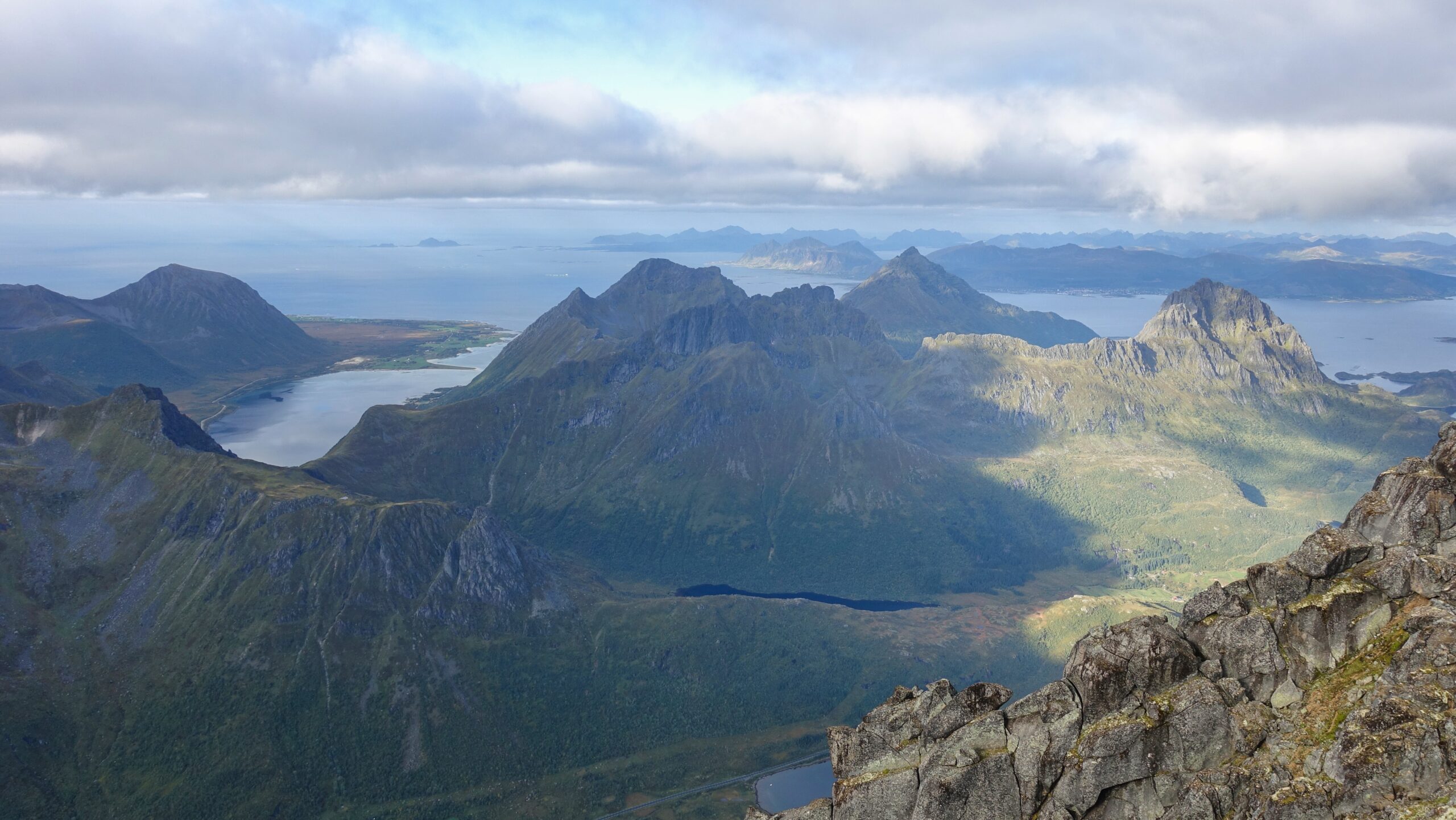
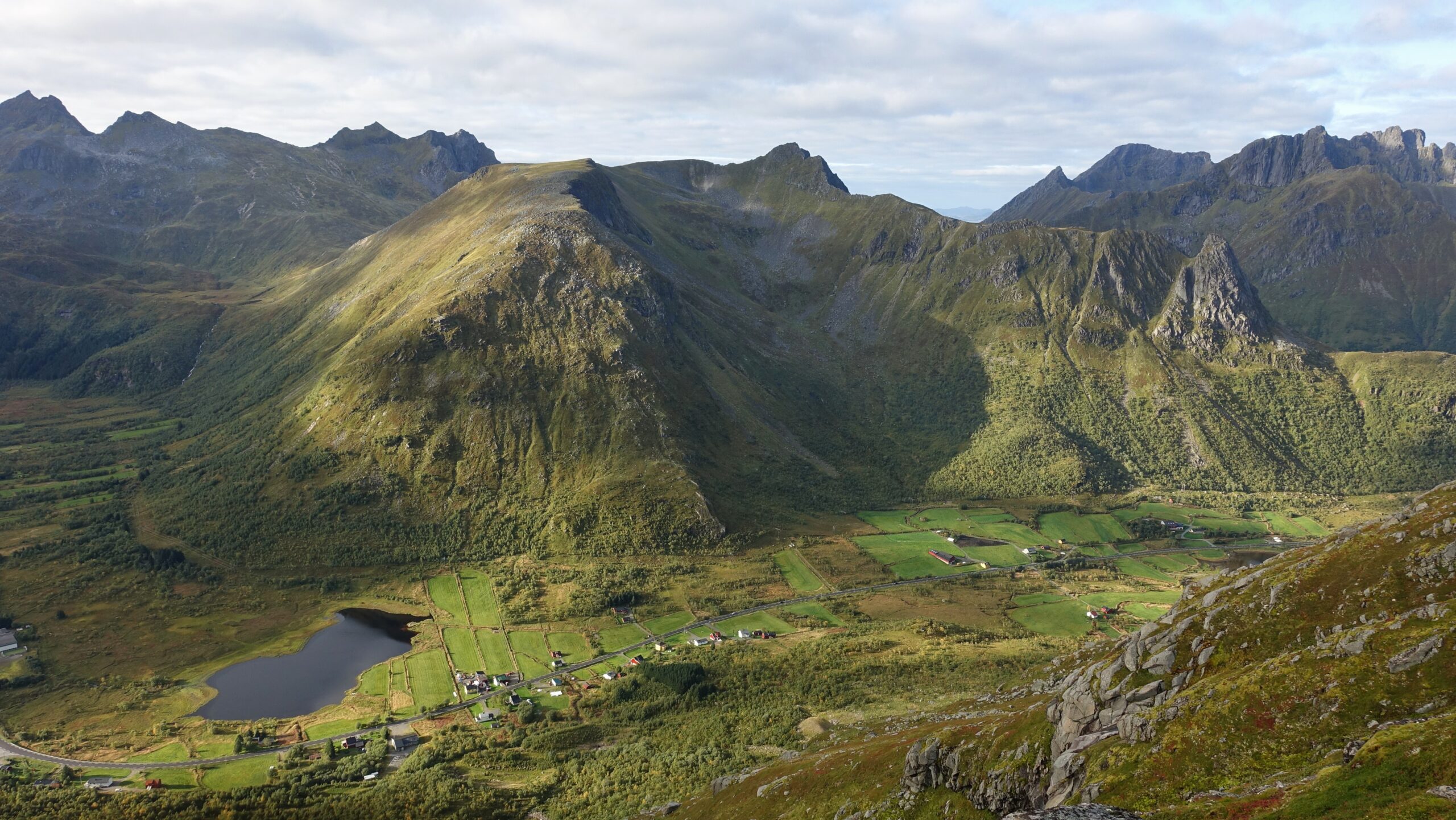
Higravtind views – Lofoten’s highest top
I had made excellent time up, reaching the top a little before my target if I wanted to hit the earlier return bus. After some faffing about on the top, it was time to tackle the descent. I was down to the main road in no time and had about 40 minutes to kill before my bus home.
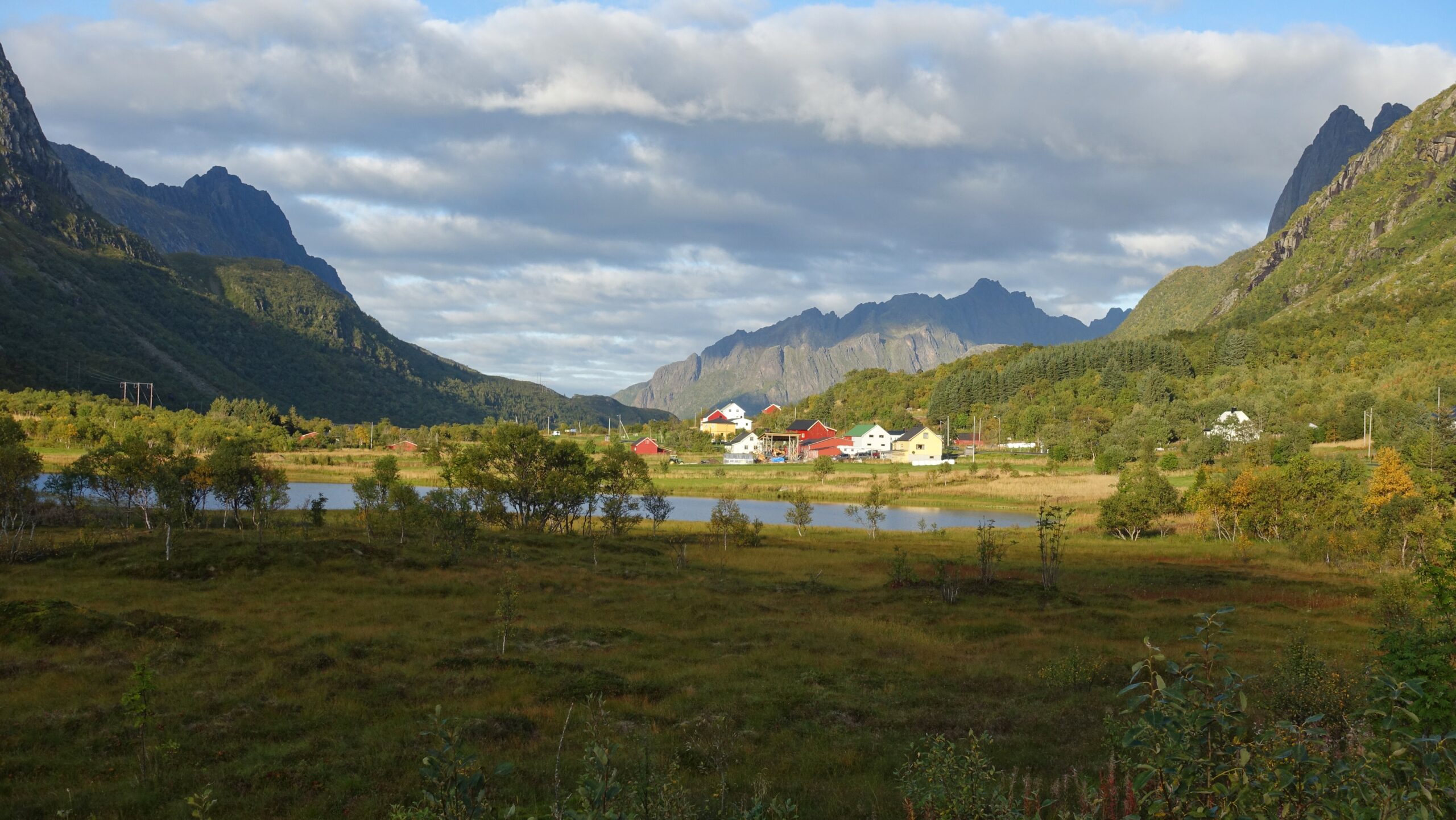
Views from the bus stop. I regret not walking a few stops further…
Cloud had been moving in and out all day, but skies started to really clear again as I waited for the bus. By the time I was on my way back, I had nearly perfect evening lighting with just enough clouds to give some texture. Watching the views from the bus, I really regretted not walking as many stops as I thought I could get away with for the views. The massif I just climbed had quite the impressive profile from the opposite side of the fjord and it was spectacularly lit up in the early evening light.
It was a good choice for the day and I’m glad I went for it over the options near Henningsvær, and definitely over staying near Svolvær.
Bodø
Saturday, 20 September – Tuesday, 23 September
The second half of the trip was back on the mainland, based in Bodø. As with Lofoten, I had just a general outline of possibilities rather than a clear wishlist and I knew that public transit was possible, but awkwardly infrequent. If I had a day of solid looking weather, I wanted to head back to Rago National Park, there were a few hills in the more local Sjunkhatten National Park, and there was an easy but pleasant broad ridgeline accessible from town. Frustratingly, a long promised map of Bodø and Sjunkhatten National Park has still not been published, two years after first announced.
The forecast for the time in Bodø was nonstop rain. I was not optimistic, but you never know what conditions will actually bring.
I left Lofoten on the morning expressboat, arriving back in Bodø around midday. Unable to check into the AirBnB yet and more wet and unpleasant weather, there wasn’t all that much to do. An extremely short trip to the tiny city museum followed by some browsing in an outdoor shop, and a late lunch killed enough time though. The next day was likewise wet and dreary. so another quiet day indoors….
Gale force winds finally broke the settled cloud and rain around midday on Monday. Unsure of what I would meet, and with few expectations, I headed for the broad ridge outside town that afternoon. The hiking was quite unremarkable and it was extremely blustery (Gale force) but it was still a pleasant walk.
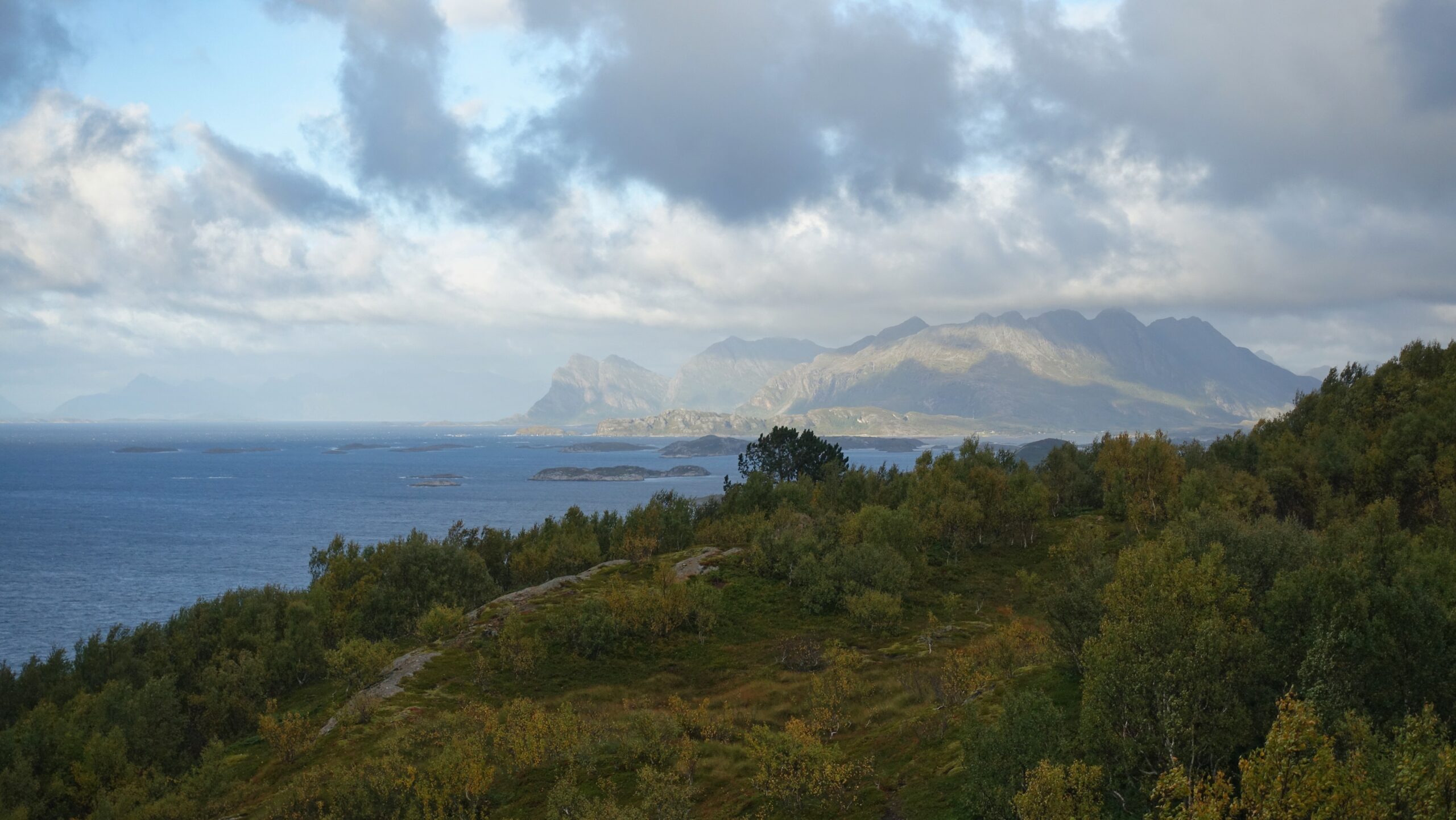
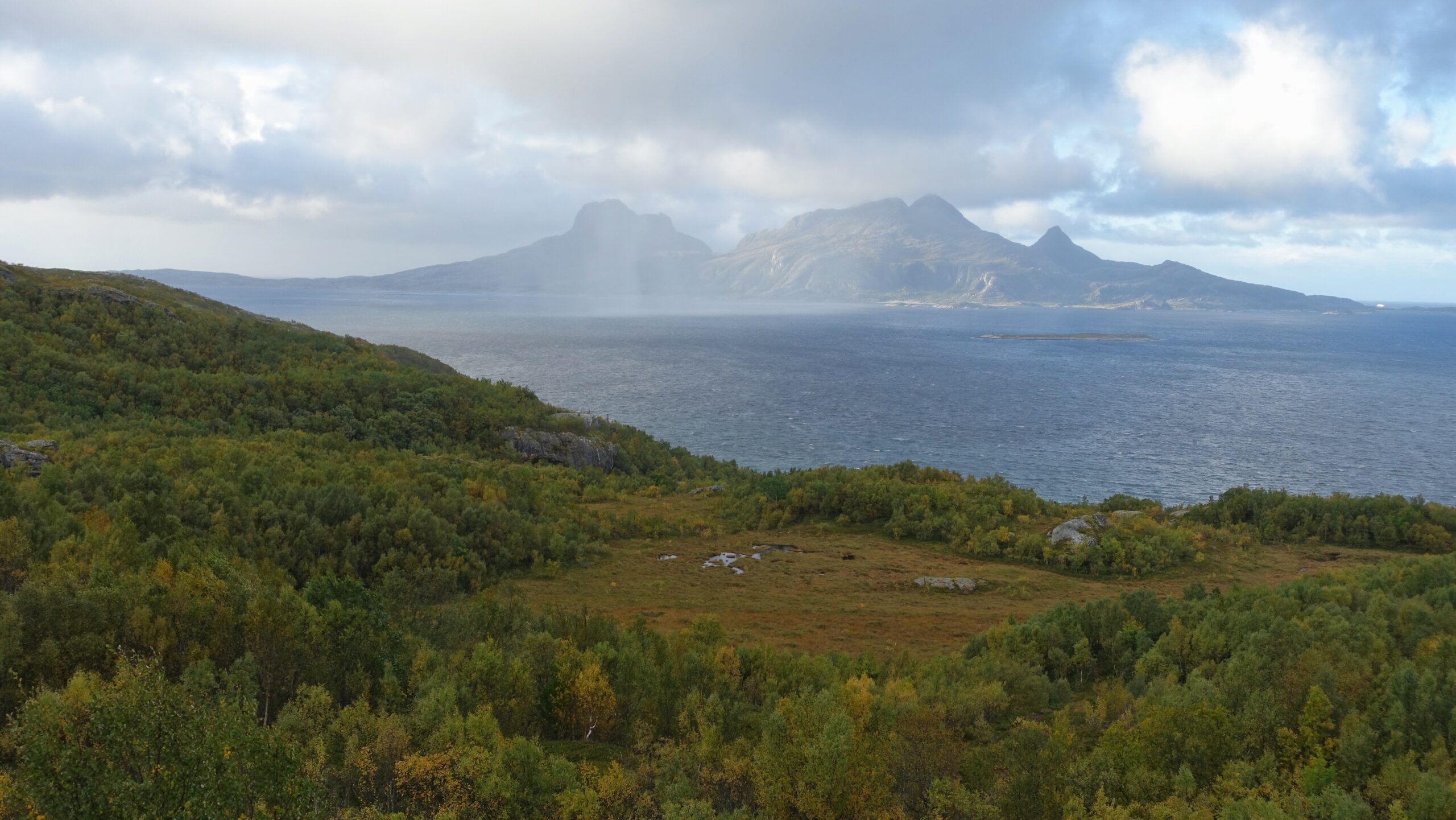
Moody weather moving in and out
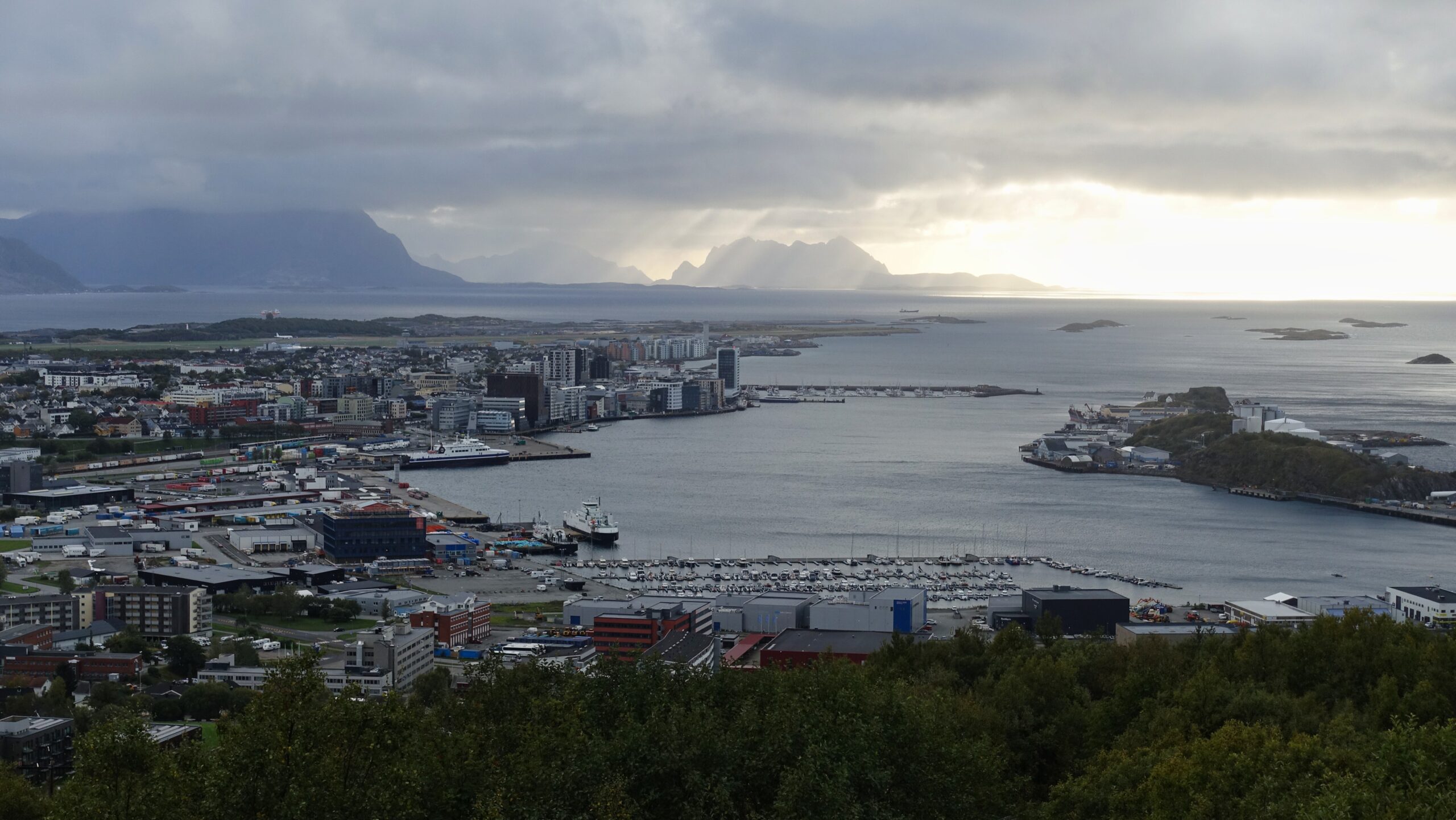
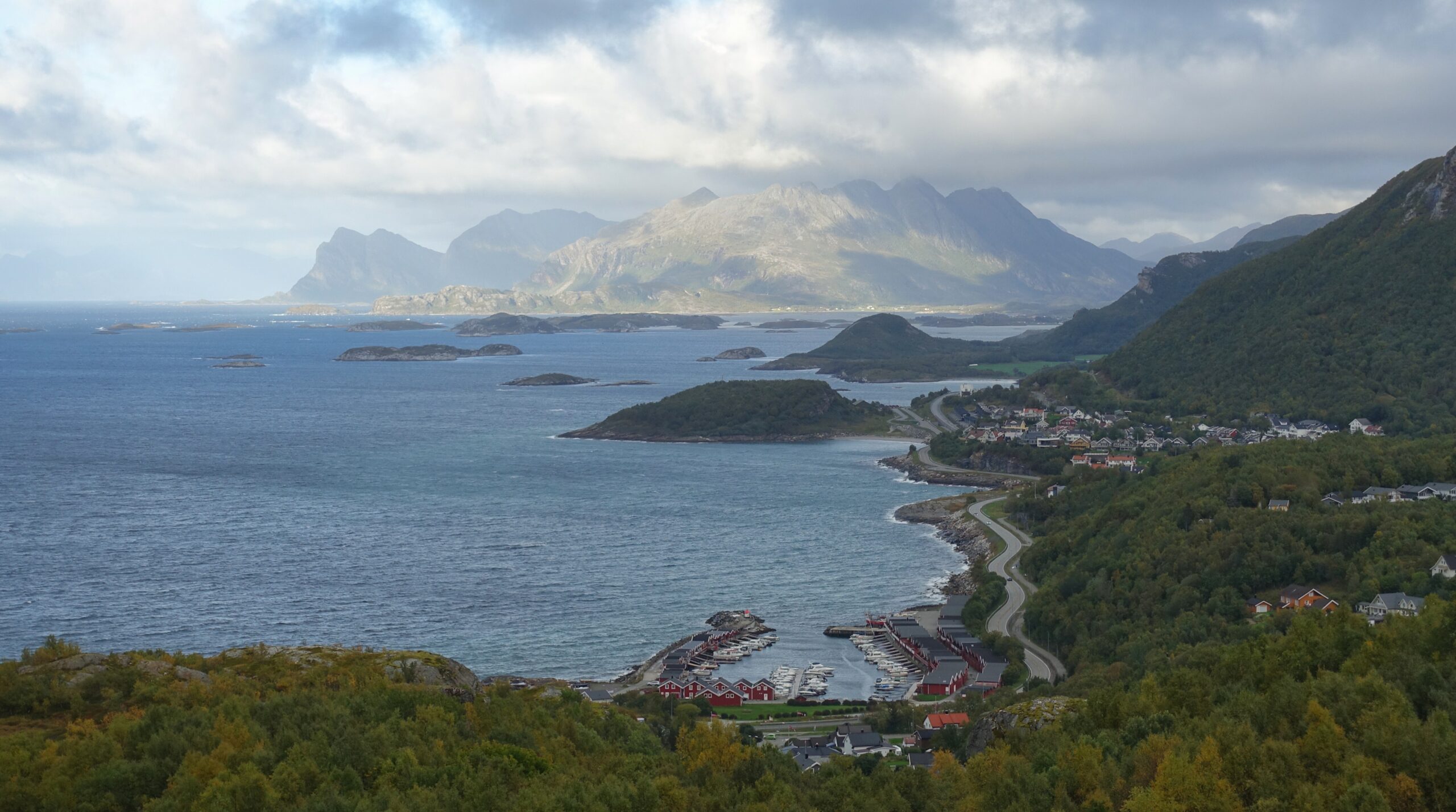
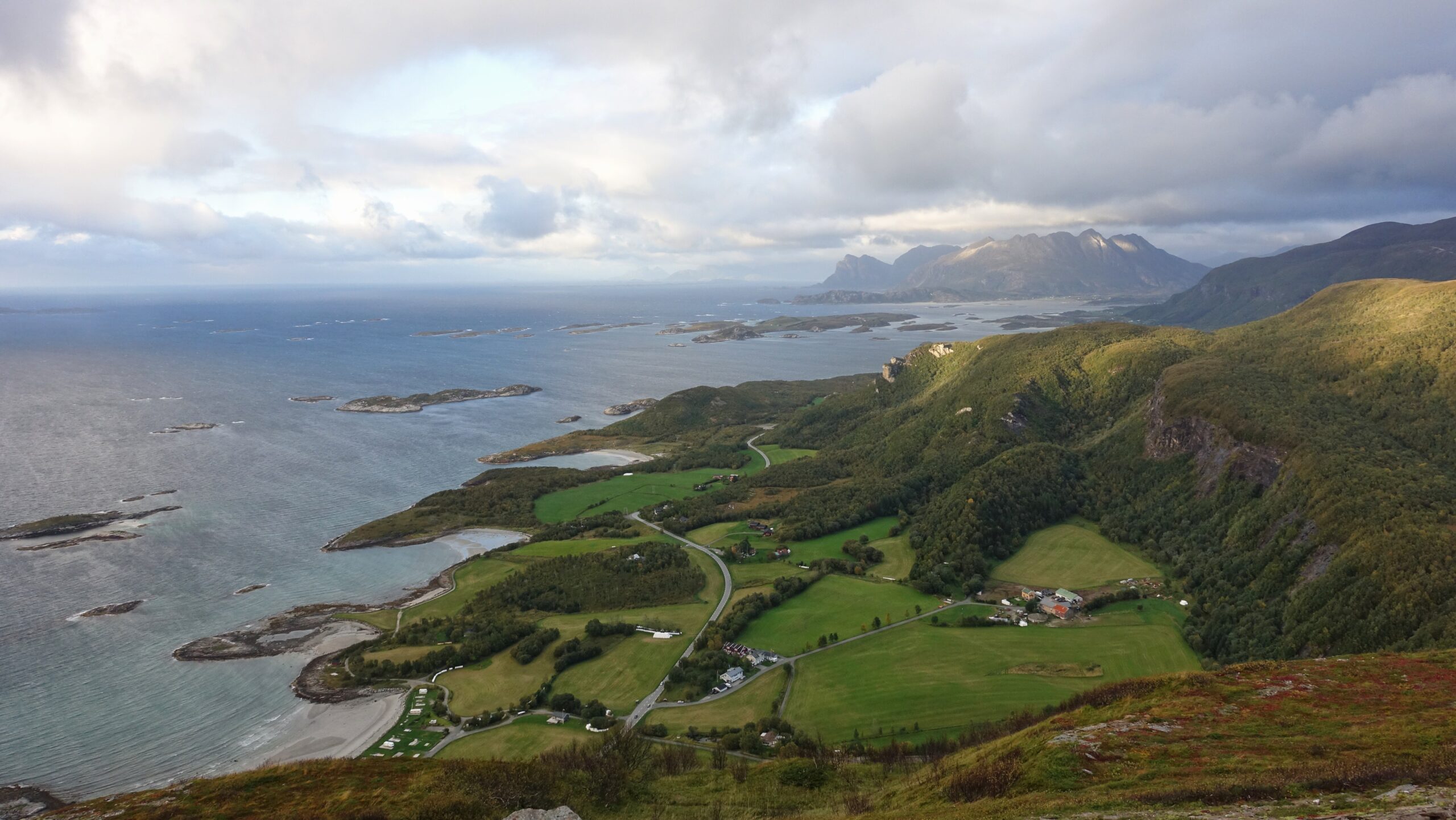
A gale of a day
With a discouraging forecast, I decided that I would wait take a ‘wait and see’ approach to the final day. Unfortunately, doing so meant that I messed up and missed the only bus combination that would realistically have worked to get me further from town. That heavily restricted my options and I ended up doing a variation of the same hike as the previous day. On the upside, conditions were such that it was well worth still getting out, but I also wasn’t missing out on much.
It was something of a missed opportunity. I should have paid more attention to the specifics of the bus schedules in advance. Given the awkward timings and temperamental weather, I am not entirely sure that I would have committed regardless though – particularly for Rago National Park.
Departure
Wednesday, 24 September
For once it was a smooth return journey. Even NS cooperated and I was home in the shortest possible time – a good thing too as I was supposed to be attending a mandatory and entirely pointless evening digital training session arranged through work….
Afterwards
It was something of a difficult trip to judge. The days that I was able to get out were excellent, but there was also a lot of down time in poor weather.
- A major point of the trip was to be out for the autumn colours. Unfortunately, we were a little early, at least this year (guessing when the colours will hit is not an exact science). I do suspect that my time calibration was too focused on Kilpisjarvi/Sarek which are a little earlier than the temperate Lofoten. Checking the webcams afterwards, and my assessment was correct – my timing was spot on for Lapland but 7-10 days too early for Lofoten.
- Looking forward, Lyngen may be the optimal autumnal destination. The higher mountains would be particularly dramatic in autumn, with the colour gradient and snow covered tops.
- I was glad to not be camping. It would have been a very wet experience and likely just not that pleasant. This is definitely something to think about moving forward with autumnal trips. My very first solo-wildcamping trip was a late-autumn trip to Trollheimen, it was a resounding success, but even at the time I knew that I had gotten exceedingly luck threading the needle between horrible conditions and was able to ride out a day of torrential downpour as a rest day in Sunndalsøra. My gear was very inadequate at the time and has massively improved since. There is only so much gear can do for overall mood when committed to being out for multiple days in terrible conditions though.
- I need to pay more attention to how realistic the buses actually are when planning. Lofoten was fine, but with only two, awkwardly placed, buses a day for the mainland hikes, I missed out on several things that I had particularly wanted to do (weather was also a factor and I would have been more willing to gamble on a lengthy wait for a return bus if it had been less stormy).
- My belief that Lofoten is much more suited to day-hiking exploits than multi-day wildcamping was further reinforced. Everything is very accessible, wildcamping doesn’t really open much in the way of otherwise inaccessible opportunities, and it is just so much easier and more fun to zip up the steep slopes with a daypack than even the lightest of overnight setups.
Footnote
All photos are exclusive property and may not be copied, downloaded, reproduced, manipulated or used in any way without permission of the photographer.
Favourite Stories